
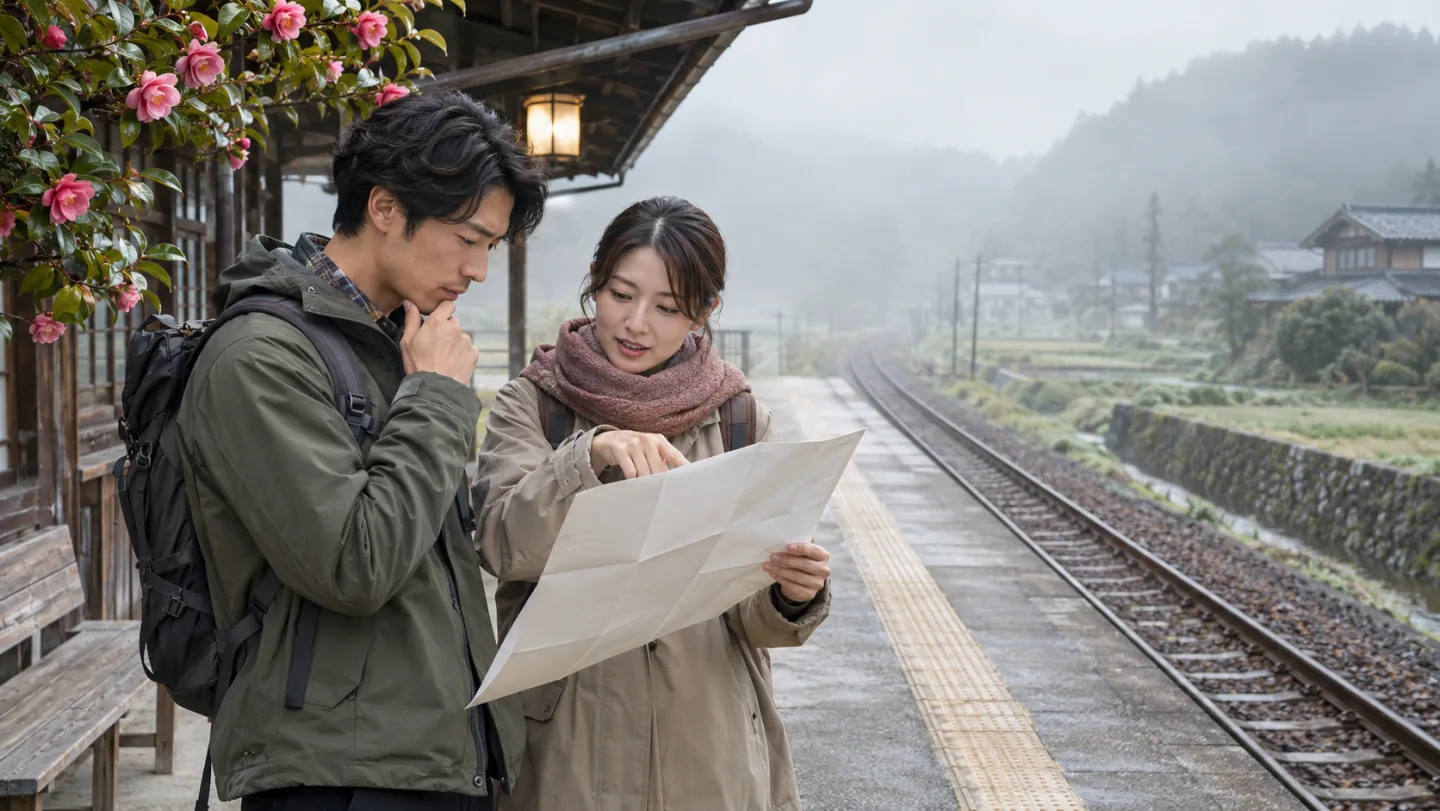
Your friend is heading out on a day trip. Rain is possible, and the station at the other end of the line has a long walk to the bus stop. You could simply mention the weather. But if what you mean is “You should take an umbrella,” **hou ga ii** gives you a way to recommend the action itself: 傘を持っていったほうがいいよ (かさをもっていったほうがいいよ). The form いった looks like the past. Here your friend hasn't left yet. Read the ending as a whole before deciding when the action takes place.
Hou ga ii starts with a choice
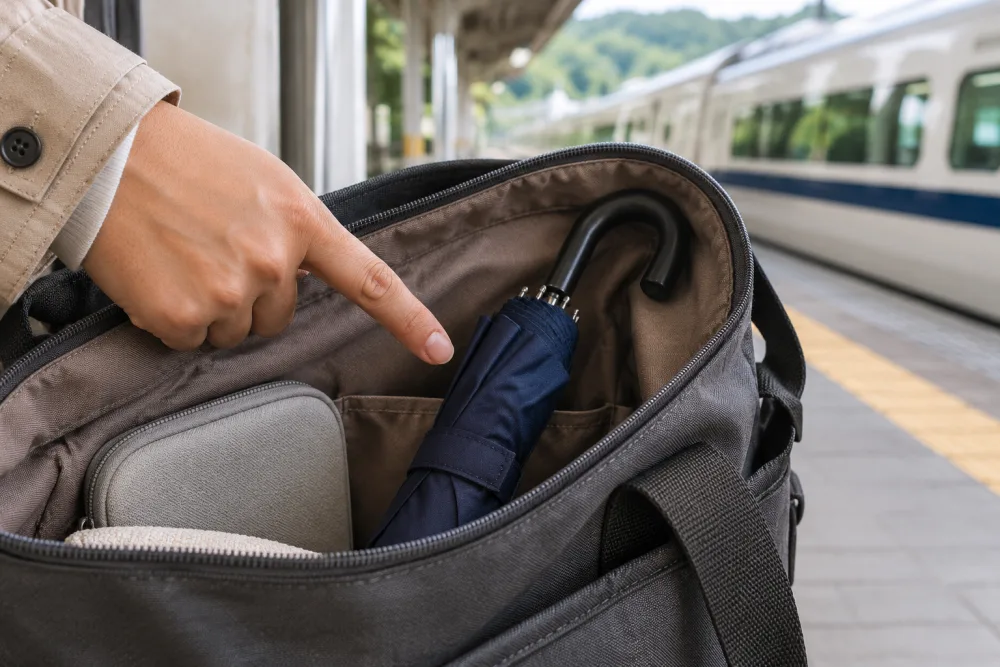
Picture a friend standing over an open bag. They can take an umbrella or leave it at home. Before you choose a Japanese ending, decide which action you want to recommend. In 傘を持っていったほうがいいよ, the action is taking the umbrella along. The recommendation is to do it. You could also say 折りたたみ傘を持っていったほうがいいよ (おりたたみがさをもっていったほうがいいよ), “You'd be better off taking a folding umbrella.” That extra detail matters if your friend has only a small bag. The ending works in exactly the same way.
Try taking away the ending. 傘を持っていった can report that someone took an umbrella with them. Put ほうがいい back, and the whole construction evaluates a course of action. You can make the time explicit with 明日は (あしたは), “as for tomorrow.” Put 明日は at the beginning and listen for how the sentence still ends in the same recommendation. This is a useful check if you tend to translate the verb one piece at a time and accidentally turn a suggestion into a report.
Advise against an action with the plain negative
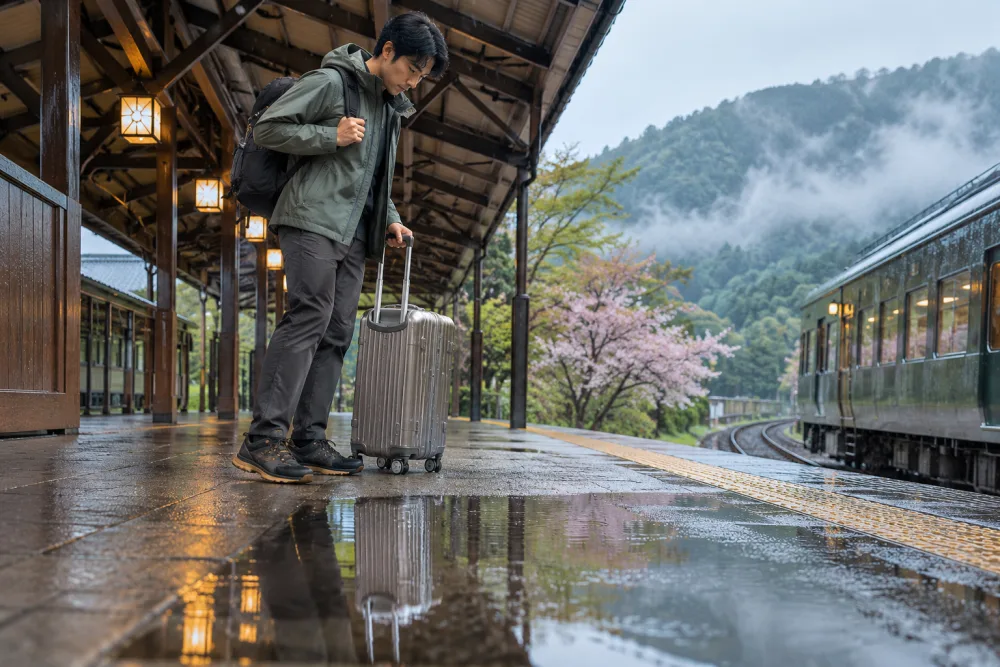
Imagine your friend is planning to run from the station to the bus stop. The path is wet. 駅から走らないほうがいいよ (えきからはしらないほうがいいよ) means “You'd better not run from the station.” The action being considered is running, and your recommendation is to avoid it. The plain negative of 走る is 走らない. Keep that form immediately before ほうがいい. You don't need to turn it into 走らなかった for a recommendation about what to do next.
Putting the negative on the verb also helps you find the intended meaning quickly when listening. Compare 走ったほうがいい, “You'd better run,” with 走らないほうがいい, “You'd better not run.” If both sound equally plausible in isolation, add the scene back in. A slippery path is a reason to avoid running. A timetable by itself doesn't tell you which advice the speaker gives. Listen for った or らない before you decide.
The Japan Foundation Irodori grammar notes explain both verb forms and compare the force of this pattern with lighter advice. the Japanese grammar guide offers a place to review plain verb forms.
Offer a reason that fits the person
Advice is easier to respond to when the listener knows why you're giving it. 雨が降りそうだから、傘を持っていったほうがいいよ (あめがふりそうだから、かさをもっていったほうがいいよ) starts with a reason: it looks like rain. With a close friend, the casual ending よ can fit. In a more formal conversation, you can finish with ほうがいいです, but the addition of です alone doesn't make unsolicited advice welcome. If the person hasn't asked for a recommendation, you might start by mentioning the forecast and let them decide what they need.
Notice how this differs from an invitation. 早めに出たほうがいいよ (はやめにでたほうがいいよ) recommends leaving early. 早めに出ませんか (はやめにでませんか) proposes leaving early together in a situation where the speaker is included. The English “Why don't you leave early?” and “Why don't we leave early?” are close enough to confuse a learner who is concentrating only on politeness. Before forming the Japanese sentence, ask who will actually take the action.
For more work on giving a reason, see how kara introduces a reason.

Choose the form before you speak
Write two columns on a piece of paper. In one, put actions you would recommend for this outing. In the other, put actions you would advise against. For the first column, try 買う → 買った (かう → かった), “buy,” and 出る → 出た (でる → でた), “leave.” For the second, try 待つ → 待たない (まつ → またない), “wait,” and 入る → 入らない (はいる → はいらない), “enter.” Say a short recommendation from each column, then switch verbs. If you switch the recommendation itself, change the form too. Just reading down the columns can make the drill feel fluent while leaving you unprepared to choose between forms.
For a more realistic second round, pick a different setting. Suppose a friend asks what to do before visiting a small museum. 先に切符を買ったほうがいいです (さきにきっぷをかったほうがいいです) recommends buying the ticket first. ここで待たないほうがいいです (ここでまたないほうがいいです) advises against waiting here. These are sample recommendations, not claims about any museum's rules. If you mean that a sign prohibits entry, report the rule itself. Your opinion that it would be better to stay outside conveys something different from a formal restriction.
Use KanaWay for the verb, then test the advice in context
The two parts of this lesson make different demands. You need to retrieve a form such as 買った or 待たない, and you need to decide which recommendation makes sense. Practice them separately at first. If you're already reviewing a verb in KanaWay on Android, pause after the verb comes up and say its ta-form and plain negative before moving on. Keep a list on paper of verbs that took you a long time to recall. You can use verbs from this lesson if you haven't met the same ones in your app practice.
Close the app for the next step. Pick one verb from the list and give it two settings. For 待つ, imagine a friend who has arrived before the rest of the group and has a dry place to sit. Then imagine that the same friend is standing outside in the rain and the group has already sent a message asking everyone to meet inside. In the first setting, ここで待ったほうがいいよ (ここでまったほうがいいよ) could make sense. In the second, ここで待たないほうがいいよ (ここでまたないほうがいいよ) is advice against staying there. Say the reason in your own words before you check the ending. If you recalled both verb forms but gave unsuitable advice, practice interpreting the scene. If you understood the scene but couldn't say the ending, return to the form drill.
Learn Japanese Hub and KanaWay share a publisher. The advice exercise is an activity you can do alongside the app. The app's vocabulary practice does not tell you whether a specific recommendation suits your listener or your relationship. You can check that by trying the sentence with a conversation partner or comparing two versions of the same exchange.

Try three replies before reading the explanations
**1. A bag with room for one more thing.** Your friend says they don't expect it to rain. You think a folding umbrella is worth packing because they'll be outdoors most of the afternoon. Form the recommendation from 持っていく (もっていく). Try it first with the casual ending you would use with a friend, then say just the reason for your advice. Would mentioning the forecast alone be enough in this exchange?
One possible answer is 折りたたみ傘を持っていったほうがいいよ. The recommended action is 持っていく. Its ta-form is 持っていった. If your friend already knows the forecast and is specifically asking what to pack, giving the item directly is useful. If they haven't asked you for advice, sharing the forecast gives them room to reach their own decision.
**2. A different place to wait.** Your group has agreed to meet inside. Someone starts waiting outside the entrance, where it is difficult to see the others. Tell a friend it would be better not to wait here. Then offer an alternative as a joint proposal.
ここで待たないほうがいいよ advises against waiting here. 中で待ちませんか (なかでまちませんか), “Shall we wait inside?”, proposes a joint action in a polite form. In a casual exchange with a friend, 中で待たない? (なかでまたない?) can serve as the invitation. This last sentence contains a negative-looking form, but the question and the context give it a different job. Check the end of each sentence before using the verb alone to infer the meaning.
**3. Two people and a timetable.** Your friend wants to know what you think about leaving early. They are going alone, so it would be odd to propose that you leave together. Use 出る and give advice. Then change the sentence so you are asking your friend whether they think you should leave early on your own trip.
早めに出たほうがいいよ is advice for your friend. 早めに出たほうがいいですか asks whether leaving early would be better. With no overt subject, the preceding conversation tells the listener whose plans are under discussion. If there's any doubt, establish the speaker and the trip before asking the question. The ending alone can't supply that information.
Questions about the method
Does ta-form mean the action already happened?
It can in other contexts. In the pattern taught here, the ta-form is part of a recommendation. A time word like 明日 makes it clear that the action is still ahead. For past regret, you might hear 早く出たほうがよかった (はやくでたほうがよかった), “It would have been better to leave earlier.” Here the evaluation changes from いい to よかった.
Can I use ほうがいい for every English ‘should’?
English also uses “should” for expectations, such as “The train should arrive soon.” That sentence predicts an arrival. It doesn't recommend that the train do something. If you can't identify an action the listener is being encouraged to take or avoid, stop and check what “should” is doing before translating it.
What if I only want to share the forecast?
Say that it looks like rain and let the listener decide whether to ask what you recommend.