

You decide to take a jacket to the garden. A second sentence says that today is cold. To explain the decision, the listener needs a connection between those facts. Kara can present the cold weather as your reason. It does more than put two events beside each other: it tells the listener how you want the first statement to support the next one.
This lesson uses fictional adults preparing a gardening session. Their reasons and decisions are supplied in writing, so you can check meaning before choosing an ending. The task works on paper. A planned sentence-building format in KanaWay provides a related way to practise connecting parts, but the original exercises here do not require an available app, a special deck or automatic grammar marking.
Put the reason before kara in this model
今日は寒いから、上着を持っていきます。Kyō wa samui kara, uwagi o motte ikimasu. “It is cold today, so I will take a jacket.” The reason is today's cold weather. The decision is taking the jacket along. から follows the reason clause; the main statement follows it. Mark those two jobs before analysing the smaller words.
寒い, samui, describes cold weather or an environment as cold; 上着, uwagi, is an outer garment or jacket in this scene. 持っていきます, motte ikimasu, expresses taking it along. The sentence does not say that every cold day requires this action. It presents the reason for this speaker's decision in the supplied situation.
The St. Olaf College explanation of kara gives the reason-plus-kara relationship. English can place “because” before a reason after the main statement; our Japanese model places kara after its reason. Compare the meaning, not just the position of one translated word. Other discourse arrangements exist, but this lesson practises one clear complete sentence pattern.

Check the connection for an adjective or noun
In our first model, the i-adjective 寒い connects directly to から: 寒いから, samui kara. Do not insert だ between them in this plain affirmative reason. A learner who memorises dakara as an indivisible replacement for every English “because” can miss this attachment difference. Identify the type of predicate before deciding what belongs immediately before kara.
Now use a noun reason: 今日は雨だから、中で作業します。Kyō wa ame dakara, naka de sagyō shimasu. “It is rainy today, so I will work inside.” 雨, ame, is the rain noun; 雨だ forms the plain noun predicate before kara. 中で, naka de, places the activity inside, and 作業します, sagyō shimasu, describes doing the work in this context.
Compare samui kara and ame dakara without claiming that they are two spellings of the same construction. The difference comes from what precedes the connection. Our adjectives guide provides a broader reference for adjective types and predicates. This short exercise concentrates on one i-adjective reason and one noun reason, leaving a full inventory of endings for later study.
Keep the final decision separate from the reason
風が強いから、外で読みません。Kaze ga tsuyoi kara, soto de yomimasen. “The wind is strong, so I will not read outside.” 風, kaze, is wind; 強い, tsuyoi, means strong; 外で, soto de, locates the reading outside. The final 読みません, yomimasen, gives the negative polite decision. The reason itself remains an affirmative statement about the wind.
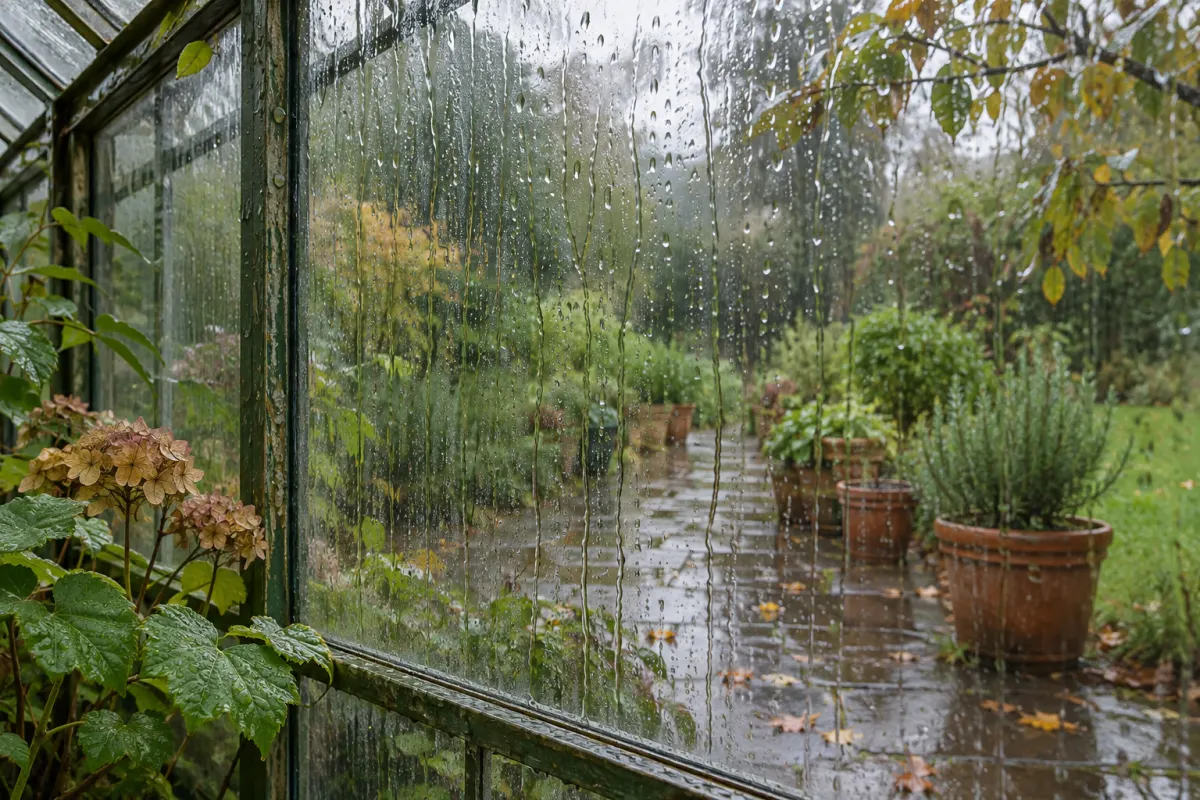
Underline the scope of the negative ending. The speaker says they will not read outside; they do not say that the wind is not strong. They may read somewhere else, or do another task, but the sentence does not settle that. Keep the stated decision distinct from an appealing continuation you have imagined from the photograph or the garden setting.
A useful two-column note contains the reason on one side and the stated choice on the other. You can change the choice while preserving the same weather reason if the new exercise supplies it. You can also change the weather while keeping the activity. Neither change is automatically justified merely because the objects still look plausible together. The prompt must tell you what the speaker means.

A reason is not automatically a time or starting point
You may already know kara in expressions about where something comes from or when an activity begins. Recognising the same kana does not make all those uses interchangeable. Our present model attaches kara to a reason statement. It does not ask you to translate every kara as “because,” regardless of its surrounding phrase.
Compare the roles in an English meaning note before writing Japanese: “because it is rainy” supplies a reason; “from the garden” supplies an origin. This is a distinction of message, not a claim that one photograph proves either meaning. If your exercise asks why somebody moved the work indoors, a place of origin alone will not supply the required explanation.
Our sentence structure guide helps you keep activity, setting and predicate connected. For today's practice, label the full reason clause and full decision clause. That is enough to avoid treating kara as a loose word to insert wherever an English translation contains “because.” Do not extend this limited exercise into an automatic rule about every connector or every formal conversation.
Build the sentence in parts, then read its meaning
Learn Japanese Hub and KanaWay share a publisher. KanaWay is in development. The official local app information describes planned sentence-building practice among its learning formats. That supports a limited learning idea here: arrange meaningful parts, read the resulting sentence and check whether the reason supports the stated decision. It does not establish a released garden lesson or automatic evaluation of your explanation.
On paper, write the first model in three chunks: today's cold-weather statement, kara, and taking the jacket. Mix the chunks and rebuild the sentence. Next explain which chunk gives the reason and which gives the action. Copying the original order from memory is only one check; understanding the relationship requires you to say what each part contributes.
If the word uwagi is missing, use a reliable word note or dictionary to check it, then return to the sentence. If you know every word but reverse the explanation, more vocabulary lookup is not the main repair. Our Japanese practice guide offers a broader way to connect an attempted answer with a specific correction. The app format remains a planned supporting option; the complete task is available on paper now.
Six prompts about reasons and choices
One: the speaker says that today is cold and therefore decides to take a jacket. Produce the first complete model. Two: the supplied reason is the noun “rain” for today, and the speaker chooses to work inside. Write the noun-reason model. Three: the wind is strong and the speaker chooses not to read outside. Preserve both the reason and the negative decision.
Four: a learner writes samui dakara in the plain affirmative cold-weather reason. Identify the local correction without changing the choice. Five: an exercise asks why the work is indoors, but the learner supplies only a place of origin. Explain why that does not provide the requested kind of information. Six: in the wind example, does the negative ending deny the wind's strength or the outside reading?
Try each item before looking at the answers. Keep your original attempt beside the correction so that you can see whether the problem concerned vocabulary, attachment or the relationship between clauses. A correct last verb cannot repair an invented reason. Likewise, a plausible weather explanation cannot compensate for changing what the speaker actually decided to do.
Compare the corrected sentence with its message
One is 今日は寒いから、上着を持っていきます。Kyō wa samui kara, uwagi o motte ikimasu. Two is 今日は雨だから、中で作業します。Kyō wa ame dakara, naka de sagyō shimasu. Read the reason first, then explain its connection to the chosen action. Notice the different attachment after samui and ame without changing either supplied message.
Three is 風が強いから、外で読みません。Kaze ga tsuyoi kara, soto de yomimasen. Four replaces samui dakara with samui kara in this model. Five requires a reason, whereas the proposed answer names an origin. Six negates reading outside. None of these answers establishes an unstated indoor activity or a universal causal law about weather and behaviour.
For a final transfer, keep today's cold weather but use a new supplied decision: taking a sweater rather than the jacket. Verify the new noun from a reliable reference before building the sentence. Then explain the reason-choice relationship without looking at the model. This checks whether you can preserve the connection when one detail changes, rather than merely repeat a familiar garden sentence.
Questions about the method
Does every kara mean because?
No. Kara also appears in other constructions, including starting-point expressions. This lesson practises its reason-clause use. Read the surrounding phrase and identify the message before deciding how to translate the kana.
Must I put da after every word before kara?
No. Our plain affirmative noun reason uses ame dakara, while the i-adjective uses samui kara. Check the predicate type and the specific form. Do not treat dakara as a universal translation unit that attaches unchanged to every word.
Does a correct sentence prove the speaker's reason is true?
No. Grammar shows how the speaker presents the explanation. The exercises give fictional stated facts for practice; a well-formed kara sentence does not independently verify a real-world cause, intention or event.