
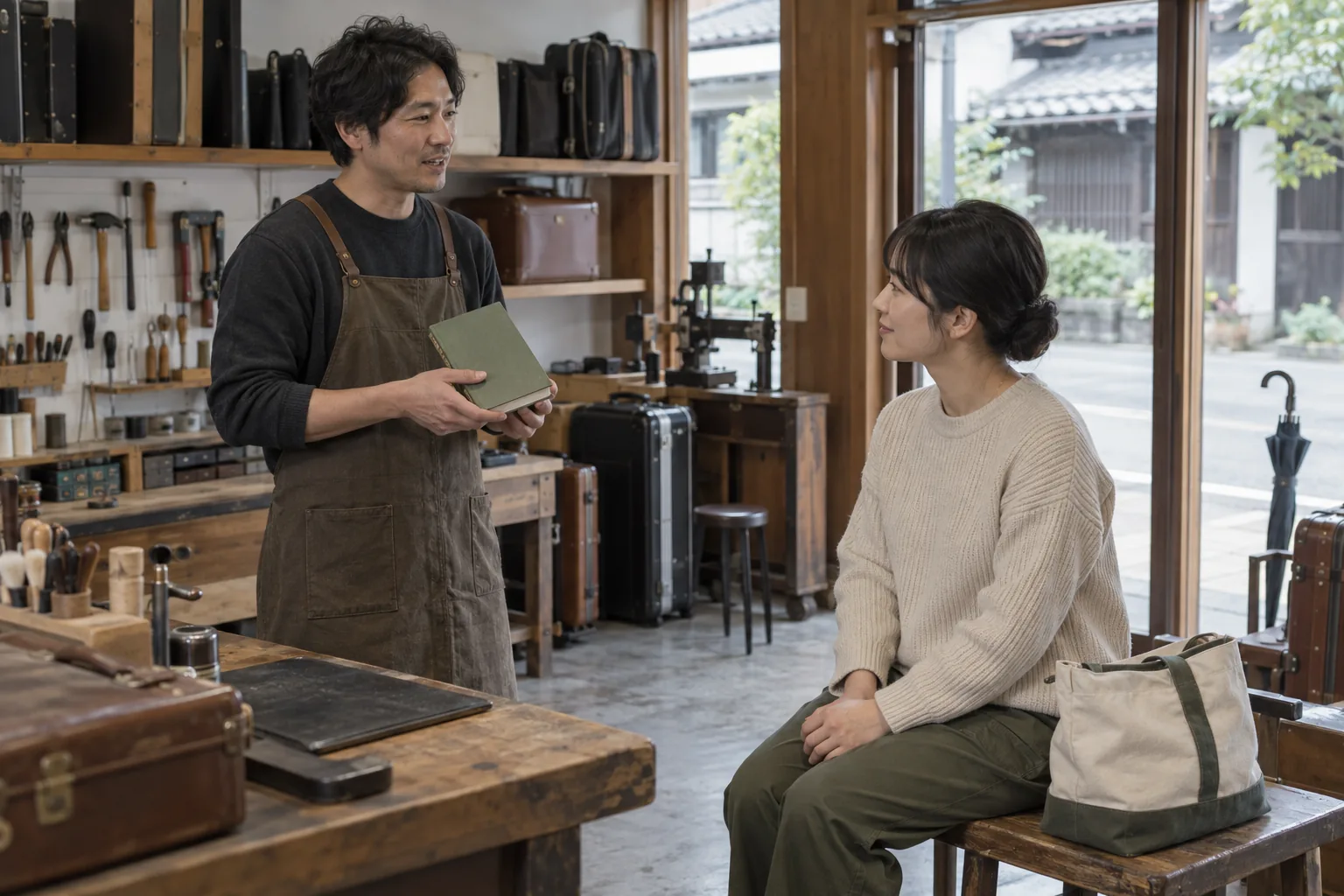
Kore, sore and are are easy to recite and harder to choose when the same bag is described by a different speaker. This guide uses clearly specified scenes, explained answers and optional word recall with KanaWay. You will practice identifying who is speaking before naming what they see, rather than treating three English translations as an automatic answer.
Kore, sore and are begin with the speaker
You face another person. A book is in your hand, a bag is beside them and an umbrella is at the far end of the hallway. Before choosing Japanese, identify who is speaking and which object is meant. These two pieces of information belong together. Learning a list of translations alone can hide the changing relationship between an object and the people discussing it.
For these deliberately clear physical scenes, use this starting model: これ, kore, refers to something near the speaker; それ, sore, to something near the listener; あれ, are, to something away from both. The relationship within the scene matters. No fixed number of centimeters separates the forms. We arrange distinct areas so the answers can be checked rather than guessed from an ambiguous photograph.
Choose objects whose names you already know. Otherwise a missing noun may look like a perspective error. A book, bag and umbrella are enough for the first round. The pictures illustrate positions, while each written task explicitly assigns the speaking role. Do not infer a mandatory answer merely from who appears on the left or who looks toward the camera.

Three objects with three clear references
When you hold the book and speak, our model uses これは本です。 Its kana reading is これはほんです, spoken kore wa hon desu: “This is a book.” The topic particle は is pronounced wa here. 本 means book and is read ほん, hon, in this word. The sentence identifies something in the speaker’s immediate area without claiming who owns it.
The bag is right beside your conversation partner. Practice それはかばんです。, sore wa kaban desu: “That by you is a bag.” The words “by you” explain the reference in English; they are not an extra Japanese phrase inside the example. For the distant umbrella, use あれは傘です。, are wa kasa desu: “That over there is an umbrella.” 傘 is read かさ, kasa.
Point to one object, then speak. Ask your partner to touch or name the object you intended. This checks shared reference as well as the word. A correctly pronounced sore does not establish clarity if you point between two bags. Keep only one bag in the starting scene, and clarify the gesture before treating confusion as a grammar mistake.

Change the speaker while leaving the book in place
The book stays in your hand, but your partner now speaks about it. From their perspective it is near the listener: you. In our separated scene they use それは本です。 Nothing has moved except the speaking role. This is why “kore always means this particular book” cannot be your learning rule. State who speaks at the beginning of every attempt.
Next place the book right beside your partner. When you speak about it, choose sore; when they speak about the book at their own side, choose kore. Begin with individual words if complete sentences make the change confusing. Name the speaker, point to the object and say the form. Add the short sentence once those three actions are consistent.
Ownership does not decide these physical exercises. Your book might be next to your partner, and their bag might sit in front of you. Write “near the person speaking” rather than “my object.” If changing only the owner changes your answer, revisit the roles. You are checking current position, not classifying possessions permanently into three vocabulary groups.
Build the sentence without mixing the two word rows
The pattern for today is demonstrative + は + object name + です. These are simple polite identifying sentences. You do not need additional verbs or a new level of politeness to practice the distinction. Our Japanese grammar guide places the parts in a broader beginner structure if the pattern itself is still unfamiliar.
これ can stand for the object on its own. When a noun follows immediately, use the different form この: この本, kono hon, means “this book.” Corresponding noun-before forms are その and あの. Keep the complete kore, sore and are sentences for this round. Learning every demonstrative row at once would make it harder to identify the one distinction being tested.
A question such as これは何ですか。, kore wa nan desu ka, means “What is this?” Here 何 is read なん, nan. A short answer can be 本です。, “It is a book.” The answering person need not mechanically repeat the demonstrative from the question. Naming the object directly is useful when speaking roles have changed, because it avoids an unnecessary second reference decision.
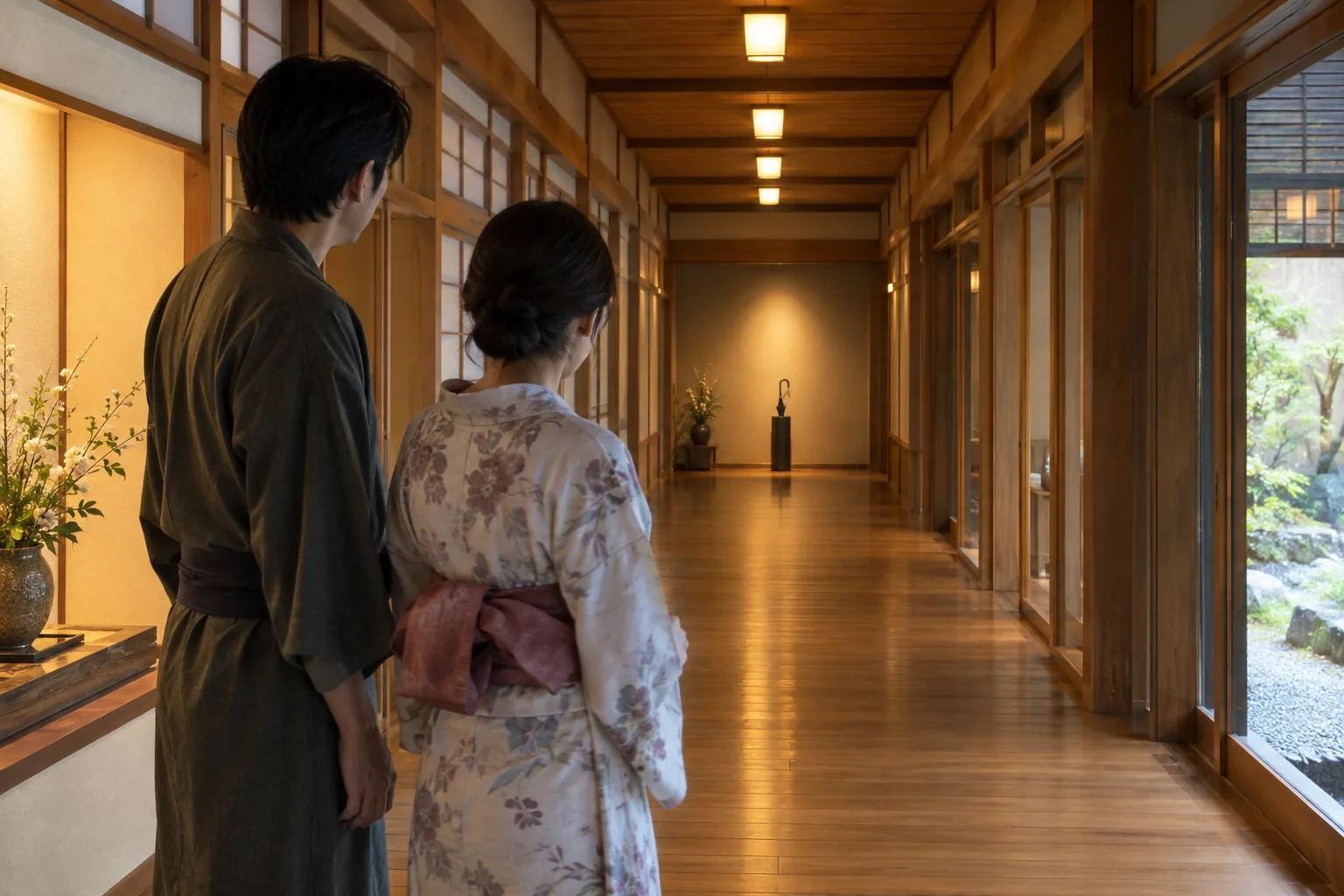
Use KanaWay for word recall and practice the scene separately
Split revision into two tasks. First recognize and retrieve the Japanese form. Then choose a reference in a described situation. The verified KanaWay workflow can support the first task: attempt an available stored card, reveal its answer and rate your recall. Changing speaker roles is a separate exercise outside the app. A successful card answer does not automatically demonstrate that second skill.
Use only suitable cards actually shown to you. This practice sequence is an editorial suggestion, not a promise of a dedicated demonstrative deck. Attempt the card before revealing the answer. Compare the form and meaning afterwards. Your self-rating describes recall; it does not independently check whether you pointed to the correct place in a room.
After the card round, set the device aside and arrange the book, bag and umbrella. Choose a written scene below and answer again. Keep “forgot the word” separate from “confused the speaker.” The app does not see this self-arranged scene, recognize positions or assess your pointing. Those claims would go beyond the demonstrated workflow.
If the nouns are missing, look them up selectively. Our Japanese vocabulary guide explains building small useful groups. Retrieve the three names needed for the actual sentences before adding more objects. This makes your next mistake easier to interpret and keeps the exercise from turning into a large unrelated word list.
Six tasks with explicitly assigned perspectives
Cover the answers in the next section. Choose kore, sore or are and explain why in one English sentence. Every task involves visible objects, clearly separated areas and a newly started exchange. We are not testing reference to something mentioned earlier in conversation. Keep the object and current speaker written beside your choice.
Task 1: You speak while holding a book. Which form goes before は本です? Task 2: You speak about the bag immediately beside your partner. Which form goes before はかばんです? Task 3: Both people stand at the entrance and the umbrella is far away at the other end of the hall. Which form goes before は傘です?
Task 4: The book remains in your hand. Your partner now speaks about that book. Which form do they choose? Task 5: You own the bag, but it is right beside your partner. You speak about it. Which form applies? Task 6: The umbrella is now right beside your partner, who speaks about it. Which form does that person use?
Record the first answer before checking. If you subsequently reread the role, mark that correction. Otherwise a quick guess followed by a look at the solution hides whether you forgot the form or skipped a condition. A pause to read carefully is allowed; this round measures understanding rather than response speed.
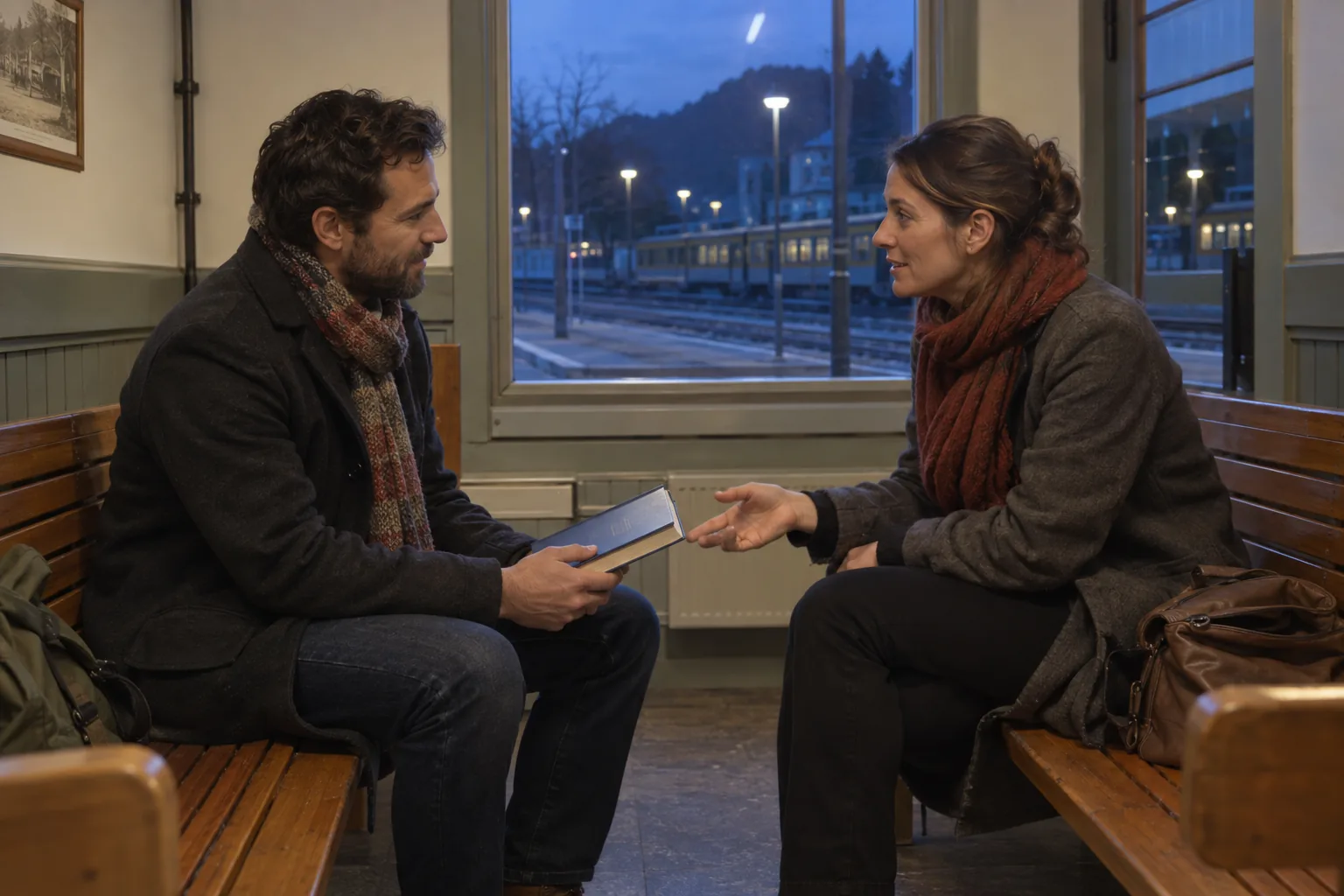
Answers: the location stays, the role changes
Task 1 is kore because the book is with the speaker: これは本です。 Task 2 is sore because the bag is with the listener: それはかばんです。 Task 3 is are because the umbrella is distant from both people: あれは傘です。 These three answers check the starting model before adding a role reversal.
Task 4 is sore. Your partner speaks, you listen and the book is with you. Task 5 is also sore: your ownership does not change the bag’s location by the listener. Task 6 is kore because your partner is now the speaker and the umbrella is right beside them. One object can therefore receive different descriptions without changing its identity.
If task 4 was difficult, repeat only the speaker switch with one book. If task 5 was difficult, change only the owner in the description while leaving position fixed. If task 3 was difficult, place one object clearly farther from both people. Alter one condition at a time to diagnose the distinction, rather than memorizing this particular sequence of six answers.
Turn the exercise into a short exchange
Arrange a new scene with two people and one known object. State in English who will speak, then let that person choose the form and identify the object. Switch speakers while leaving it in place. Use a different familiar noun later to check transfer. Recognizing the book from the first example is less informative than explaining an unfamiliar arrangement correctly.
The Japan Foundation’s Irodori Starter materials provide contextual shopping examples in lesson 16. Use the original situation instead of deriving a universal distance measurement from an isolated word. Its Marugoto Starter teaching notes also place the trio in a beginner curriculum. Our exercises use that physical distinction without reproducing their dialogues.
This spatial starting model does not cover every conversational use. Demonstratives can also refer to previously mentioned or shared information. If an object sits between the people and the reference is unclear, a written task may lack enough information for one compulsory answer. Clarify the scene instead of inventing precision. For another manageable session, use our Japanese practice guide and repeat the role change with a known new object.
Questions about the method
Do I need to measure the distance?
No. The tasks deliberately separate the speaker’s area, listener’s area and a location away from both. An object between people may require clarification. A centimeter threshold would imply precision this beginner exercise does not provide.
Does sore mean yours?
No. In these physical scenes it depends on where the object is relative to the two people. Someone else’s book beside the listener can be sore. Ownership and current position are separate pieces of information.
Can I practice alone?
Yes. Draw two clearly separated positions and a distant object. Write which person speaks on each attempt, then change that role while keeping the object still. A real partner additionally helps reveal an unclear pointing gesture.
Does KanaWay assess my choice in the room?
The verified workflow here concerns attempting, revealing and rating available cards. No automatic checking of your arranged scene is claimed. Check your choice against the specified speaker and the explained answers in this guide.