

You can recite Monday to Sunday, yet pause when Wednesday appears alone in a message. Japanese days of the week share a useful ending, but the shared sound can also conceal uncertainty about the first part. This guide gives you the complete names and a practical way to check each one independently. The goal is recognition and recall, not an impressive recital of a memorised sequence.
Our broader Japanese time and dates guide covers clock times, months and dates. Here the focus stays on weekday names and their calendar abbreviations. You will build a small checked reference, try shuffled prompts, explain mistaken answers and finish with a short exchange. Nothing requires a particular application, an elaborate timetable or a promise that seven words can be mastered in a fixed number of minutes.
Read the Japanese days of the week as complete words
Monday is 月曜日, げつようび, getsuyōbi. Tuesday is 火曜日, かようび, kayōbi. Wednesday is 水曜日, すいようび, suiyōbi. Thursday is 木曜日, もくようび, mokuyōbi. Friday is 金曜日, きんようび, kin’yōbi. Saturday is 土曜日, どようび, doyōbi. Sunday is 日曜日, にちようび, nichiyōbi. Keep the meaning beside the whole written form during your first check, rather than guessing a name from an isolated character.
The repeated ending 曜日 is read ようび, yōbi. The long vowel matters; the macron in these romanisations marks it. Roman letters are a temporary reading aid, not an English pronunciation instruction. If you can already read hiragana, compare the kana with the entire word. An answer consisting only of getsu or sui is not the full weekday name requested by this exercise.
Make a reference sheet with three columns: meaning, kanji and kana. Copy the seven entries carefully once, then compare them with the model. Check that Wednesday and Thursday have different first characters, and that Sunday begins with 日 as well as ending in 日. This is an accuracy check before practice, not a requirement to fill a page with repetitions. The Monash University introductory Japanese textbook provides a reference for the names and readings in section 8.3. Compare your sheet with a checked reference before hiding it for recall practice.
Use memory pictures without inventing readings
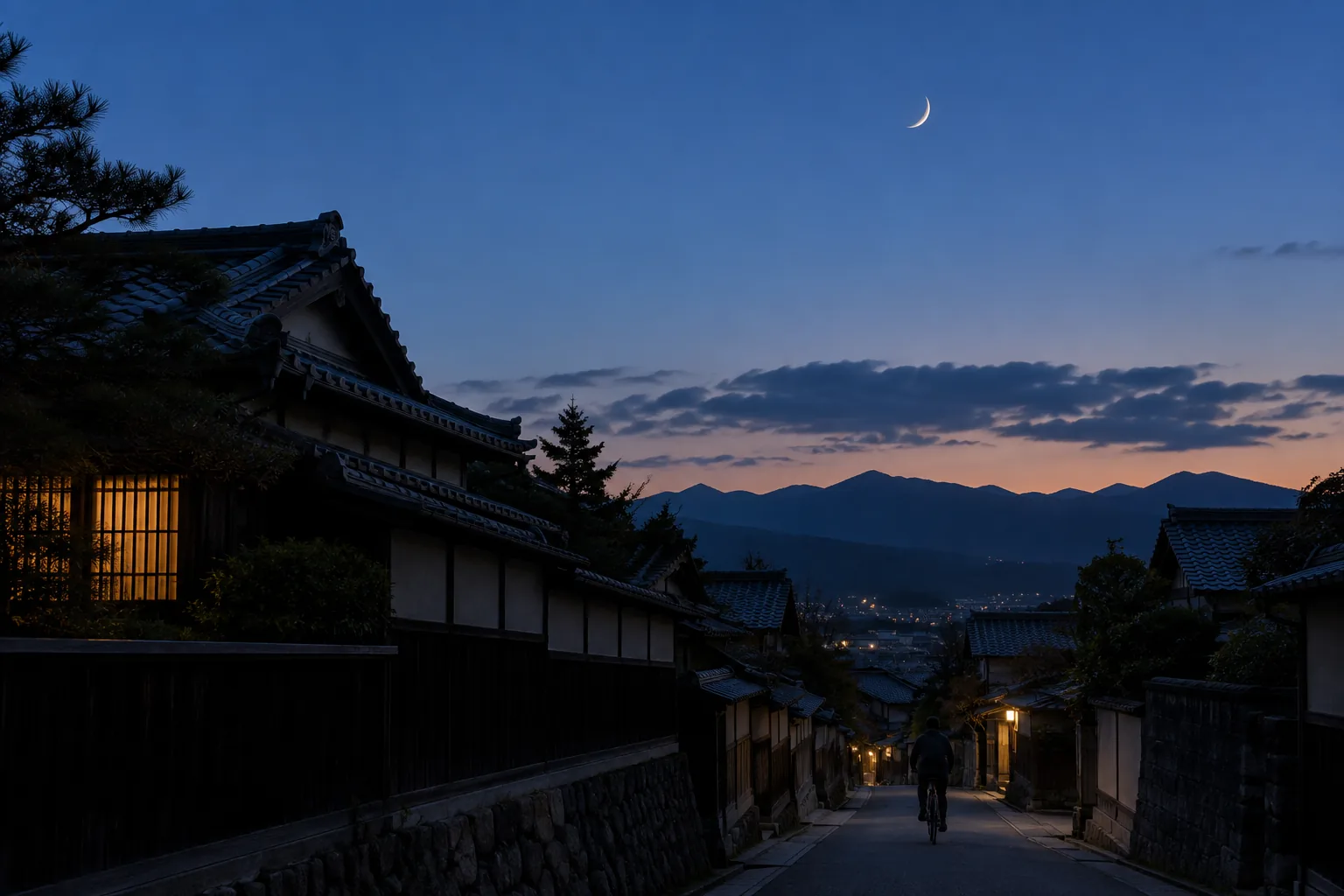
The first characters offer possible memory cues: moon for 月, fire for 火, water for 水, wood for 木, metal or gold for 金, earth for 土 and sun for 日. The photograph of a moon can remind you of Monday. It does not establish that the photographed evening actually fell on a Monday. Treat a picture as a personal cue, not evidence of a date.
A cue is useful only if it leads to the checked whole word. Knowing that 月 can refer to the moon does not mean you should build Monday by attaching yōbi to whichever reading of 月 you know. The complete form is getsuyōbi. Likewise, learn mokuyōbi for Thursday rather than constructing a new reading from an everyday word for tree.
Choose cues that help you personally. If Wednesday and Thursday are easy to confuse, contrast water with a solid wooden object instead of making seven complicated stories. The aim is a short route to the correct answer. If a story introduces another Japanese word you cannot verify, simplify it. Memory support should reduce uncertainty rather than hide it under a clever explanation.

Read shortened calendar headers in their context
In a clearly labelled weekly calendar, headers may use 月, 火, 水, 木, 金, 土 and 日 instead of the full weekday names. Once the layout establishes that the columns represent weekdays, expand the abbreviation to the corresponding complete name. For example, the 水 column is Wednesday in that context. First identify what kind of display you are reading; then identify the heading.
Do not turn that shortcut into a universal rule. 月 also appears in month expressions, and 日 appears in numerical dates. A character on a receipt, a prose sentence or a standalone sign may have a different function and reading. The surrounding numbers, labels and layout matter. Recognising a weekday header is narrower than knowing every use of the same kanji.
Check the order printed on an unfamiliar calendar. Do not assume that the leftmost column is Monday or Sunday simply because your own calendar uses that arrangement. Find an actual header before choosing a column. This task teaches you to read labels; it does not announce a universal Japanese first day of the week or a rule about when businesses close.
Test recognition and recall as separate tasks
Put the seven meanings on separate cards, leaving the Japanese answers on your checked reference sheet. Shuffle the cards. Choose one, say the full name and then check it. Start with Friday or Tuesday sometimes, rather than silently walking forward from Monday. If you need to recite the entire list to reach an answer, record that dependency honestly.
Now reverse the task: show a Japanese weekday name and identify its meaning. You may find that recognising 木曜日 is easier than producing mokuyōbi from the prompt “Thursday”. Both tasks are useful, but a successful recognition attempt is not proof that you can retrieve the word independently. Keep the direction of the question visible in your notes.
The seven blank cards in the photograph represent this sorting method, not a ready-made worksheet or written Japanese labels. Write your own prompts separately and verify them. Our Japanese vocabulary guide explains the wider relationship between meaning, use and review. This exercise applies that idea to one small set without claiming a measured memory improvement or a universal ideal review interval.

Ask for a weekday rather than a numbered date
何曜日 is read なんようび, nan’yōbi, and asks which day of the week. For a controlled example, 今日は何曜日ですか。 means “What day of the week is it today?” Its reading is きょうはなんようびですか. The topic particle written は is pronounced wa here. Do not answer with the number of the day in the month when the question asks for a weekday.
A short model answer is 月曜日です。, げつようびです, “It is Monday.” Use it only when the exercise context specifies Monday. This article does not calculate the reader’s actual local date or suggest that everyone reading it is experiencing the same day. On a real call across time zones, confirm the relevant local date as well as the weekday.
The Japan Foundation’s Irodori Starter materials provide a broader setting for basic everyday communication and listening. Choose an appropriate checked recording when practising sound. Our written examples are not hosted audio. If your problem is hearing the beginning of a weekday name, hearing a model is more relevant than repeatedly copying the kanji.
Repair the part that changed your answer
Suppose the prompt is Thursday and you answer Wednesday. Compare 木曜日 with 水曜日 and mokuyōbi with suiyōbi. The repeated yōbi ending was not the distinguishing information. Your correction should focus on the different first character and sound. Looking at seven names for the same amount of time can be less useful than examining this particular contrast.
Suppose you recognise Friday but omit the ending when asked to say the full name. That is a different error. Retrieve kin’yōbi as a complete word, then check the written kana きんようび. Do not mark every imperfect attempt merely “wrong”; note whether you selected the wrong weekday, lost part of the word, depended on list order or remain unsure about pronunciation.
A correct written answer and an uncertain spoken answer can coexist. Keep sound questions separate from spelling questions. You do not need a score, a ranking or a claim of native accent to make the next practice choice. The useful result is a specific problem that you can check with an appropriate model.
Try eight prompts before looking at the answers
Hide the reference. A: give the full name for Friday. B: identify 水曜日. C: write Thursday in kanji and kana. D: expand 日 in a display explicitly labelled as a weekly calendar. E: identify what 何曜日 asks for. F: give the full name for Tuesday. G: distinguish 月曜日 from a numerical month expression. H: translate 月曜日です。 when the fictional exercise states that today is Monday.
The answers are A 金曜日, きんようび; B Wednesday; C 木曜日, もくようび; D 日曜日, にちようび, Sunday; E a weekday; F 火曜日, かようび; G Monday is the full weekday word, while a month expression needs its own context; H “It is Monday.” Check the entire answer and the condition attached to each prompt. D is only valid in the specified calendar context.
For a tiny exchange, one adult asks 今日は何曜日ですか。 and another answers 土曜日です。, どようびです, “It is Saturday.” In this fictional setting both people refer to the same local day. The photograph illustrates attentive confirmation; it does not show a real Japanese transcript. Change the specified weekday and try another checked answer, without adding unverified grammar.

Finish with one secure answer outside the sequence
Choose the prompt that caused the most uncertainty and try it again with the model hidden. Then change the direction of the question. If you repaired Thursday from an English meaning cue, recognise 木曜日 next. If you recognised Wednesday, produce its full kana form next. This keeps the exercise tied to an observable task rather than to the feeling that the list looks familiar.
Return to a broader beginner Japanese practice routine when you want to combine reading, listening and sentence work. Keep weekdays in a small useful context, but add clock times or numerical dates only with a checked reference. Several kinds of calendar information can appear together; that does not make them interchangeable.
You can finish today by naming what is secure and what remains open. Perhaps all seven meanings are clear, but one spoken form still needs listening feedback. That is a sensible result. Accuracy with this set does not establish fluency, and no fixed number of rounds guarantees mastery. Carry forward the particular uncertainty, not a vague instruction to repeat everything.
Questions about the method
Does every weekday end in yōbi?
The seven full names presented here end in 曜日, ようび. Learn each complete word, including its first part. Calendar abbreviations can omit the shared ending when the layout already establishes weekday columns.
Should I always read 月 as Monday?
No. It abbreviates Monday in an established weekday calendar header, but it also appears in month and other expressions. Check the context before assigning a weekday meaning or reading.
Is nan’yōbi a question about a numbered date?
No. It asks which weekday. A numerical calendar date answers a different question. In real arrangements, confirm whatever date and time-zone information the situation requires.
Must I say all seven names in order?
The sequence can help you learn the set, but independent recognition needs changed prompts. Try one name from a shuffled cue, check it and distinguish recognition from producing the answer without help.