
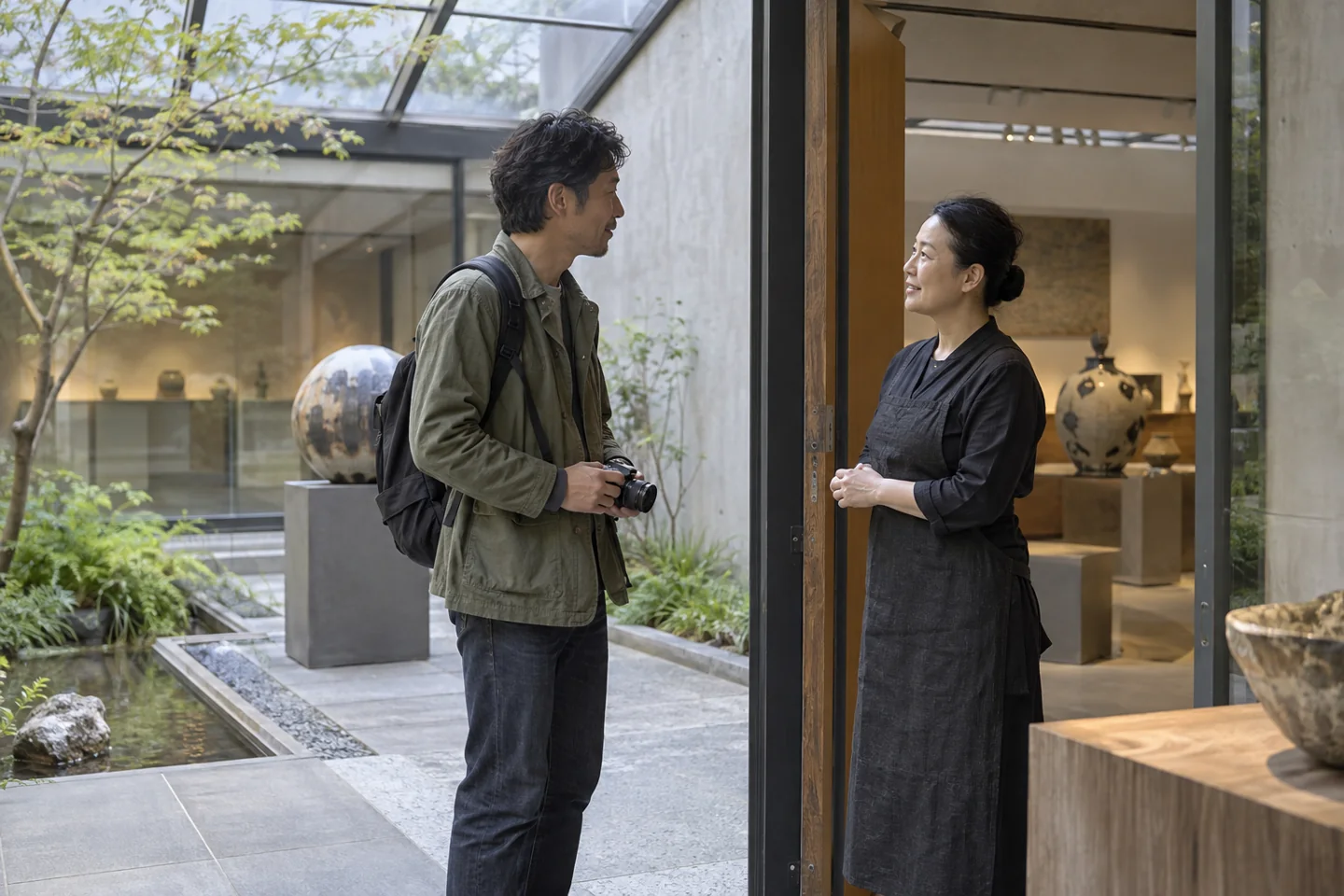
Te mo ii helps you ask whether you may do something, but the phrase only works when it matches your intended action. At a gallery, asking to take a photograph yourself is different from asking an attendant to take one for you. Both situations involve a camera; the person who acts is different. That is the decision we will practise before adding a polite ending.
This lesson uses four familiar actions and six original role questions. You will check a small set of te-forms, assemble short permission questions and distinguish a vocabulary gap from a sentence-choice error. A bounded KanaWay review workflow can support the vocabulary part when suitable stored cards are available. It does not decide whether a complete permission request fits a real conversation.
Te mo ii starts with who will act
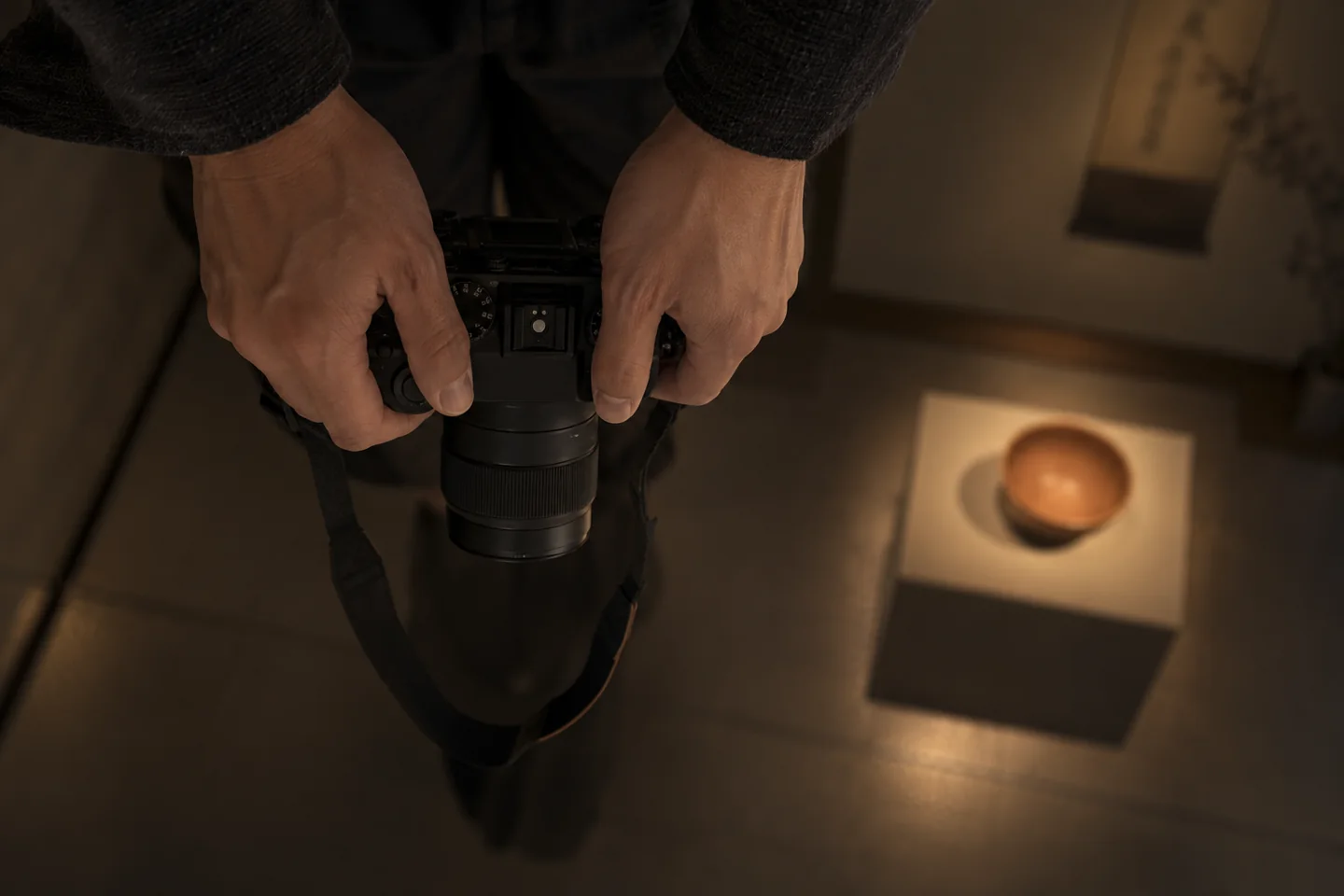
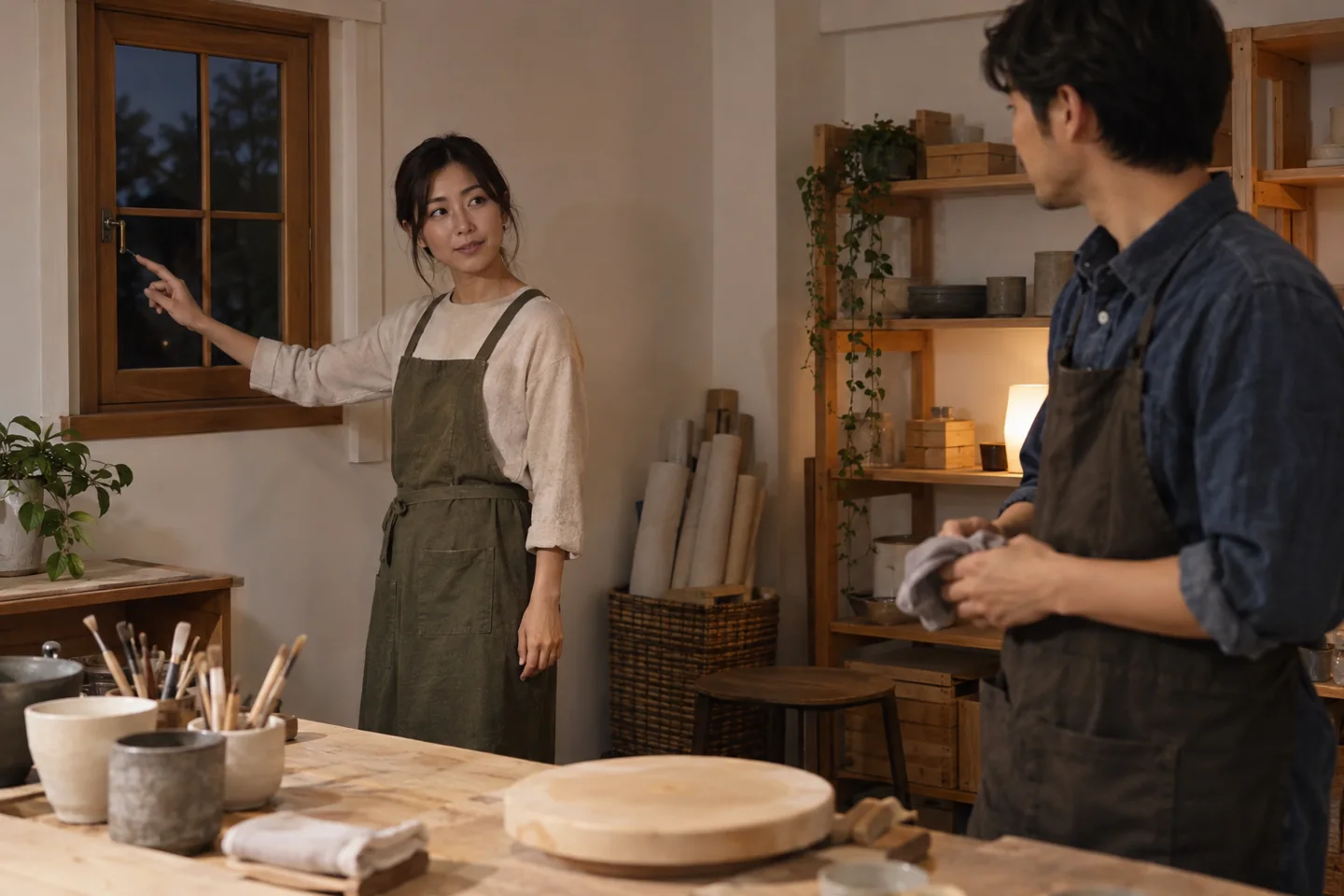
Imagine you are holding a camera and want to photograph a display. You are the intended photographer. A permission question asks whether you may perform that action. Now imagine you want an attendant to photograph you. The attendant is the intended photographer. You need a request directed at another person, not permission to take the picture yourself.
Before translating, write two short notes: the action and the actor. “Take a photograph; me” is enough for the first case. “Take a photograph; the listener” describes the second. The object in the scene does not select the construction. A camera, a window or a book can occur in either type of interaction.
This distinction also prevents a misleading translation of English “can”. You may be asking about permission, ability or whether someone will help. This article covers permission for the speaker’s own action and contrasts it with a simple request. It does not teach the full potential form or every indirect way to ask for assistance.
Build the permission question as one pattern
For our everyday polite examples, use the verb’s te-form followed by もいいですか, mo ii desu ka. 写真を撮ってもいいですか。Shashin o totte mo ii desu ka means “May I take a photograph?” The subject is omitted in this short model; our scenario makes clear that the speaker plans to take it.
The Japan Society permission lesson provides the construction and checked examples with reading, drinking, eating, watching and sitting. We use a limited subset and original role exercises. Do not interpret the pattern as a guarantee that the listener will agree, or that the setting permits the action.
You are not adding mo ii directly to a dictionary form or a masu-form. Start from a verified te-form, then attach the complete ending. In 撮ってもいいですか, totte is the verb form and mo ii desu ka completes the permission question. Recognising that boundary helps you identify which part needs correction.
A useful contrast is 窓を開けてください。Mado o akete kudasai: “Please open the window.” In that request, the listener is asked to act. 窓を開けてもいいですか。Mado o akete mo ii desu ka asks whether the speaker may open it. The action is similar, but the conversational job changes.
Check four te-forms before changing objects
Our four verbs are 撮る, とる, toru, “take a photograph”; 座る, すわる, suwaru, “sit”; 読む, よむ, yomu, “read”; and 開ける, あける, akeru, “open”. Their forms here are 撮って, totte; 座って, suwatte; 読んで, yonde; and 開けて, akete. Learn each pairing with its meaning.
Do not assume every verb ending in ru becomes te by removing ru. Toru and suwaru produce totte and suwatte, while akeru produces akete. Yomu supplies a de ending: yonde mo ii desu ka. The umbrella label “te-form” includes those voiced endings; you do not turn yonde into yonte merely because the pattern is named after te.
The te-form guide explains the wider formation groups and exceptions. Here, keep the list controlled. If you forget whether a verb means “open” or “read”, repair that vocabulary gap first. If you know the meaning but produce the wrong ending, compare the dictionary and te-forms side by side.
Choose a clear situation and a suitable register
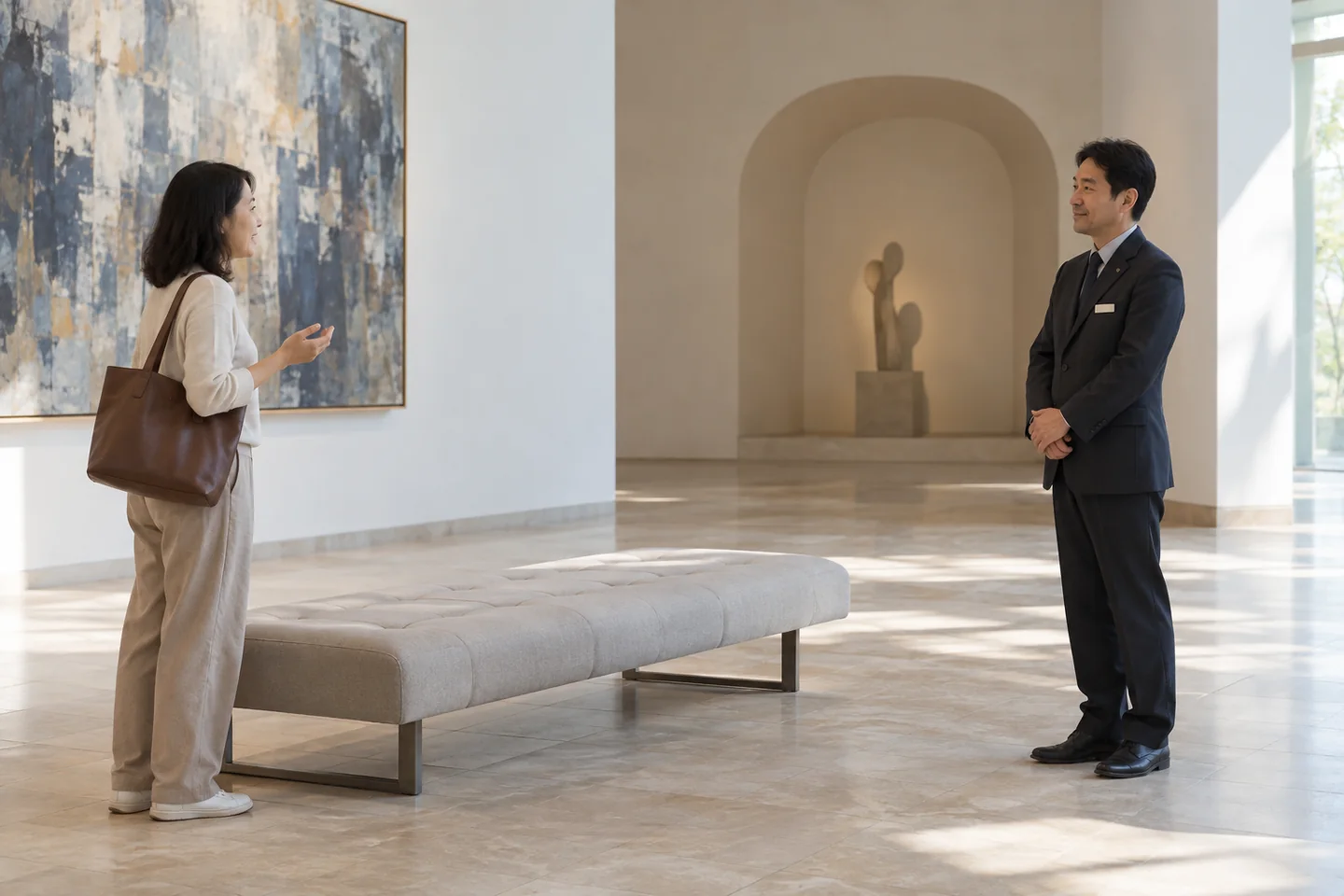
ここに座ってもいいですか。Koko ni suwatte mo ii desu ka means “May I sit here?” This question works for our scenario of a visitor asking about an available seat. The phrase koko ni identifies the intended sitting location. An empty bench in a photograph is only a visual prompt; it does not prove the seat is available in real life.
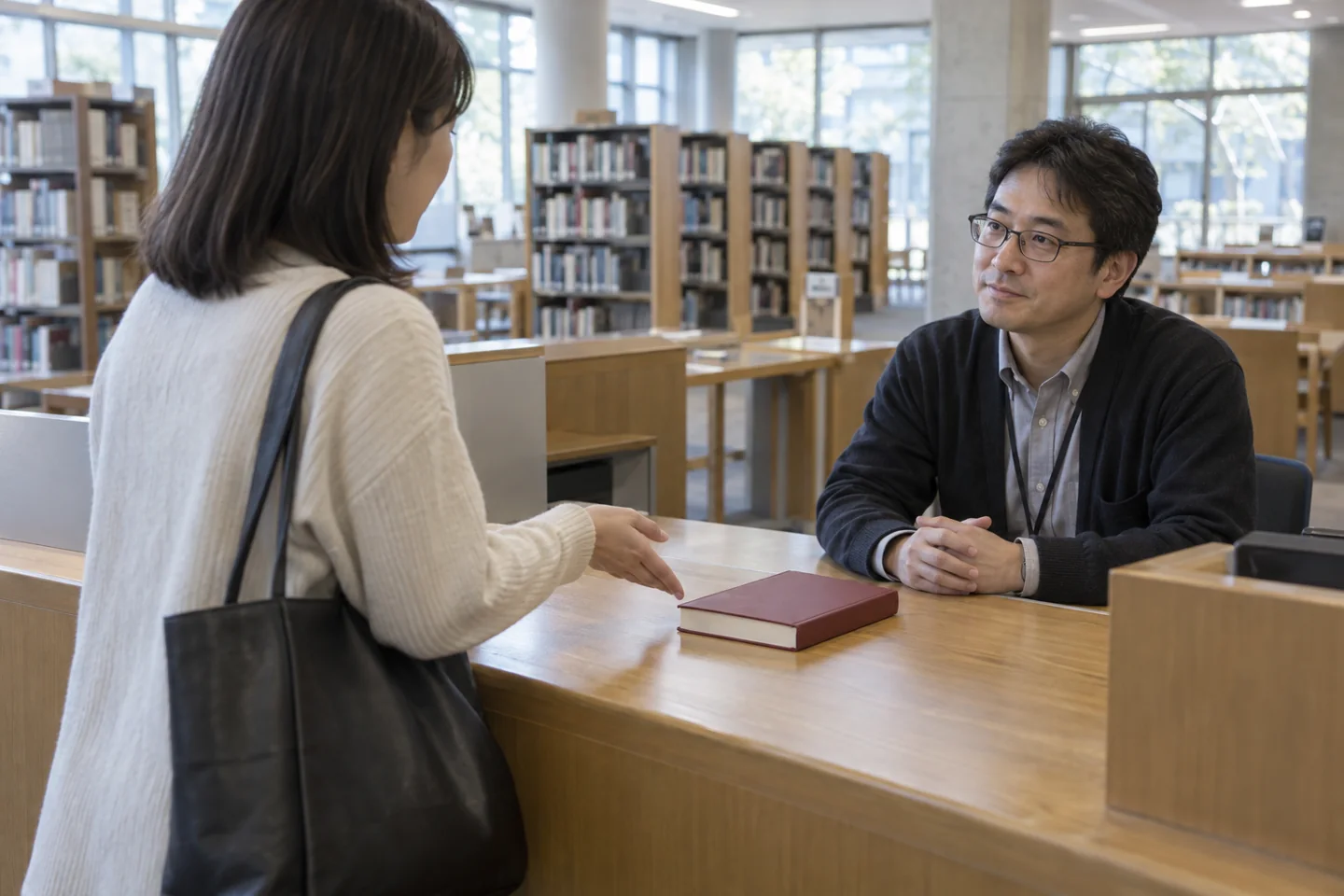
この本を読んでもいいですか。Kono hon o yonde mo ii desu ka means “May I read this book?” In our practice, the listener can grant access to the particular book. The speaker will read it. If the speaker instead wants the listener to read it aloud, the intention has changed and the same permission question does not express that request.
The French Genki syllabus from its publisher separates making requests from asking and giving permission, with photo and window examples. This supports keeping the two learning targets apart. The images on this page illustrate moments before an action; they do not document an actual exchange or approval.
Desu ka gives the models an everyday polite ending. It is not a universal solution for every workplace hierarchy or very formal occasion. We are not ranking advanced honorific alternatives. For a sensitive or unfamiliar situation, learn a complete appropriate expression from a reliable context rather than upgrading one word and assuming the whole request is now suitable.
Review words with KanaWay, then judge sentences separately
A common practice problem is not knowing which part failed. You may understand that you are asking permission but forget yomu; you may recall yomu yet produce the wrong te-form; or you may form the question correctly while intending the listener to act. These are separate errors and should lead to different next steps.
The current KanaWay project source shows a stored-card review flow: make an attempt before revealing the card, reveal its content, then give a self-rating with a preview of the review interval. We publish KanaWay and describe only this verified implementation. It does not establish public release, a permission-specific deck or automatic grammar correction.
If your available stored cards contain a relevant verb, use that flow for the information the card actually asks you to recall. Do not infer that every card tests its te-form, and do not rate a word as forgotten solely because a separate sentence exercise went wrong. If suitable cards are absent, use the checked verb pairs in your own notes; this article does not promise arbitrary card creation.
After the word review, return to the role exercise outside that card session. Write the actor, form the question and compare it with the answer. Keep the sentence error in a separate note. A self-rating records your judgment of the card attempt; it is not an independent assessment of politeness, permission, listening comprehension or real-world appropriateness.
Six role questions before you reveal the answers
Cover the next section. For each prompt, decide whether the speaker wants to act or wants the listener to act. Choose permission or request before writing Japanese. Where the task asks for a permission sentence, use only the four checked actions. You can consult the verb pairs, but keep the intended actor fixed.
A: You hold a camera and ask a gallery attendant whether you may photograph a display. B: You want a coworker to open a window while you remain at your desk. C: You ask the owner whether you may read the book in front of you. D: You ask an attendant whether you may sit on an empty bench beside you.
E: You stand beside a closed window and want to open it yourself, after checking with your coworker. F: You want an attendant to take a photograph for you. For F, identify the intention only; an appropriate full request can require wording beyond today’s controlled set. Do not force every camera situation into the same permission model.
Now write one additional prompt that uses the same action as A but changes who acts. Explain in plain language why its construction must change. This checks whether the actor distinction survives a familiar object and verb. If you merely swap a noun while keeping the actor unexamined, you have not yet tested the point of the activity.
Answers: intention first, sentence second
A is permission: 写真を撮ってもいいですか。Shashin o totte mo ii desu ka — “May I take a photograph?” The speaker takes it. B is a request: 窓を開けてください。Mado o akete kudasai — “Please open the window.” The listener acts. This simple model identifies the contrast; context may call for a softer request.
C is permission: この本を読んでもいいですか。Kono hon o yonde mo ii desu ka — “May I read this book?” D is permission: ここに座ってもいいですか。Koko ni suwatte mo ii desu ka — “May I sit here?” In both cases, the speaker intends to perform the action after receiving permission.
E is permission: 窓を開けてもいいですか。Mado o akete mo ii desu ka — “May I open the window?” F is a request because the attendant is the intended photographer. Correctly identifying F is enough for this task. The lesson does not require you to invent a complete service request from a pattern we have not explained.
Mark a role error separately from a verb error. If you wrote the permission pattern for B, you changed who should open the window. If you chose permission for C but wrote yonte, the intention was right and the verb form needs repair. A useful correction names the actual problem rather than judging every incorrect answer as failure to know Japanese.
Make the next practice task small and observable
Choose one incorrect or hesitant answer. Keep the action but change the actor, then explain the new intention before producing another phrase. Next, keep the actor and change the action to one of the other checked verbs. Changing one element at a time makes it easier to see whether the difficulty comes from roles or forms.
The Japanese practice guide helps you set a small task and inspect its result. Keep today’s evidence concrete: you can explain who acts, recover a checked te-form and choose permission or request for a specified scene. A KanaWay word-review attempt may support the vocabulary component; the sentence and context checks remain separate.
Questions about the method
Does te mo ii ask another person to do something?
In the controlled questions here, it asks whether the speaker may act. If you want the listener to act, identify that as a request and learn an appropriate request pattern. The same object can occur in either situation.
Why does yonde appear in a te-form pattern?
Te-form is the conventional label for the verb form, including forms ending in de. Yomu becomes yonde in this example. Keep the verified form and add mo ii desu ka; do not change de to te.
Can a KanaWay review rating check my permission sentence?
The verified flow supports attempts, reveal and self-rating for available stored cards. It does not establish grammar correction or a dedicated permission lesson. Review the card’s actual target and check the sentence separately.