
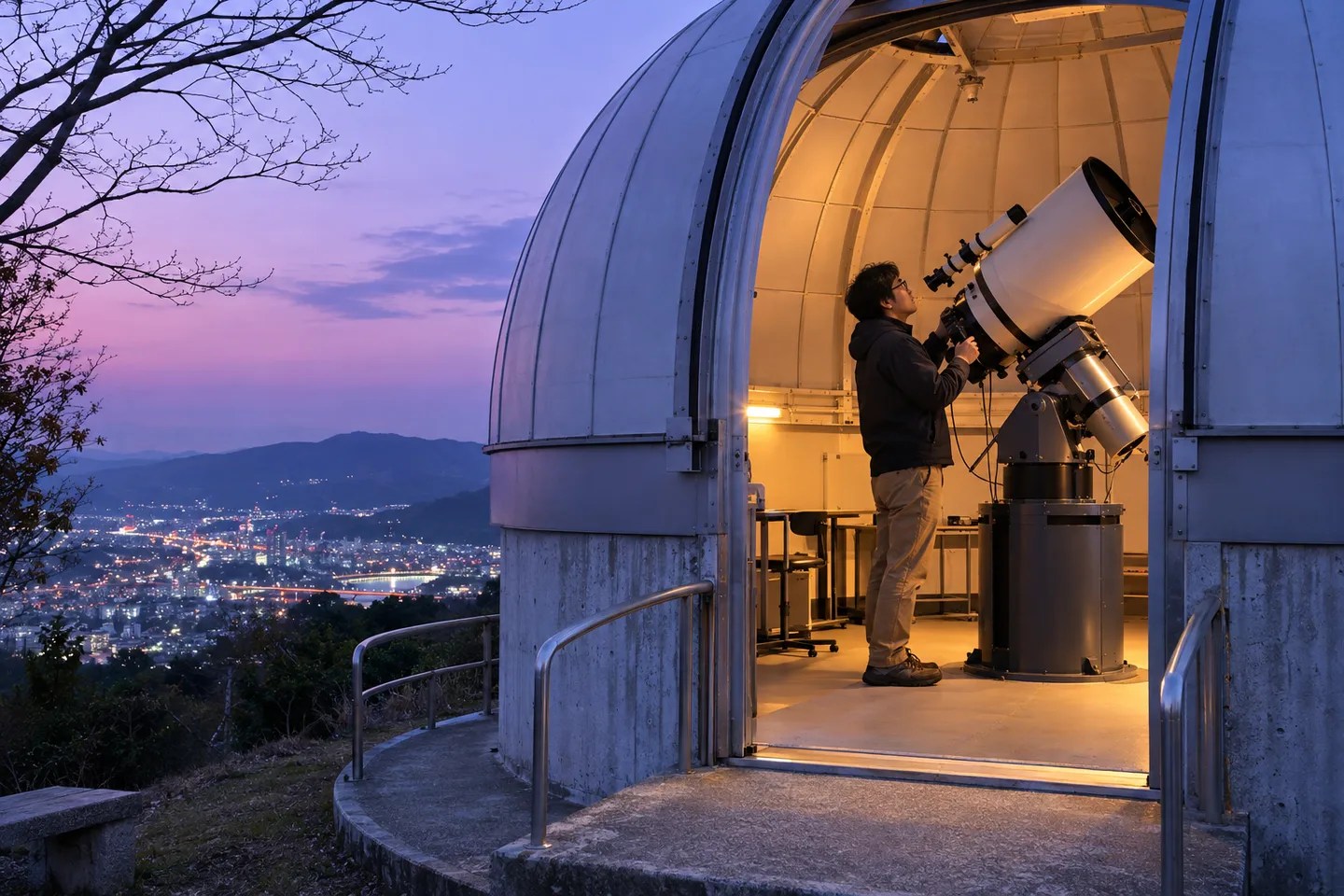
Tabi ni is a way to say that something happens each time a particular event occurs. Imagine visiting a small public observatory. When the clouds clear, the operator checks the view through the telescope. The skies might clear twice in fifteen minutes or stay cloudy for an hour. The check follows what happens in the sky. The clock cannot tell the operator when to do it.
This difference matters when you go from understanding “every time” to saying it in Japanese. An event can recur without following a schedule. A response can recur without producing the exact same result. The lesson uses a fictional observatory to practise the verb and noun patterns, choose a tense for the whole report and distinguish an event from a regular interval.
Make the event clear with tabi ni
Start with 雲が切れるたびに、空を確認します(くもがきれるたびに、そらをかくにんします), “Every time the clouds break, I check the sky.” Put the ordinary dictionary form 切れる before たびに. The object of the check belongs after the comma, in the part that tells us what the operator does. Reading only the first half tells us when to expect the check. It does not tell us what the check involves or what the operator will see.
To test your understanding, imagine that the clouds part, then close in again, then part a second time. Under the procedure the operator describes, the two openings each call for a check. If there is no opening, this sentence supplies no other rule for deciding when to check. The operator could have a separate task that follows the clock, but it would need its own sentence.
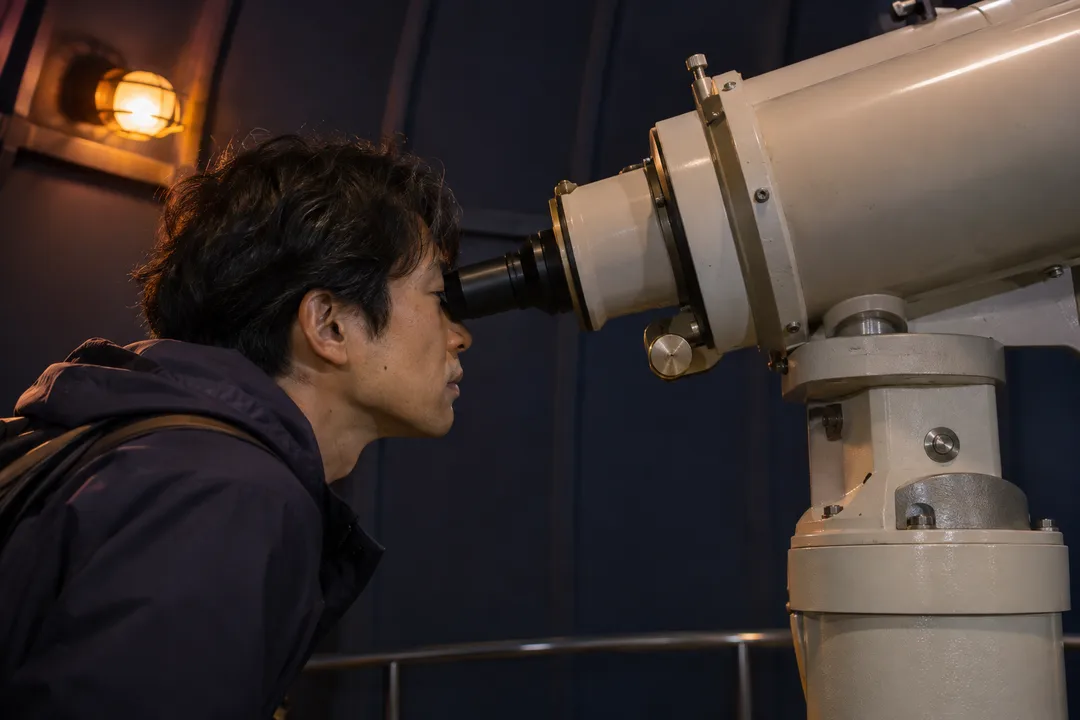
The pattern works with observations as well as planned responses. この望遠鏡をのぞくたびに、何か新しいものが見えます(このぼうえんきょうをのぞくたびに、なにかあたらしいものがみえます)means “Every time I look through this telescope, I can see something new.” It does not guarantee which object will appear. Compared with “I saw something new,” it expresses a regular connection from the observer’s point of view.
Keep the visitor's action distinct from what they notice
A visitor can look through the eyepiece without immediately seeing what the guide has pointed out. のぞく describes looking through or peering into something. 見える describes what is visible. When you practise, say the action first and decide separately what the visitor notices. This also helps with sentences that have different people on either side of たびに. One person can perform the action while another person has the reaction.
For example, 案内の人が説明するたびに、私はメモを取りました(あんないのひとがせつめいするたびに、わたしはメモをとりました)means “Every time the guide explained something, I took notes.” The guide did the explaining. I did the writing. Japanese can leave out an obvious subject, but naming both people once is useful in an exercise or in a conversation where it would otherwise be unclear who did what.
A response can also be involuntary or emotional. 月を見るたびに、初めてここに来た日のことを思い出します(つきをみるたびに、はじめてここにきたひのことをおもいだします)means “Every time I see the moon, I remember the day I first came here.” The first visit happened once. What recurs is seeing the moon and having that memory. If the seeing and the memory happened only on one occasion, the sentence would make the relationship sound stronger than intended.
Turn an occasion into a noun phrase
When the expression before たびに is a noun, use の. 観察会のたびに、ノートを持っていきます(かんさつかいのたびに、ノートをもっていきます)means “I bring a notebook to every observing session.” The noun 観察会 names the occasion. Say 観察会に行くたびに if you prefer to describe what you do as a verb phrase. Now the expression immediately before たびに is 行く, so the の is gone. Both versions can work when describing the same habit.
Make a small set of noun triggers with clear boundaries. 訪問のたびに refers to each visit. 説明のたびに refers to each explanation. These do not have to be timed or planned equally far apart. Other nouns name objects rather than occasions. If you want to say what happens every time you open a notebook, say ノートを開くたびに. The action 開く supplies the repeatable event that the notebook on its own does not naturally express in that sentence.
Write the noun version and verb version side by side. Read the MIT Japanese VI grammar notes for more examples of event nouns and verb phrases. Then turn both your examples into a past report. Leave the noun and its の in place. In the verb version keep the dictionary form before たびに. Change the ending of the response so it expresses what you did on earlier occasions.
Use a unit when you mean a regular interval
Suppose the operator records the temperature every ten minutes even on a cloudy night. 十分ごとに気温を記録します(じゅっぷんごとにきおんをきろくします)means “I record the temperature every ten minutes.” The ten minutes are a unit of time. They do not describe an event like a break in the clouds. You can start a timer for this part of the work even if you have no way to know when the sky will clear.
Now imagine seeing one small spot of clear sky at 8:04 and another at 8:17. If the operator began interval checks at 8:00, the next two checks might be at 8:10 and 8:20. The two sets of times can differ. Decide which one your Japanese sentence is supposed to help a partner predict. The guide to expressing minutes in Japanese can help you read the number in the interval version. It also gives you other quantities to put into the same practice sentence.
ごとに can also be used with other units and with repeated actions in some contexts. An event can happen regularly, and a sentence about each repetition can overlap another way of describing the same routine. For this exercise set up two clear cases, a visible change and a measured interval. If another speaker uses a different pattern, listen for what they treat as the unit or occasion before assuming the meaning must be different.
Report a past visit or a growing change
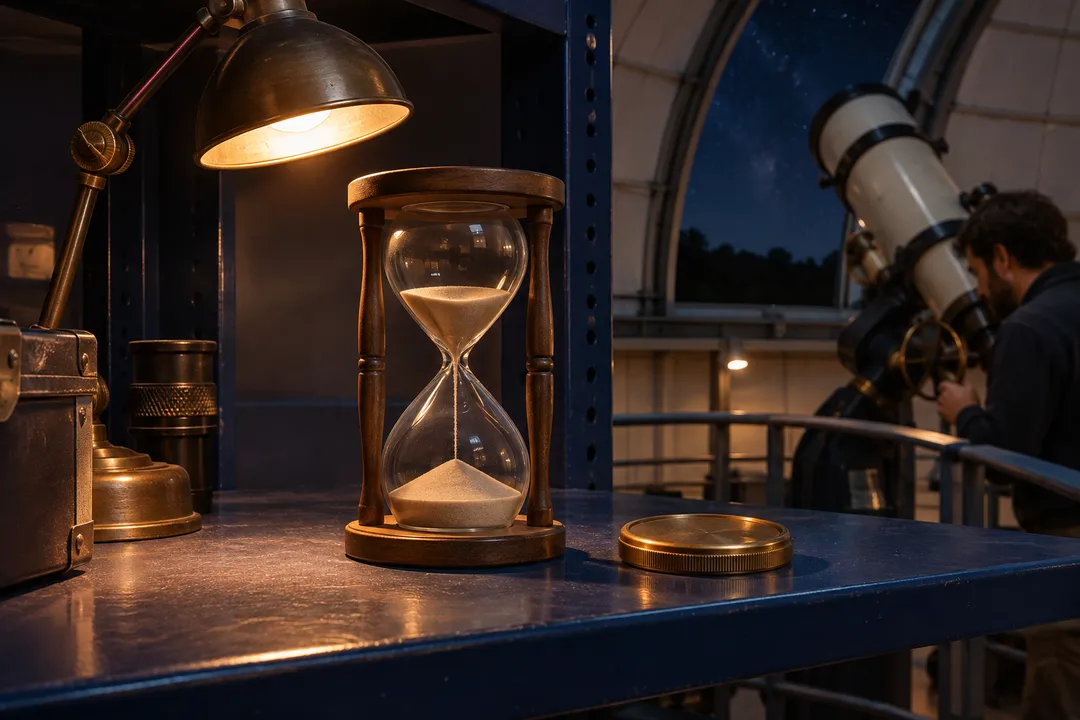
天文台に行くたびに、月の絵を描きました(てんもんだいにいくたびに、つきのえをかきました)means “Every time I went to the observatory, I drew the moon.” English uses a past tense twice here. Japanese keeps 行く before たびに and puts the past ending on 描きました. Think of the first part as giving the recurring occasion and the last part as telling us what happened across those visits. If your interlocutor asks which visits you mean, add a time frame such as 去年, “last year.”
A repeated response can change a little each time. For an example about a skill, try スケッチを描くたびに、少しずつ上手になりました(すけっちをかくたびに、すこしずつじょうずになりました), “Each time I made a sketch, I got a little better.” The act of sketching repeats. The skill gradually develops. If the change matters, 少しずつ helps the listener picture it. See the guide to zutsu for other ways to use this expression of increments.
Plain and polite endings still work the usual way. When speaking to a guide you have just met, 描きました is a comfortable default. In a casual recap to a friend, 描いた can be appropriate. The verb immediately before たびに does not become polite simply because the last word of the sentence is polite. Read the clause aloud before changing your register and check that only the part that needs changing has changed.
Build three cues for your own story
Take a piece of paper and draw three boxes. In the first, write one event that can happen more than once, like a cloud break. In the second, write an observing session as a noun. In the third, write a ten-minute interval. Make a sentence with a response for each cue. If all three responses happen to be “write a note,” it is still a good exercise. You have held the response steady and made the timing do all the work.
Try a one-time scene as a fourth cue. Say 雲が切れたとき、月が見えました(くもがきれたとき、つきがみえました), “When the clouds cleared, I could see the moon.” It fits a single moment in a story. とき can also introduce repeated situations when the rest of the sentence makes that clear. In the new sentence たびに makes it explicit that the response applies on each occasion.
Cover the Japanese and explain the difference in your own words. To test the second box, try turning its noun into a verb ending in the dictionary form. To test the first, put the whole report into the past without changing the verb before たびに. Finally have a partner choose a cue for an everyday activity away from the observatory. If they can work out which moments you are talking about from your sentence, the pattern is doing its job.
Questions about the method
Can I write 度に?
Yes. In this expression it is read たびに. Use the kana spelling if you are still getting familiar with it. The pronunciation is the same in the two spellings.
Does the first event have to be occasional?
No. You may visit every week and still talk about what happens each time you visit. The pattern treats the visits as occasions. If you want to communicate the weekly schedule itself, give the interval or use an expression such as 毎週.
Can I use the word for a date that comes around regularly?
An occasion such as 誕生日, “birthday,” works with のたびに. Its regularity is not a problem. A duration such as 十分, “ten minutes,” describes the spacing between checks and calls for an interval expression.
Does every visit need the same outcome?
You can keep the type of response the same and vary the detail. For example, “I notice something new” makes no claim that you notice the same object. The repeated connection matters more than identical results.