
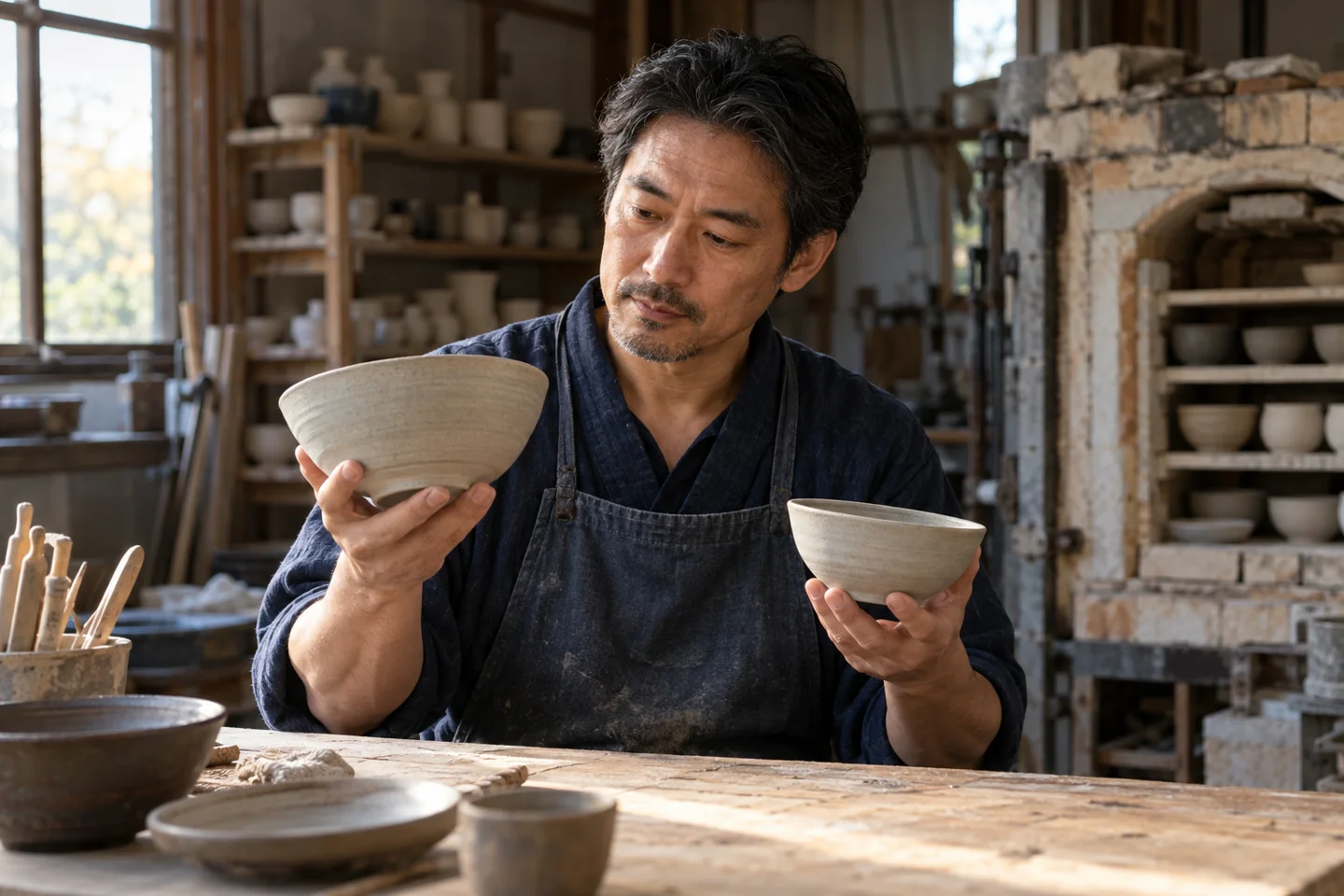
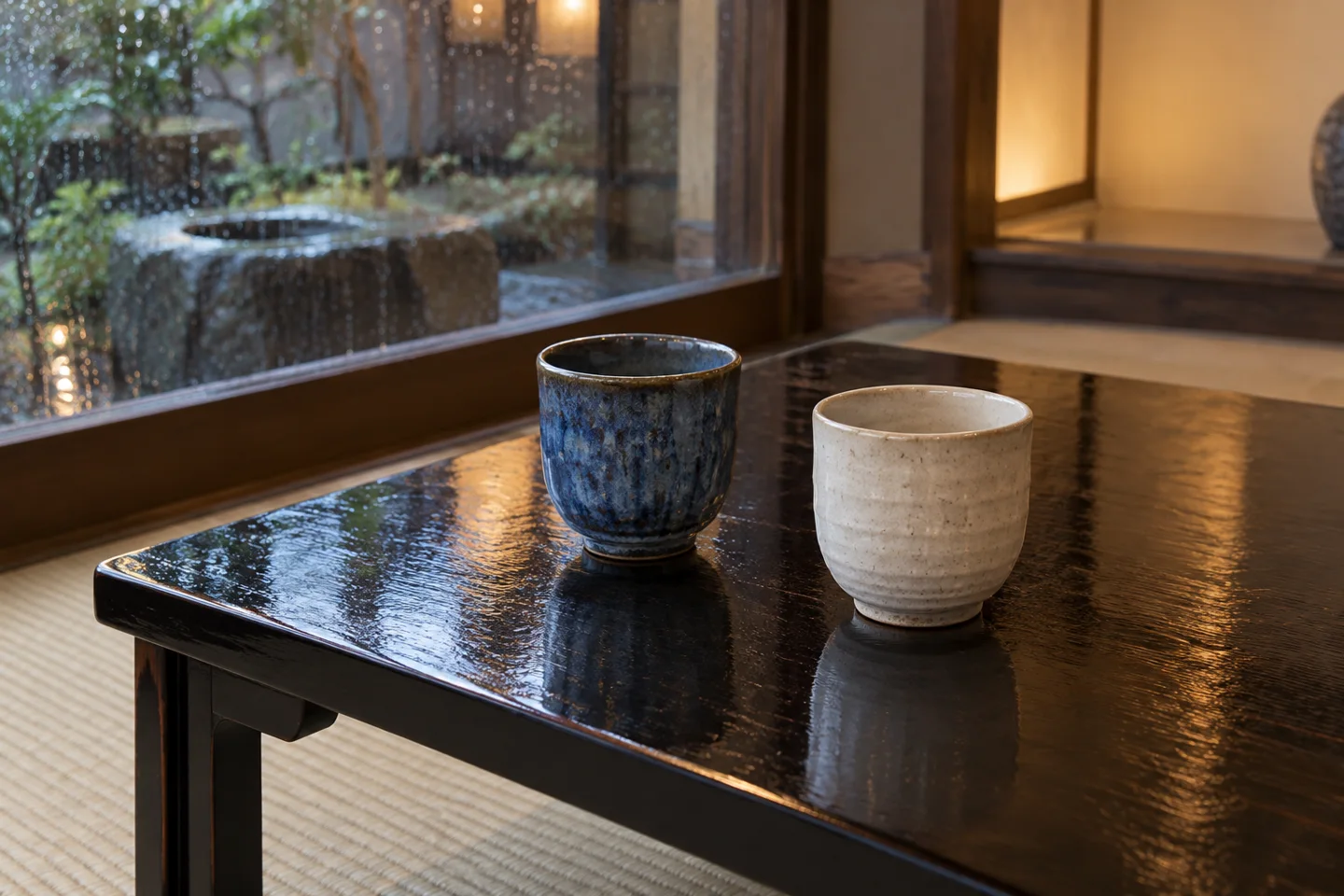
Learning yori and hou ga is easier when you can point to the two things being compared. Imagine a ceramics workshop with a blue cup, a white cup and several bowls. A larger bowl need not be lighter, cheaper or more suitable for your shelf. Each statement needs its own property and its own evidence. Otherwise, a correct-looking pattern can carry a claim you never intended to make.
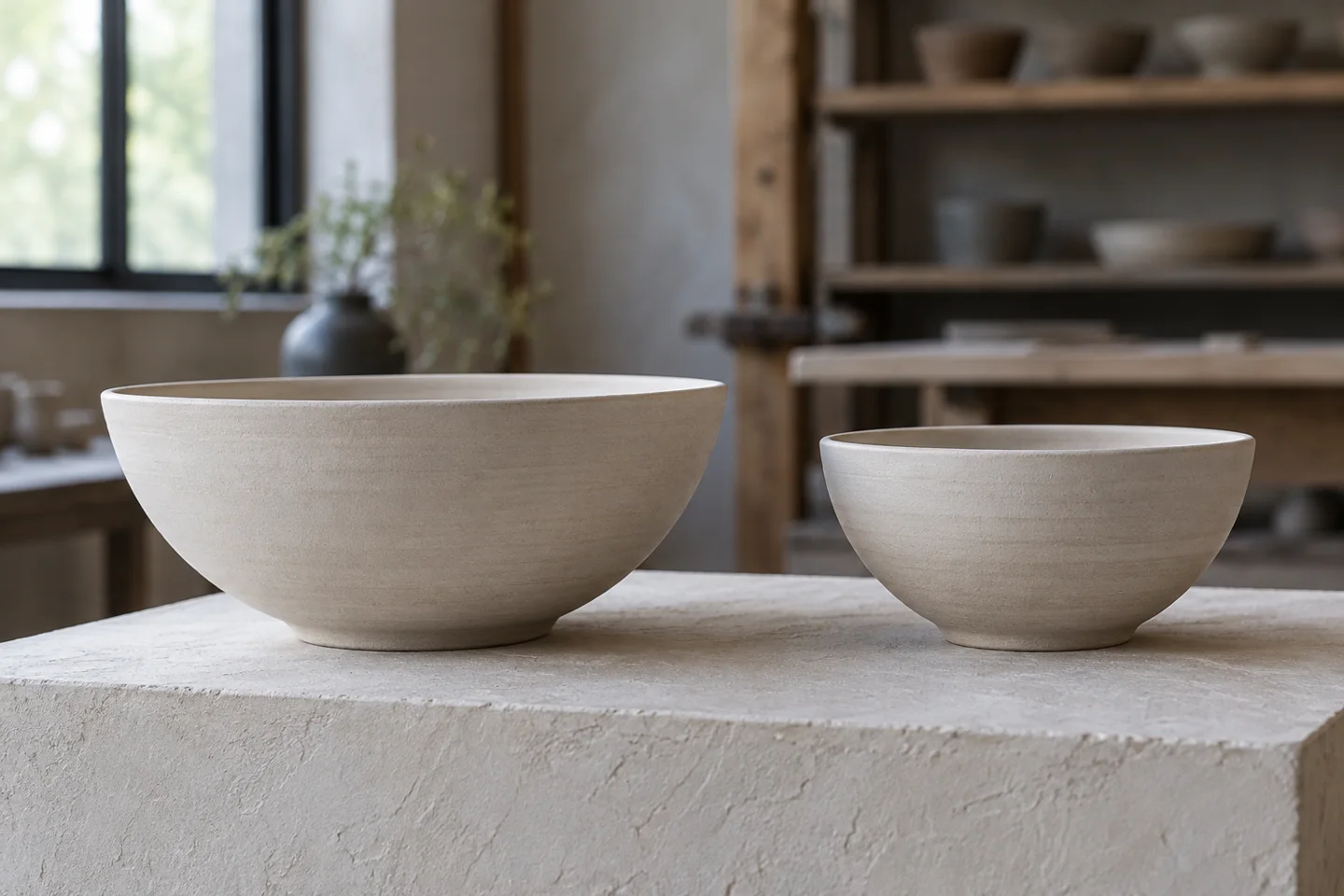
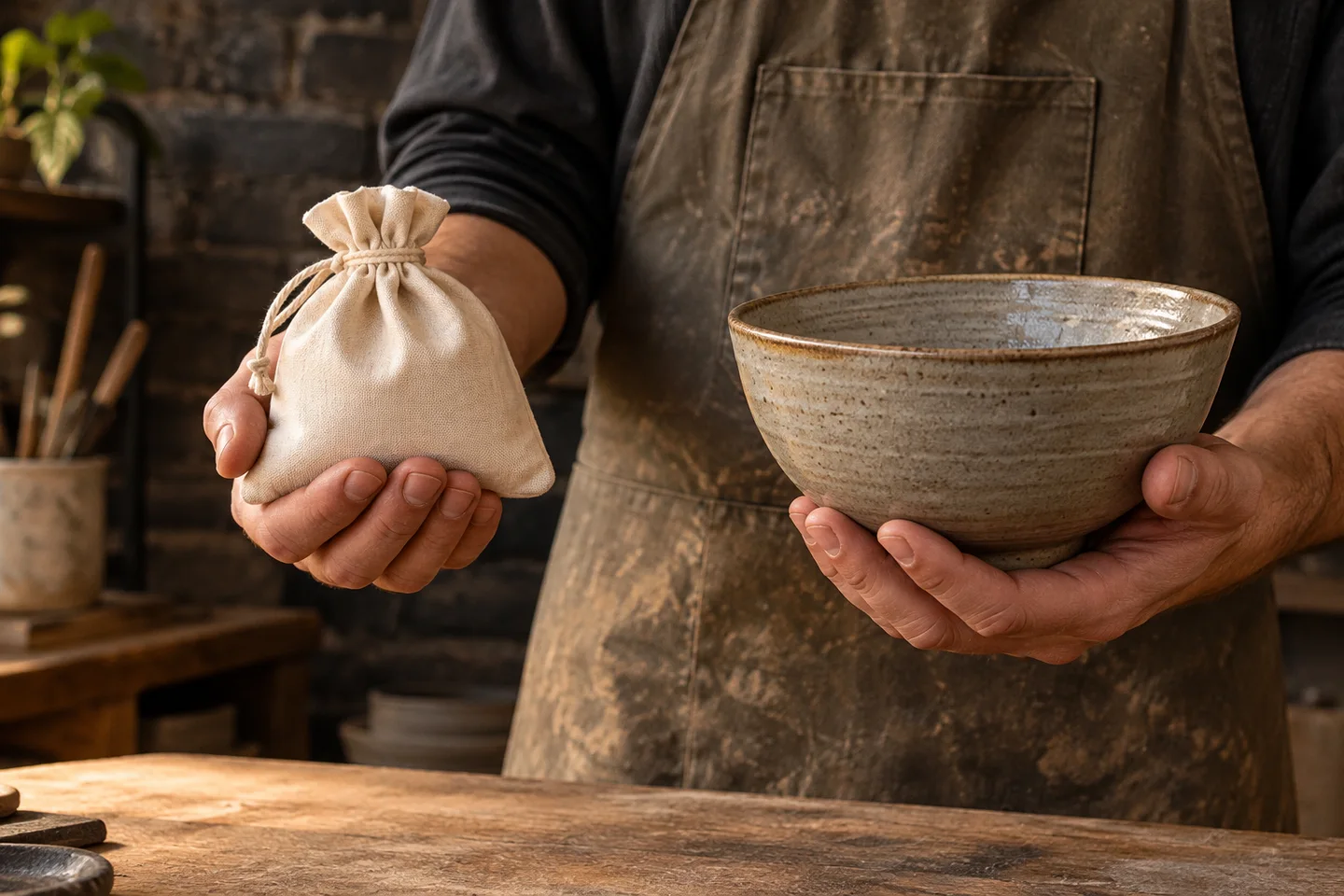
This guide gives you a small, controlled comparison task that works on paper or aloud. You will mark the reference, build a complete sentence, move its phrases without reversing the relation and answer a two-choice question. The prices and weights below are invented exercise data, not facts about pictured products or Japanese shops. The photographs provide objects to talk about; the written cues provide the information you must express.
Start with one property you can actually check
Set out two objects or draw two plain shapes. Give them unambiguous names: the blue cup and the white cup. For our fictional exercise, the blue cup costs 600 yen and the white cup costs 900 yen. Those amounts establish a price comparison only. They tell you nothing about weight, durability, craftsmanship or which cup somebody ought to buy.
Write “blue cup: cheaper; white cup: reference” before trying Japanese. This short preparation fixes the direction of the message. If you begin by inserting familiar nouns into a memorised pattern, you may produce a fluent sentence about the opposite relation. Checking the intended meaning first gives you something independent against which to assess your answer.
Keep the adjective visible beside the two names. 安い, yasui, means inexpensive; 高い, takai, can describe a high price in this context. Our Japanese vocabulary guide explains learning a word with its setting. Here the setting matters because the same objects can support several different comparisons, and the photograph alone cannot supply their prices.
Yori and hou ga keep different jobs
Use 白いカップより青いカップのほうが安いです。Shiroi kappu yori aoi kappu no hō ga yasui desu: “The blue cup is cheaper than the white cup.” 白いカップ, shiroi kappu, is the white cup. 青いカップ, aoi kappu, is the blue cup. The noun phrase immediately before より supplies the comparison reference: here, the white cup.
The blue cup comes before のほうが. Keep の after the noun phrase in this model. The final adjective states the property being compared; it does not acquire an English-style “-er” ending. Our sentence uses 安いです. Read the whole expression as a relationship between two named objects on price, rather than assigning one English comparative word to each Japanese particle.
The Japan Foundation’s comparison pattern verifies this division of roles and the alternative word order. Try tracing each phrase with your finger: white cup plus yori, blue cup plus no hō ga, inexpensive. Then translate the completed claim back into your own language without looking at the exercise cue.
Move the phrases while keeping their attachments
You can also say 青いカップのほうが白いカップより安いです。Aoi kappu no hō ga shiroi kappu yori yasui desu. This still means “The blue cup is cheaper than the white cup.” The phrases have moved, but the white cup remains attached to より. The first noun in the sentence is therefore not a reliable shortcut for identifying the reference.
Contrast that with 青いカップより白いカップのほうが安いです。Aoi kappu yori shiroi kappu no hō ga yasui desu. It says “The white cup is cheaper than the blue cup.” Both noun phrases now have different jobs. The sentence can be grammatical while contradicting our invented price data; a tidy ending does not repair a reversed message.
Make two short phrase cards if this is difficult. Put the entire white-cup-plus-yori phrase on one and the blue-cup-plus-no-hō-ga phrase on the other. Exchange their positions while leaving the words within each phrase intact. This is a temporary checking aid, not a claim that all Japanese word order is freely interchangeable.
A different adjective asks for a different comparison
For a second exercise, a small dish weighs 200 grams and a large dish weighs 500 grams. Say 大きいお皿より小さいお皿のほうが軽いです。Ōkii osara yori chiisai osara no hō ga karui desu: “The small plate is lighter than the large plate.” Here お皿, osara, refers to a plate or dish. Use the named dishes in the written exercise, even though the studio images also contain bowls.
軽い, karui, means light in weight; 重い, omoi, means heavy. 小さいお皿より大きいお皿のほうが重いです。Chiisai osara yori ōkii osara no hō ga omoi desu states that the large dish is heavier than the small one. The reference and the higher-degree item change with the adjective. Neither statement says anything about price.
Do not conclude that the larger object must always be heavier. These particular exercise numbers support the relation. An actual object would need checking. Likewise, a hand holding something is not a scale. Keep visual size cues, supplied measurements and personal preference separate so the grammar practice does not quietly become an unsupported factual claim.
Answer the question that was actually asked
Ask 青いカップと白いカップと、どちらが安いですか。Aoi kappu to shiroi kappu to, dochira ga yasui desu ka: “Which is cheaper, the blue cup or the white cup?” The question names two choices and a property. With our price data, answer 青いカップのほうが安いです。Aoi kappu no hō ga yasui desu: “The blue cup is cheaper.”
The white-cup reference can remain unstated because the question has supplied the pair. AJALT’s original lesson demonstrates this question-and-answer pattern. For an isolated practice sentence, retain the full comparison until you can recover both objects confidently. A short answer is useful in context; a missing reference is confusing when nobody knows what was compared.
Answering “the blue cup is lighter” would not answer the price question, even if that separate statement happened to be true. Listen for the adjective as carefully as for the object names. Our Japanese grammar guide offers broader sentence practice; this task isolates the relationship so you can diagnose a reversal without introducing many unfamiliar constructions.
Six short tests for your reference check
Cover the answers. One: the blue cup costs 600 yen and the white cup 900 yen. Complete 白いカップより__のほうが安いです with the correct noun phrase. Two: move the two full comparison phrases in your completed sentence without changing its meaning. Write both versions and underline the phrase containing より in each.
Three: translate 青いカップより白いカップのほうが高いです。Aoi kappu yori shiroi kappu no hō ga takai desu. Does it agree with the supplied prices? Four: someone asks which cup is cheaper. Give a short answer using のほうが, with the pair already established. Explain which reference the conversation leaves unstated.
Five: the small dish weighs 200 grams and the large dish 500 grams. Which is lighter, and which object should carry より in a complete answer? Six: can the blue cup be called the cheapest item in the entire shop from the two prices alone? For every answer, give a reason tied to the cue rather than the order in which the objects appeared.
Check the relation before correcting the spelling
One: 青いカップ, aoi kappu. Two: 青いカップのほうが白いカップより安いです is the reordered version; the white cup still carries より. Three: “The white cup is more expensive than the blue cup.” This agrees with 900 versus 600 yen. The adjective 高い makes the white cup the higher-priced item without changing the exercise data.
Four: 青いカップのほうが安いです。The omitted comparison reference is the white cup. Five: the small dish is lighter; put the large dish before より and the small dish before のほうが. Six: no. There may be other products with lower prices. A comparison between this pair does not establish a shop-wide superlative or an overall recommendation.
If your noun was right but its phrase marker was wrong, record a relation error. If you answered a weight question with a price adjective, record a property error. If you extended the answer to every item in the shop, record a scope error. These notes point to different repairs; simply copying the finished sentence hides which decision went wrong.
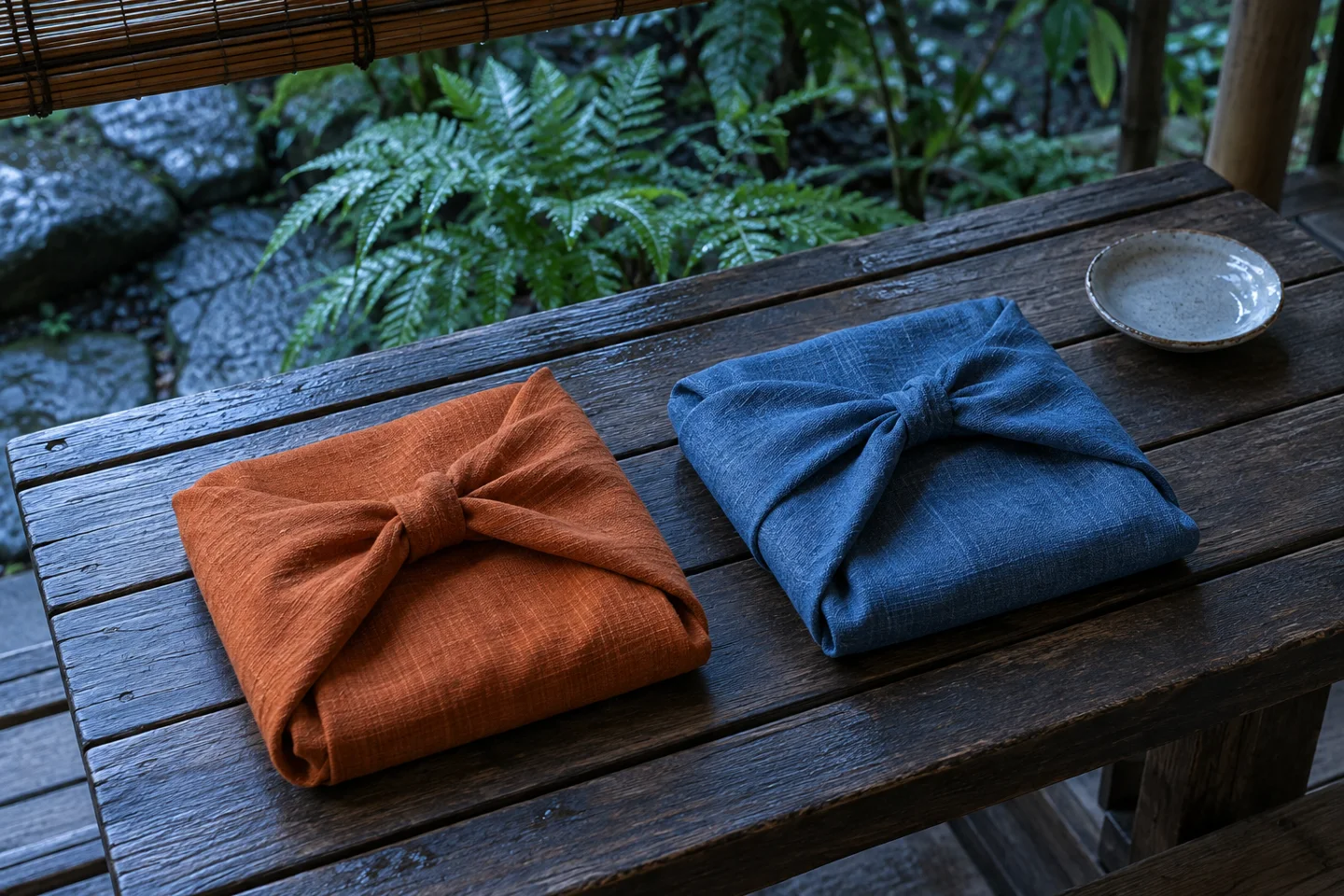
Make a fresh comparison with a clear limit
Choose a new pair and supply one checkable property. You could draw two dishes with different stated weights, or compare two known prices on a practice sheet. Write the intended claim first, then produce a full Japanese comparison. Hide it, reorder the phrases from memory and check whether the reference stayed attached to より.
Next, ask a partner a two-choice question with that same adjective. Accept a shorter answer only when both people can recover the omitted reference. Change the property on a later attempt and reconsider the evidence. There is no need to invent a story, a purchase decision or a preference merely to make the exchange feel complete.
Keep the task small enough to explain your answer. The Japanese practice guide can help you fit a short exercise into a session. Finish by naming the reference, the compared item and the property. If all three match your cue, you have checked a meaningful comparison rather than just remembered a familiar sequence of sounds.
Questions about the method
Does yori always follow the first object mentioned?
No. Follow the attached noun phrase, not its position. Both full word orders in this lesson keep the white cup before yori while saying that the blue cup is cheaper. Moving whole phrases differs from exchanging their markers.
Can I leave out the yori phrase?
Yes, when the comparison reference is clear from the exchange. A two-choice question often establishes it. Keep the full expression in an isolated drill until you can name what has been left unstated and why the listener can recover it.
Does cheaper mean the best choice?
No. Our sentence compares price between two specified objects. Suitability, quality and personal preference require separate information. It also does not show that the object is cheapest among every product in a shop.