
Te oku helps you explain why you do something now when its benefit comes later. “I wash the vegetables” names an action. “I wash them beforehand so they are ready for the meal” connects that action to a later need. Japanese can make this preparatory viewpoint explicit with a verb in the te-form followed by おく. The challenge is choosing a meaningful later purpose rather than attaching another ending to every task.
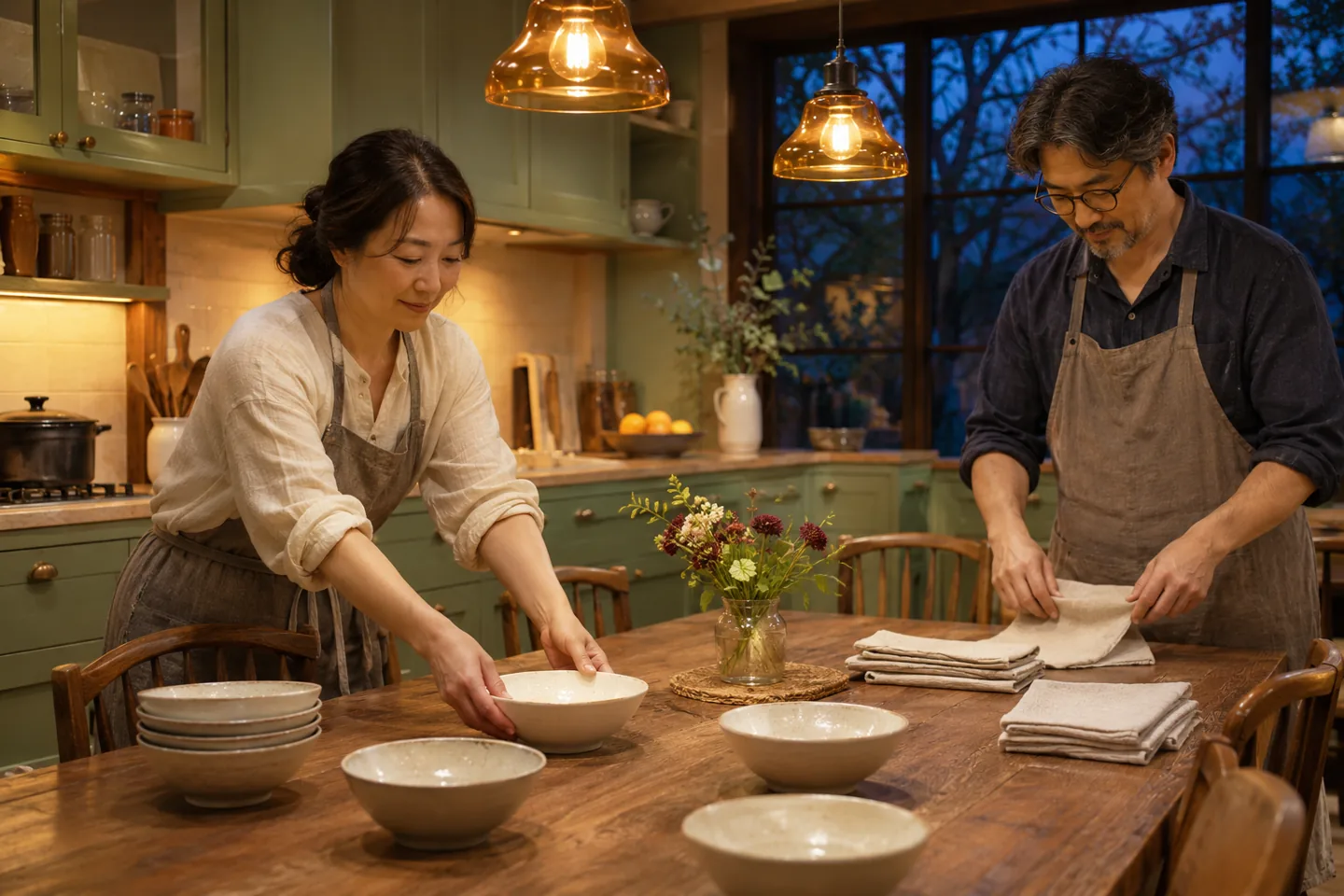
Imagine an evening community meal. Before the guests arrive, someone washes greens, another person arranges bowls and a volunteer checks a useful word during vocabulary review. This fictional kitchen gives you a practical sentence task alongside KanaWay. You will retrieve a familiar action, build its preparatory form and check whether the sentence says what you intend. The writing and checking happen separately from the app; no automatic assessment of your own sentences is assumed.
Te oku connects an action with a later need
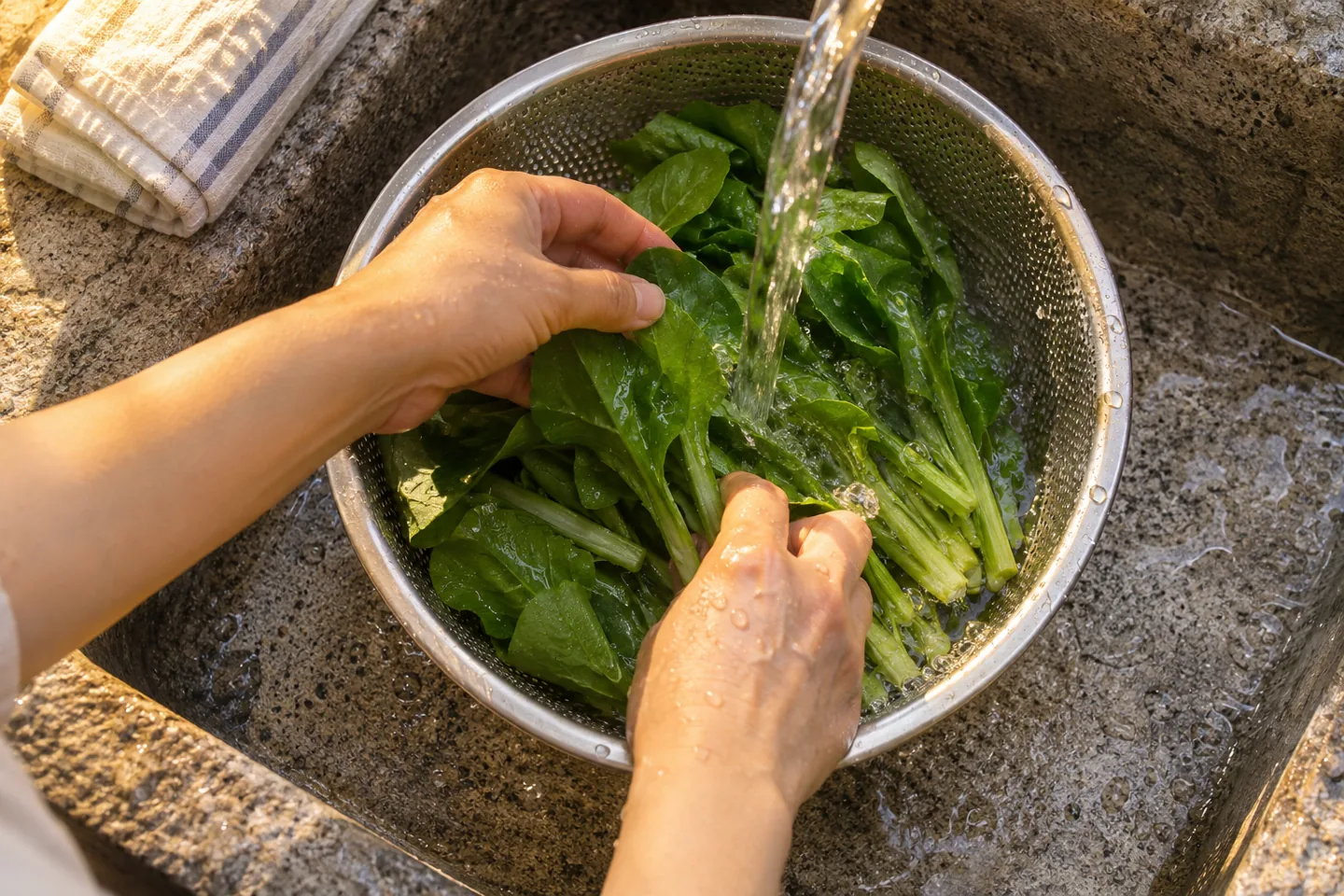
Begin with two notes: the action and the situation it prepares for. For the kitchen, the action might be washing vegetables, and the later situation is using them for the meal. 野菜を洗っておきます(やさいをあらっておきます, yasai o aratte okimasu)means “I will wash the vegetables beforehand.” The sentence presents washing as preparation. Context supplies the later purpose; the ending does not tell your listener exactly which dish you plan to make.
Compare 野菜を洗います, “I will wash the vegetables.” That ordinary statement can be perfectly appropriate. Adding おきます changes the viewpoint by highlighting preparation, rather than making the action inherently more polite, more complete or more efficient. Choose the extra meaning when your listener needs it. If you are simply naming what you are doing during a language exercise, the plain action may already answer the question.
A useful check is to finish “so that later…” in your own language. If you cannot name any later use, reconsider the construction or clarify the context. Your reason need not be an elaborate plan: setting bowls out before people arrive is enough. The St. Olaf teaching note provides the basic preparation pattern. Your own practice should add a concrete situation instead of copying its example and changing only a noun.
Build the te-form first, then change oku
Attach おく to a correctly formed te-form. 洗う(あらう, arau), “wash, ” gives 洗っておく, while 並べる(ならべる, naraberu), “arrange, ” gives 並べておく. A verb whose te-form ends in で keeps that sound: 読む(よむ, yomu)becomes 読んでおく, “read beforehand.” The helping verb is still おく. The connection depends on the first verb, so do not replace every ending with て without checking its verb group.
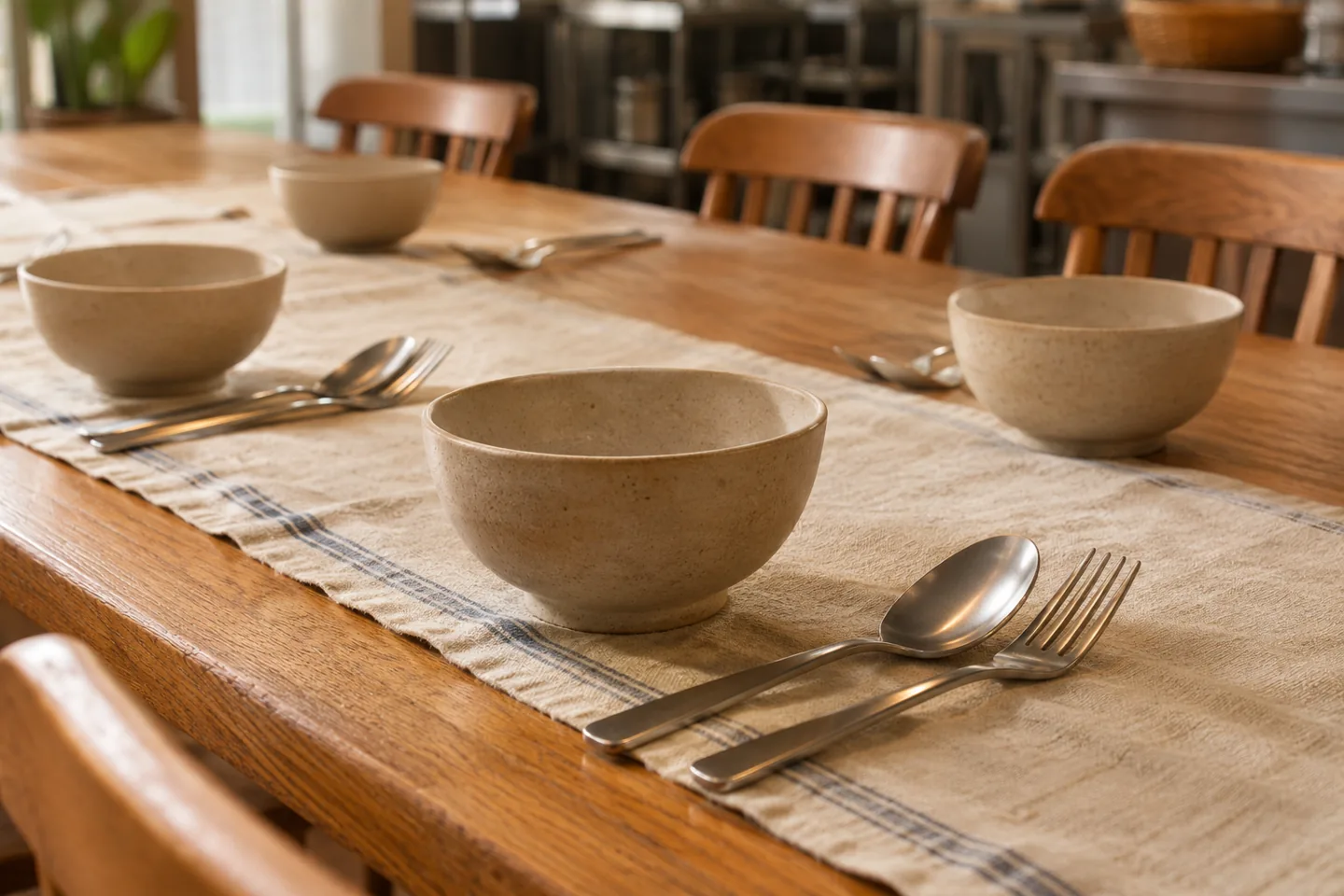
For a polite non-past sentence, use おきます: お皿を並べておきます(おさらをならべておきます, osara o narabete okimasu), “I will arrange the plates beforehand.” Here, お皿 is a common way to refer to plates or dishes. In our exercise, say what items you mean instead of deciding that every bowl in a photograph must be a particular Japanese dish type. The grammar task concerns a preparation, not a tableware classification test.
The final verb carries the ending you need. 洗っておきました reports that you washed something beforehand; 洗っておきません says you will not do that preparation in the polite non-past. Keep the first te-form intact while changing the end. If this part is uncertain, use the te-form guide before practicing the longer pattern. Repairing the base connection separately is easier than trying to correct vocabulary, tense and meaning at once.
Follow the kitchen timeline without inventing a result
Give the fictional scene three moments: preparation, arrival and the meal. Before arrival, someone says 野菜を洗っておきます. After the washing is finished, 野菜を洗っておきました tells the others that this preparation has been done. The past ending reports a completed action viewed as preparation. It does not by itself promise that every later step will succeed, that the food is ready to eat or that all work in the kitchen is complete.
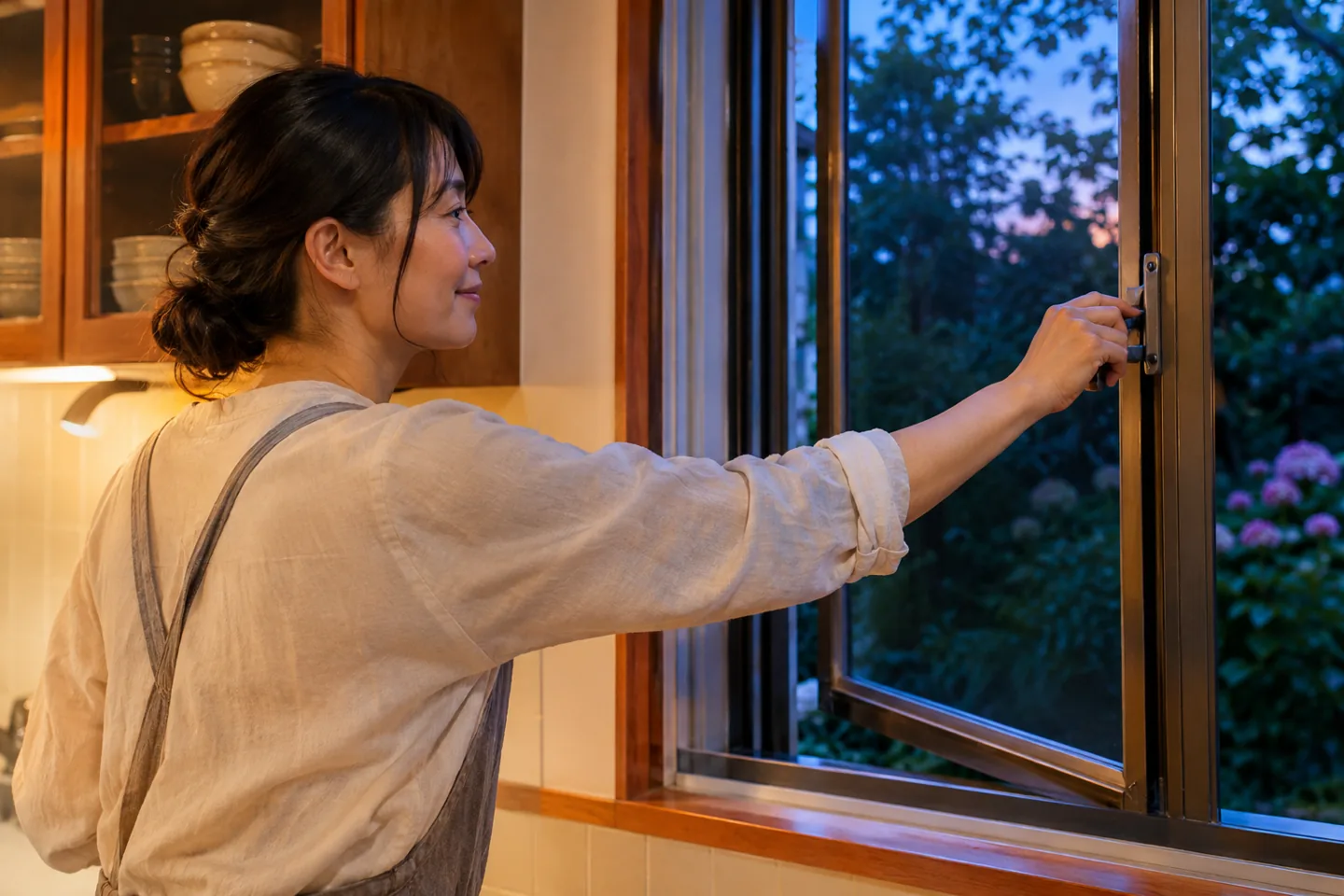
For another task, 窓を開けておきます(まどをあけておきます, mado o akete okimasu)can mean “I will open the window and leave it open.” In a suitable context, the speaker intentionally keeps the resulting situation available for later. Explain the purpose in your practice notes, such as airing the room before the gathering. A picture of an open window alone does not prove who opened it or what they intended.
Keep those observations separate. “The window is open” describes a state; “I will open it and leave it open” presents an intentional action and its continuation. Other Japanese constructions can describe the state, but this lesson does not treat them as interchangeable endings. Ask your partner to identify the action and later purpose before discussing the conjugation. If the sentence suggests preparation while your sketch shows only an unexplained state, add context rather than asking the sketch to prove an invisible intention.
Use a familiar review word to make your own sentence
KanaWay's published app overview describes spaced review that brings earlier language back. When an ordinary review presents an action word you already know, use it as a starting point for this separate writing exercise. Complete the review in its normal way, then write the word in your notebook with the meaning you actually encountered. You do not need to assume that a specific kitchen verb appears in your account or that you can create a special review deck.
Choose one suitable verb and give it a later purpose. For 読む, imagine reading an explanation before helping with a task: 説明を読んでおきます(せつめいをよんでおきます, setsumei o yonde okimasu), “I will read the explanation beforehand.” Write the basic action first, add its te-form, then attach おきます. Check the meaning and form against a reference or with a qualified speaker. Finishing a vocabulary prompt does not validate a new sentence automatically.
If your current review contains no suitable verb, use one of the verified examples here on paper. The exercise should follow the available material rather than encourage you to skip unfamiliar review items until a preferred word appears. Our practice guide offers a broader place to organize short recall tasks. Keep the app's review result and your sentence check as two separate pieces of evidence: remembering a word and expressing a preparatory intention are related skills, but one does not establish the other.
Recognize a short spoken form without changing register blindly
You may hear 買っとく(かっとく, kattoku)for 買っておく, “buy beforehand, ” or 読んどく(よんどく, yondoku)for 読んでおく, “read beforehand.” The Japan Foundation lesson illustrates this kind of spoken shortening. Recognizing the sound helps you connect a familiar meaning to ordinary speech. It is not a reason to replace every full form in every conversation or assume that unfamiliar speakers always prefer casual language.
For this beginner task, produce the full polite form first and treat the short form as a recognition exercise. Say what the long form would be, then identify the preparation in the situation. Do not read とく as a new verb you must add after an already complete おく. It represents a contraction of part of the longer expression. With でおく, the corresponding short sound is どく, so the first verb's te-form still matters.
Also distinguish preparatory おく from the ordinary verb 置く, “put/place.” A sentence about putting a bowl on a shelf can use the ordinary verb; a preparation construction attaches おく after another action. Looking only for the sound oku is not enough. Ask which action comes before it and how the sentence connects to a later use. When context or register is unclear, keep the full expression in your own answer and ask for clarification rather than copying a short sound without understanding its role.
Check three answers and change one detail
Try a preparation round with the kitchen notes hidden. First, you intend to wash vegetables for a later meal: 野菜を洗っておきます is suitable. Second, you have already arranged the dishes before the guests arrive: お皿を並べておきました is suitable. Third, you merely notice that a window is open and know nothing about the earlier action. Do not turn that observation into a first-person promise to open it; the message would change.
For each answer, explain the action, the later purpose and the time viewpoint. In the second example, the preparation is already done, so おきました matters. In the first, the non-past form fits the intended action in the given context. A correct explanation is useful even if you need to look up a te-form. Keep that meaning decision and repair the form. Conversely, a perfectly copied conjugation still needs correction if it describes the wrong task or time.
For a final round, change just one detail: the action, the later event or whether the preparation has happened. Make a new question for your partner and let them explain what they understood. Return to a familiar review word on another day and build a different sentence around it. There is no fixed score or promised timetable. The practical goal is to make the reason for preparing something recoverable from the sentence and its context, instead of treating a longer verb ending as proof of better Japanese.
Questions about the method
Does te oku always mean doing something immediately?
No. It presents an action with a preparatory or intentionally maintained effect in a suitable context. The action may be planned for later, and the surrounding time expressions help establish when it happens. In our kitchen task, you must identify both the preparation time and the later need. Do not translate the ending mechanically as “right now, ” or assume that a non-past sentence proves that the action has already been completed.
Is te oku the same as tsumori?
No. つもり expresses an intention or plan. ておく presents an action as preparation or keeping something suitably available. A person can intend to do many things that are not preparations for another occasion. These meanings can interact in larger sentences, but this exercise practices one contrast at a time. Name the later purpose before choosing the preparation pattern; remembering the word “plan” alone does not resolve the choice.
Can KanaWay check the sentences I write here?
This exercise does not assume automatic checking of your original sentences in KanaWay. The documented spaced-review workflow can help you retrieve a known word. You then build and verify a new sentence separately, using the examples, a grammar reference or a qualified speaker. A review answer and a sentence judgment concern different work. You can also do the whole task with paper notes; no account-specific lesson, custom-card feature or additional purchase is required by the exercise.