

You recognise the characters in きっぷ, but your mouth wants to say ki-tsu-pu. Or you read the word as kipu and lose the extra consonant time altogether. Small tsu creates a useful learning problem because recognising a shape and producing its timing are separate skills. This guide gives you four ordinary words and a way to find out which skill actually needs attention.
Start with きっぷ, kippu, meaning ticket; きって, kitte, meaning postage stamp; ざっし, zasshi, meaning magazine; and がっこう, gakkō, meaning school. Our romanization gakkō shows the long final vowel. The kana spelling keeps う, so you will also see gakkou as a spelling-oriented transcription. Neither convention turns the little っ into a separate spoken tsu.
You need a pencil, somewhere to note four answers and a checked audio example when you move to listening. No special app, timer or paid resource is required for the written exercises here. If kana recognition is still uncertain, use our hiragana guide first. A pronunciation problem is much easier to diagnose when the neighbouring characters no longer need guessing.
Small tsu marks consonant time, not a new vowel
Compare the full character つ with the smaller っ. In the ordinary middle-of-word examples here, っ marks a lengthened consonant rather than the syllable tsu. When you write the reading in familiar romanization, the consonant is doubled: kippu and kitte. Keep this as a reading aid, not an instruction to make two separate explosive consonant releases.
A useful practice division for きって is ki / っ / te. It has three morae, the timing units used for this explanation. The middle place does not ask you to pronounce a vowel. Prepare the following t, briefly hold its closure, then release into te. Counting the places slowly can make an omission visible, but natural speech is not a metronome with mechanically identical intervals.
The precise physical action depends on the consonant. A t or p involves a closure; the longer sh in zasshi involves sustained friction. Calling every example a silent pause would hide that difference. You can begin with the written divisions, then listen for the actual sound of the chosen word rather than forcing all four into one mouth movement.
This article stays with familiar word-internal examples. Expressive word-final small tsu, special loanword spellings and dialect differences need more context than this first exercise. You do not need to solve all of them before learning to keep the consonant time in a ticket or a stamp.
A ticket gives you a clear p closure
Read きっぷ as ki / っ / pu. The first and last kana supply vowels; the small character occupies the middle timing position without adding another one. Say ki, bring your lips together for the p, hold that closure briefly, then release into pu. Avoid adding an English uh between the two parts, and do not try to pronounce a whispered tsu there.
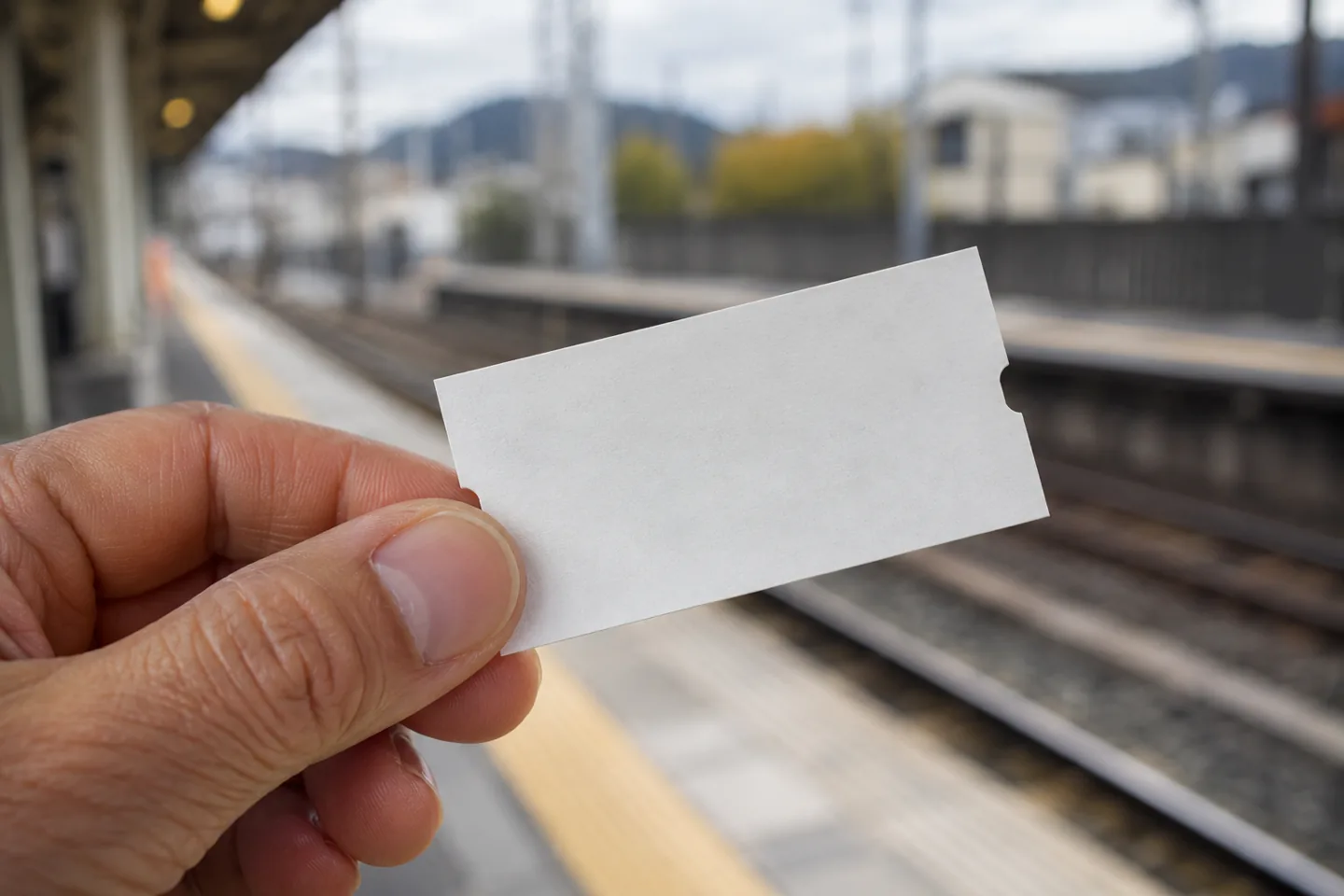
The photograph is a reminder of the meaning, not a pronunciation diagram. Cover the printed Japanese and write the word for ticket from memory. Reveal きっぷ and check three things independently: the first kana, the small character, and the final pu. An answer with the right number of shapes but a full-size つ still needs correction because it represents a different reading instruction.
Now separate recall from sound. If you can write the word but are unsure whether your consonant is held, keep the spelling and work with an audio model. If you can repeat it while looking yet omit っ when writing later, the next task is spelling retrieval. Repeating the same visible line twenty times would not specifically address that problem.
For a short note, use a concrete observation: “I wrote kipu without the small mark” or “I inserted an extra vowel after ki.” That is more actionable than rating the whole word as bad. On the next attempt, change only the feature named in the note and keep the meaning stable.
A stamp lets you test the t without changing tasks
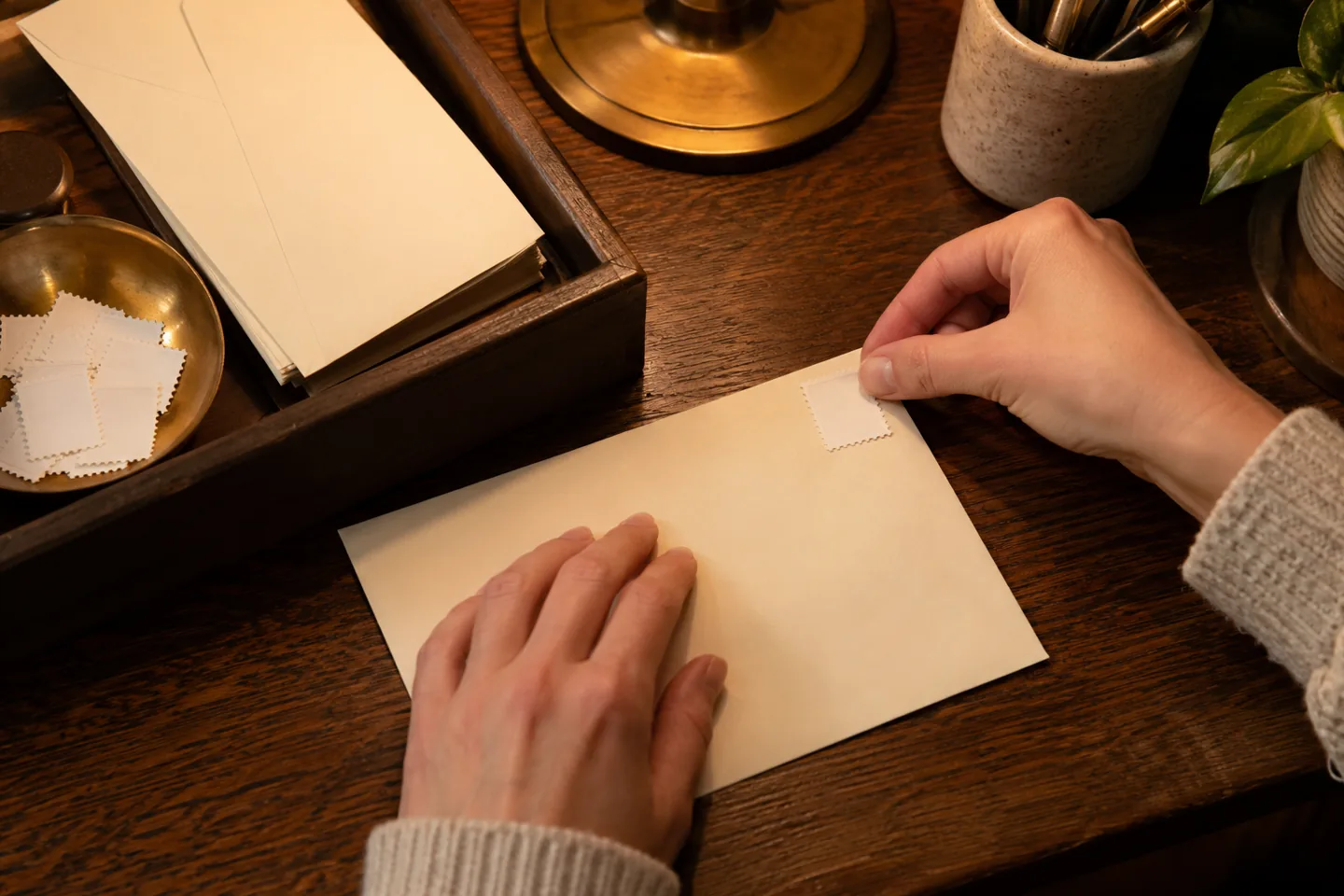
For きって, use ki / っ / te. The structure resembles the ticket word, but the consonant is t rather than p. Read the meaning before you attempt the sound: this word means postage stamp. We are practising an ordinary noun, not asking you to infer a verb form from a picture or to build a sentence beyond the example.
Close for t before the final te, keep the closure briefly, then release. A much louder t is not the target. Loudness, pitch and consonant duration are different properties, and a forceful stressed syllable can conceal an omitted hold. Work at a comfortable volume and listen for where the transition occurs rather than how emphatic it feels.
For a written comparison, place the checked forms きっぷ and きって on separate lines. Hide the last kana and ask which object each line names once it is restored. Then hide the whole word and write it from the meaning. This two-step task distinguishes a mistake about the object from a mistake about the shared small character.
The sh in magazine should not become an empty gap
Read ざっし as za / っ / shi, with the familiar romanization zasshi. The double s spelling is a cue to the longer consonant, while the actual sound before the final vowel is sh. Compared with the t and p examples, this is why “put silence everywhere” is an incomplete instruction: sustained friction is part of the useful distinction here.
Keep the word together when returning to natural speed. A slow division is a practice scaffold, not the final way to say the noun in conversation. You may temporarily exaggerate the consonant enough to notice it, then compare with a checked recording and reduce the exaggeration. Do not choose a fixed duration in milliseconds from a written guide.
Use the picture to recall magazine, then write ざっし. If the shape of ざ or し is itself uncertain, return to character recognition for that item. The small-tsu drill cannot reliably repair every kana at once. Our Japanese pronunciation guide gives the broader sound context; this exercise intentionally tests one narrower feature.
A useful listener task is to hear a known recording before viewing the spelling, then explain where you expect the small character to appear. Verify with the source text afterward. The recording must actually contain your chosen word; an unrelated clip with vaguely similar consonants cannot confirm your particular answer or tell you whether your own version matches.

School contains two timing questions
The spelling がっこう divides into ga / っ / ko / u for the present counting task. It has four morae. Small tsu contributes consonant time before k, and the final う helps represent the long o in this word. These are two separate details. Adding a long vowel cannot compensate for dropping the consonant hold, and holding k does not remove the final vowel length.
Our reading gakkō makes the long vowel explicit. You may encounter gakkou when a resource follows the kana letters more closely. Compare either romanization with the actual kana and a recording; do not assume different Latin spellings necessarily represent different Japanese words. Keep the chosen transcription consistent within your own practice notes.
Cover the word and write school from memory. Check the small っ first, then the final う. If both are present, switch to sound comparison and ask two questions separately: did I retain the k closure, and did I retain the vowel length? A single score for the whole word would hide which feature caused uncertainty.

Six checks before you look at the answers
Answer these prompts on paper before reading the next section. One: in きっぷ, should the small character be spoken as a full tsu? Explain what happens instead. Two: write the kana for postage stamp and divide it into timing positions. Three: which consonant is extended in ざっし? Four: how many morae does がっこう have in our written division?
Five: a learner writes きっぷ correctly but says an extra tsu between ki and pu. Is the next task spelling recall or pronunciation adjustment? Six: another learner imitates a checked recording of kitte accurately while looking, but later writes the word without っ. Which task would reveal the unresolved difficulty more directly: another visible repetition or writing from the meaning?
The prompts deliberately mix explanation, spelling, counting and diagnosis. They are not six interchangeable measures of fluency. Leave a blank when unsure and record whether the uncertainty concerns a kana, a meaning or a sound. You learn more from that distinction than from guessing until all six lines appear complete.
After the first pass, reorder the prompts. Begin with the magazine or school rather than the ticket. Changing the order removes some help supplied by the earlier explanation and makes recall less dependent on the page sequence. If you practise with someone, ask them to name the object rather than show the answer-bearing word. They should still use the checked answer key when correcting spelling.
Answers and a small next step
One: no separate tsu belongs in this ticket example; retain the p closure before pu without inserting its own vowel. Two: きって, divided ki / っ / te, gives three morae. Three: the longer consonant is sh; the teaching transcription is zasshi. Four: ga / っ / ko / u gives four morae, including both the consonant timing place and the final vowel-length place.
Five: adjust pronunciation, since the written form is already present. Listen, attempt the transition and compare, without treating correct spelling as proof of correct sound. Six: writing from the meaning exposes the missing spelling recall more directly. A visible repetition may help sound practice, but it leaves the troublesome character available to copy.
For checked background, the MIT-hosted kana introduction explains the consonant-doubling function. The Japan Foundation Madrid beginner notes also introduce the small form in their sound overview. The exercises and error log here are an original practice sequence, not a copied test from either source.
Choose just one unresolved item for another attempt later. Our Japanese practice guide suggests ways to turn a specific difficulty into a manageable session. Stop when you can name the remaining problem accurately; faster repetition is not automatically a better check. On your next visit, start with the object cue and see whether the small mark survives without the model in view.
Questions about the method
Is small tsu a quieter version of tsu?
Not in the ordinary middle-of-word examples here. Full-size つ represents tsu; small っ indicates consonant length. Lowering your voice while saying tsu would still add a sound that these spellings do not ask for.
Do I always make a silent pause?
No. Closure is useful for t, p and k in these examples, but a longer fricative such as sh involves continued friction. Use a checked word recording instead of treating one physical instruction as a rule for every consonant.
Can I assess pronunciation from spelling alone?
You can check where the character belongs and explain the intended timing. You cannot verify the sound of your own spoken attempt from the written form alone. Compare a recording with a reliable model or ask a qualified teacher to listen.
Should I practise all four words every time?
Only if that remains a clear task. You can isolate the ticket and stamp first, then add the magazine, then separate the two timing features in school. Return to shuffled recall after the individual spellings are familiar.