
You know the word for opening a door, but a sentence still feels wrong. Did somebody open it, or are you describing the door opening? Japanese verb pairs make that difference visible. Learning two English translations is often not enough: both 開ける and 開く can be translated with “open”, yet they give the participants different jobs.
This session uses a handful of everyday scenes rather than a long list. You will choose an action or an event, check the particle, practise a complete sentence and return to one genuine mistake. KanaWay’s review implementation offers a useful way to organise that last step. The examples here are our own exercises, not a claim that the app automatically supplies this entire lesson. If basic sentence structure is unfamiliar, begin with our Japanese grammar guide and return with one clear pair.
Japanese verb pairs begin with the scene
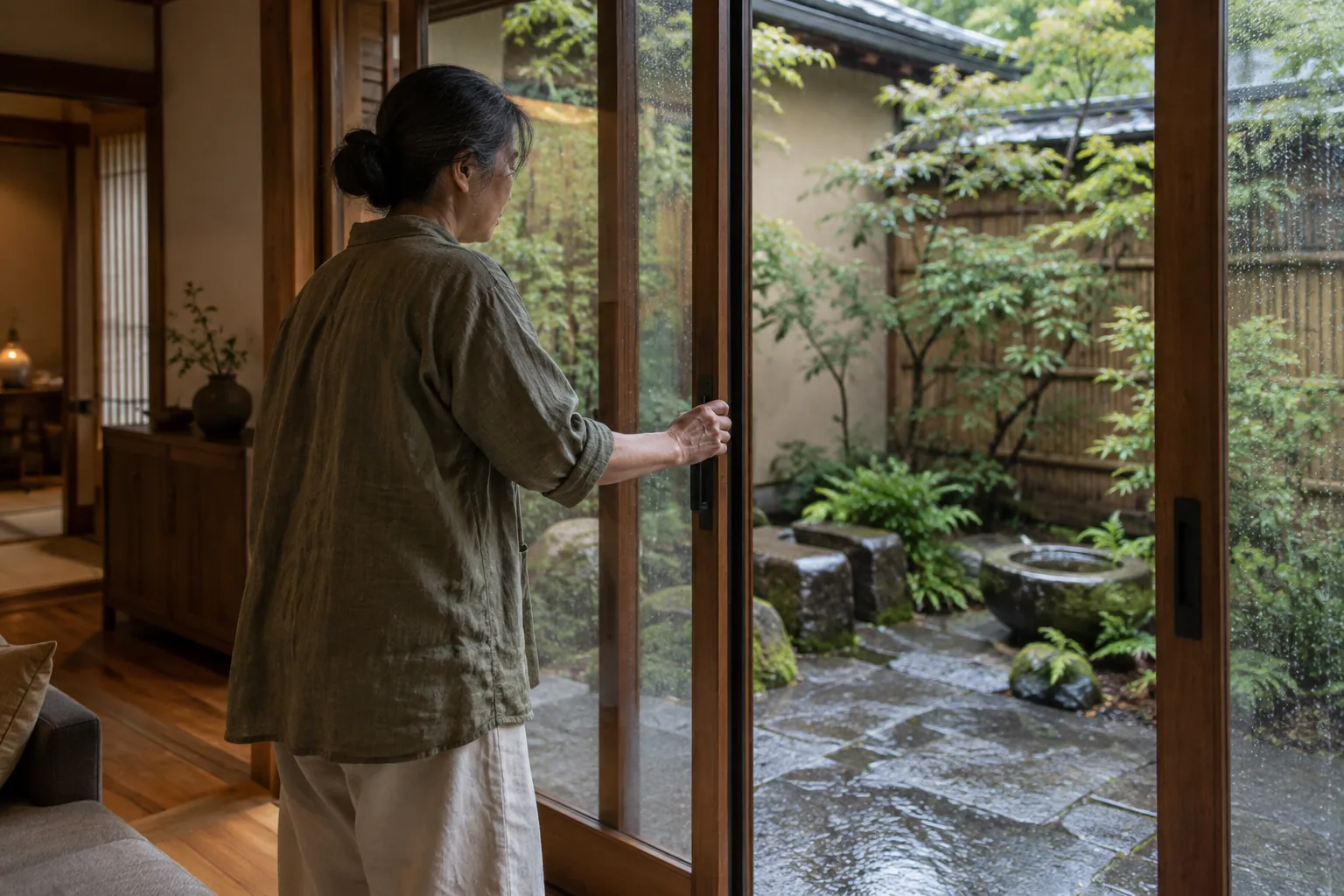
Picture a door moving from closed to open. First tell the story of a person acting: 私はドアを開けます。The reading is わたしはドアをあけます, and the meaning is “I open the door.” Here, 私 is the person doing the action, ドア is the thing acted on, and 開けます is the polite form of 開ける. The particle を marks the direct object in this sentence.
Now describe the event at the door: ドアが開きます。Read it as ドアがあきます: “The door opens.” 開きます comes from 開く, read あく in this example. The sentence presents the door as what undergoes the change. It does not tell you who caused it, and it does not prove that nobody caused it. An automatic door, wind or a person could be part of the wider situation.
Before speaking, ask what your listener needs to know. If you are describing your action, the first sentence fits. If you are reporting what happens to the door, the second fits. This decision is about the message, not whether you can see a hand in a photograph. Both descriptions may be true of the same event.
Give the participants the right jobs
A transitive verb takes a direct object in the use we are practising: someone does something to a thing. An intransitive verb describes an event without that direct object. Japanese grammar calls these 他動詞, たどうし, and 自動詞, じどうし. Learn the terms if useful, but practise the roles before memorising the labels.
For this small exercise, keep two frames: person は thing を action, and thing が change. They are training frames, not rules for every Japanese sentence. A transitive sentence can have a subject marked with が; は is a topic marker, not a transitivity switch. Equally, を occurs in some motion expressions without marking a direct object. Do not classify every verb from one particle alone.
Compare 私は窓を閉めます, わたしはまどをしめます, “I close the window”, with 窓が閉まります, まどがしまります, “The window closes.” Start by saying who or what the sentence is about. Then choose the verb and check the remaining particle. If you confuse the frames, keep the vocabulary fixed and practise the two meanings again. Adding unfamiliar nouns would conceal the original problem.
Keep the first set small and check every pair
Use three contrasts today: 開ける/開く, あける/あく, opening something versus opening; 閉める/閉まる, しめる/しまる, closing something versus closing; and つける/つく, turning something on versus coming on, in a light-related context. The same spelling or pronunciation can have other senses, so attach each entry to the situation you actually mean.
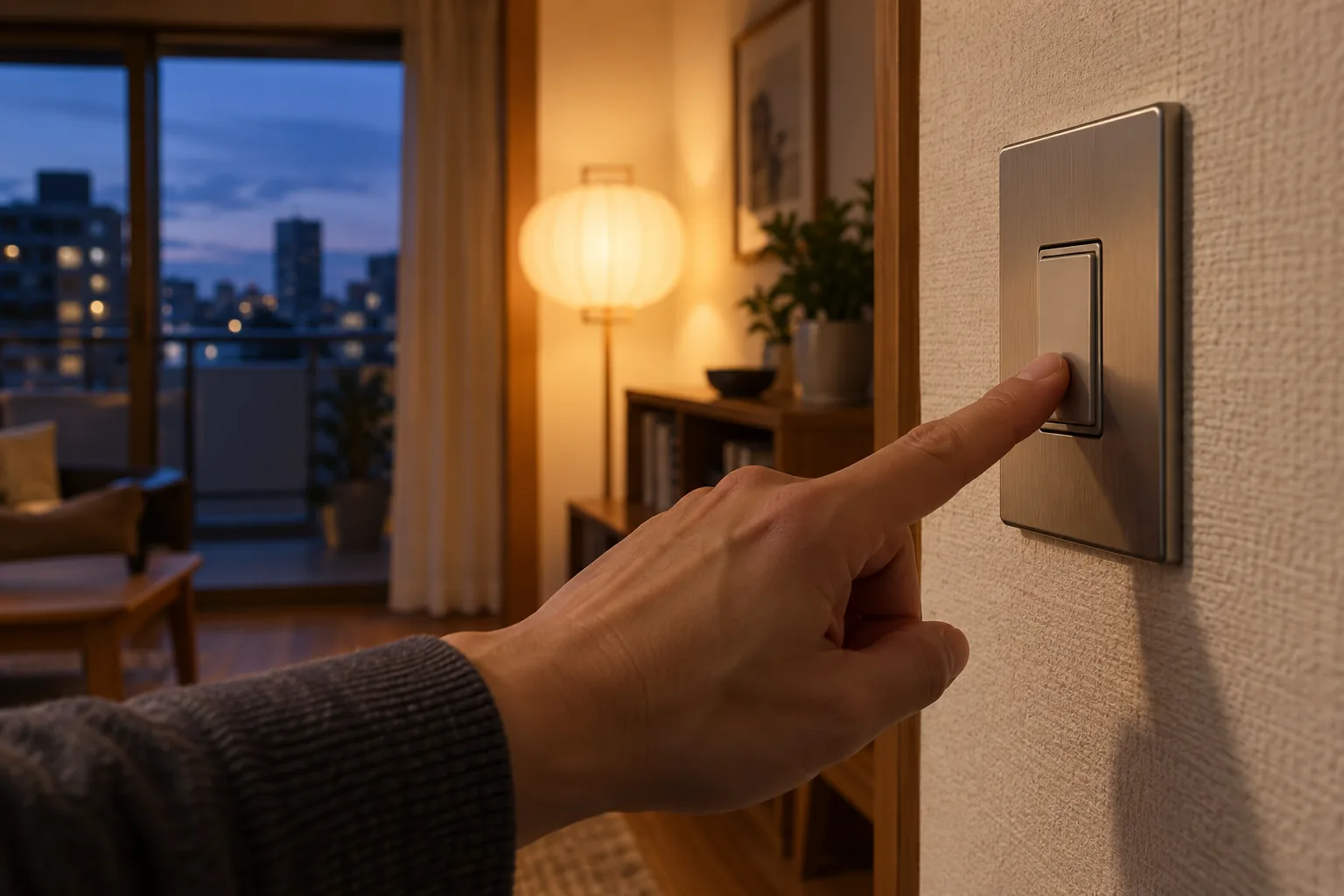
For the third contrast, 私は電気をつけます, わたしはでんきをつけます, means “I turn on the light.” 電気がつきます, でんきがつきます, means “The light comes on.” Do not translate the second as somebody turning it on unless the broader context supplies that person. This exercise asks you to notice what the sentence itself presents.
Check a pair before inventing its other half. The University of Texas JOSHU pair reference gives forms you can verify; our practice sequence is an original exercise built around those distinctions. Endings are sometimes helpful memory clues, but no single ending reliably generates every partner. Record both readings and one complete example. An accurate small set is more useful than a guessed list.
Try six prompts before looking at the answers
Cover the next paragraph. Choose 開けます or 開きます for A: “I open the door”, 私はドアを__。For B, “The door opens”, complete ドアが__。Choose 閉めます or 閉まります for C: “I close the window”, 私は窓を__。For D, “The window closes”, complete 窓が__。Choose つけます or つきます for E: “I turn on the light”, 私は電気を__。For F, “The light comes on”, complete 電気が__。
The answers are A 開けます, B 開きます, C 閉めます, D 閉まります, E つけます and F つきます. Read each finished sentence, not only the missing verb. Explain which participant acts or changes. If you picked a form because it looked familiar, repeat that prompt after a short unrelated task. Familiarity is not yet a reasoned choice.
Diagnose a wrong answer precisely. Choosing 閉まります for C is a verb-choice problem. Knowing 閉める but writing an incorrect polite form is a conjugation problem. Choosing the right verb with the wrong particle is a sentence-frame problem. Give these different follow-up tasks. Repeating every item indiscriminately wastes attention and makes it harder to see whether the actual confusion has improved.
Use KanaWay review for a specific confusion
Learn Japanese Hub is made by the team behind KanaWay. The following description comes from the current app implementation, not a performance test or a release promise. Its word-review flow lets a learner attempt a stored card, reveal the answer and rate the attempt; the interface previews the next review interval. This can support a short return to the word you actually missed.
The typed-answer confusion check is narrower than a teacher interpreting an entire sentence. It looks for a failed answer that matches the written form or stored kana reading of another known review card. If several different words could explain the answer, it does not simply choose one. A detected match is evidence for a possible mix-up, not proof that you understand the grammar.
Use the flow when the relevant words are available in your review collection. Attempt the target before revealing it, compare the reading and meaning, and rate honestly. Then do the sentence contrast from this article outside the card. We have not verified an automatic complete verb-pair lesson or arbitrary sentence correction for these prompts. If a pair is unavailable, keep the same checked exercise on paper; the learning decision does not depend on an app feature that has not been demonstrated.
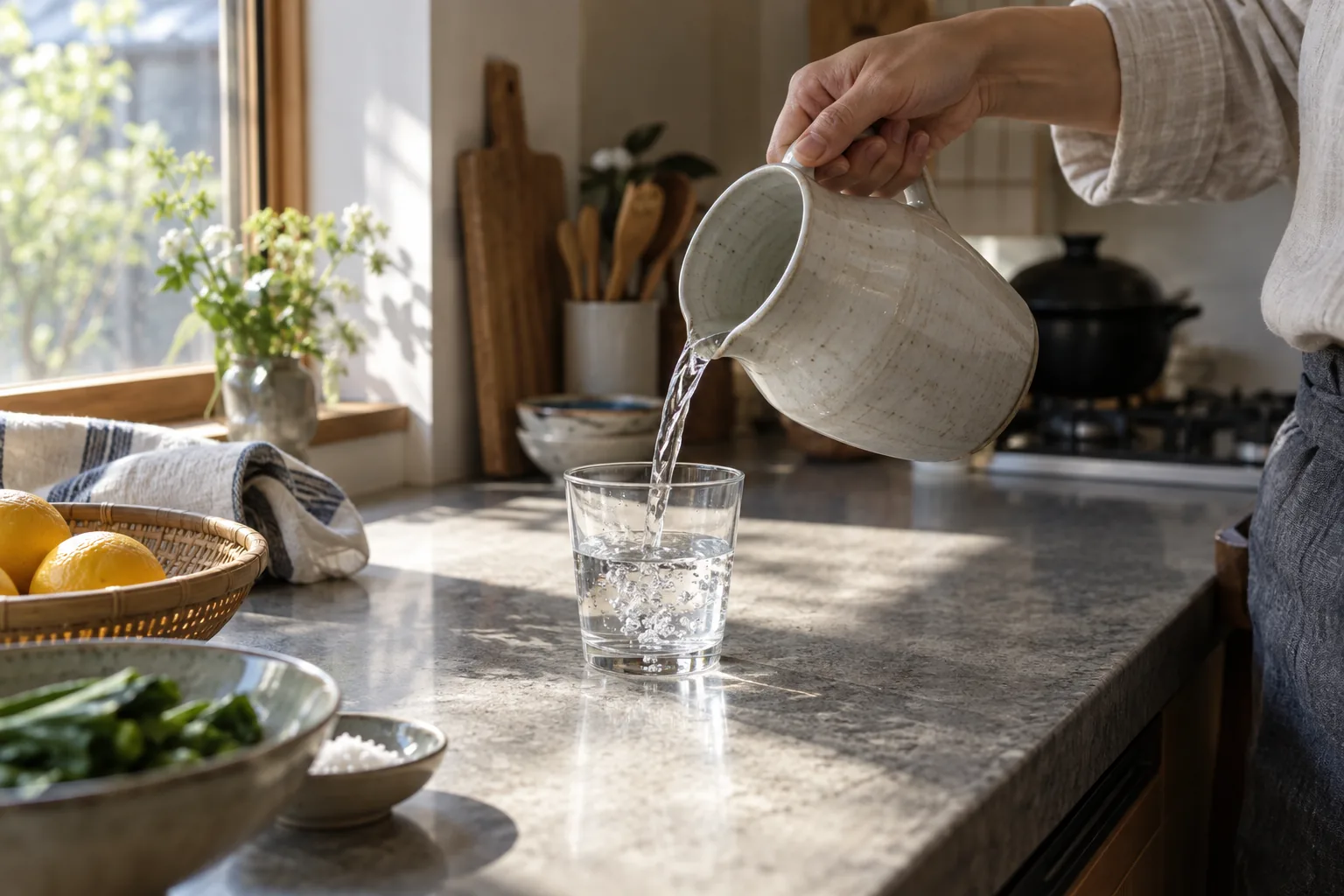
For a concrete container example, 水を入れます, みずをいれます, means putting water in. 水が入ります, みずがはいります, presents the water going in. Use 入れる/入る only with a checked context; the photograph gives you the action, not a complete Japanese sentence.
Change the situation without changing the task
Once the first six prompts are understandable, add one new situation rather than ten new verbs. You can replace the door with a window in the opening contrast: 私は窓を開けます, わたしはまどをあけます, “I open the window”; 窓が開きます, まどがあきます, “The window opens.” Notice how the same roles remain, even though the noun changes.
Next, compare a dropped object with an object falling. 私は本を落とします, わたしはほんをおとします, means “I drop the book.” 本が落ちます, ほんがおちます, means “The book falls.” The first does not necessarily mean the person intended to drop it. Transitivity is not the same thing as deliberate intention; accidental actions can also be described with a transitive verb.
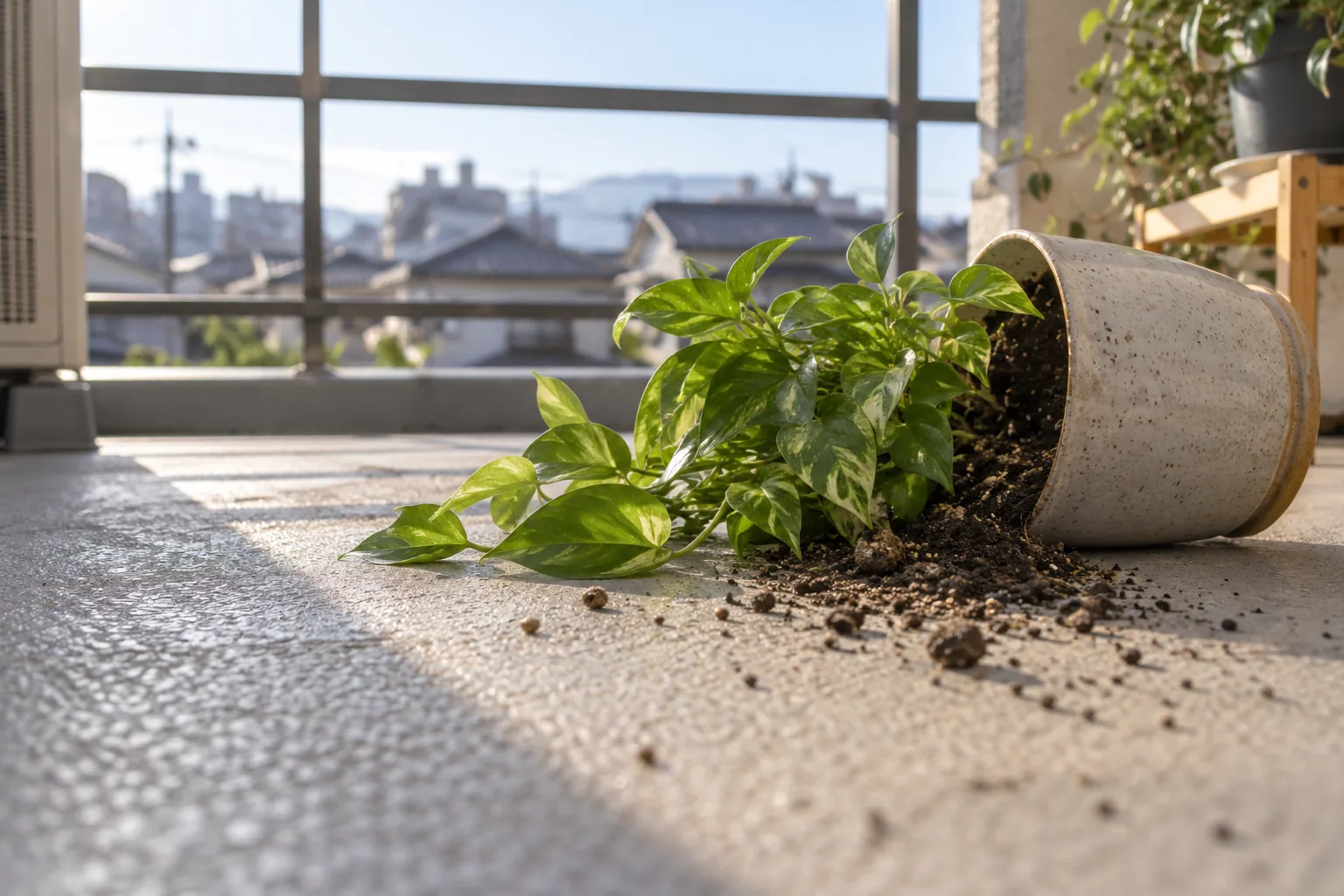
Make a short two-line scene from something you can safely observe. Write what you did, then what changed, using an appropriate checked pair. Do not create a physical accident to illustrate a word. The photograph of the tipped plant is simply a visual cue for a result, not evidence about who caused it. For further controlled exercises, use our Japanese practice collection.
Separate an event from a continuing state
The present polite forms above keep the first contrast manageable. A report about the current state may need a different form. ドアが開いています, ドアがあいています, means “The door is open” in this setting. It describes the resulting open state; it is not simply another translation of “I open the door.” Learn that line as a separate message.
Do not automatically translate every ている construction as an English action in progress. Its interpretation depends on the verb and context. At the same time, do not try to solve every use of ている in today’s session. First distinguish the person opening something from the thing opening, then add the state sentence when that decision feels clear.
An intransitive sentence does not mean the event had no outside cause. Someone may have opened the door earlier, while ドアが開いています simply reports its present condition. Keep the chosen message separate from assumptions about how it happened.
Finish with a check you can repeat tomorrow
End the session with two prompts that caused difficulty, in mixed order. Hide the model sentence, choose the verb, write the whole line and explain the roles aloud. Then compare with the checked answer. A correct guess is different from a choice you can explain, so record a short reason as well as the result.
Return to the same contrast in a later session before expanding the collection. There is no guaranteed number of repetitions and no fixed timetable that makes these pairs automatic. If only the polite ending fails, practise that form separately. If the agent-versus-event choice fails, return to the two scene descriptions with familiar vocabulary. Adjust the task to the error you see.
Questions about the method
Does an intransitive sentence mean nobody caused the event?
No. It presents the changing thing or event without a direct object in that use. ドアが開きます says the door opens; it leaves the cause unspecified. A person may still have opened it. Choose the sentence according to the information you want to communicate.
Can I guess every partner from the ending?
No. Patterns can help you remember known pairs, but they are not a safe generator. Check the dictionary form, reading and sense of both verbs. Some verbs have more complicated uses or no neat partner. Start with verified examples instead of extending a pattern mechanically.
Will KanaWay grade these complete sentences automatically?
That has not been verified for this exercise. The described review flow checks stored-card attempts and can identify certain matches with other known cards. It is not a claim of unlimited sentence evaluation. Use the answer key and role explanation here to check the full sentence.
Should I practise conjugation and transitivity together?
You can eventually combine them, but separate the problems when diagnosing a mistake. First choose the verb that expresses your intended message. Then form the polite ending. If one step is unreliable, reduce the other demands until you can explain and check that specific step.