
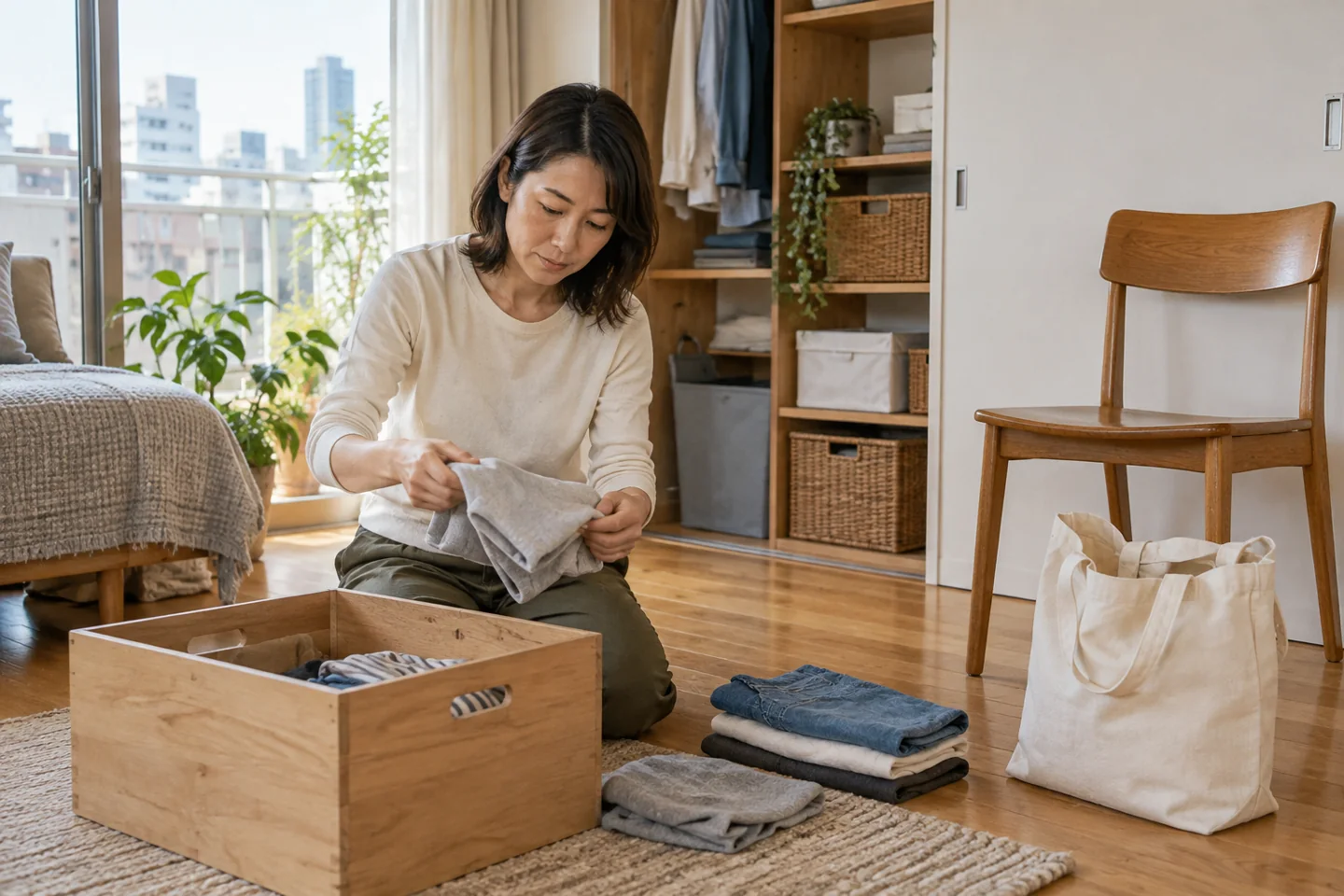
Japanese location words are easier to use when you name the reference object before choosing “on”, “under” or “inside”. Knowing shita means “under” does not yet tell you how to describe a bag under a chair. You need to keep the bag you are locating separate from the chair that helps locate it.
This guide gives you a small object-search task rather than a long directions list. You will learn five spatial words, build short reference phrases and use a polite sentence pattern. Six exercises test whether you can choose the relationship without copying a model. A chair, a box and a few safe everyday objects are enough; no app or special equipment is required.
Japanese location words need a named reference
Start with two questions: what are you trying to locate, and relative to what? If the bag is under the chair, the bag is the target and the chair is the reference. Write those roles in plain language before translating. Reversing them changes the scene even when every Japanese word is spelled correctly.
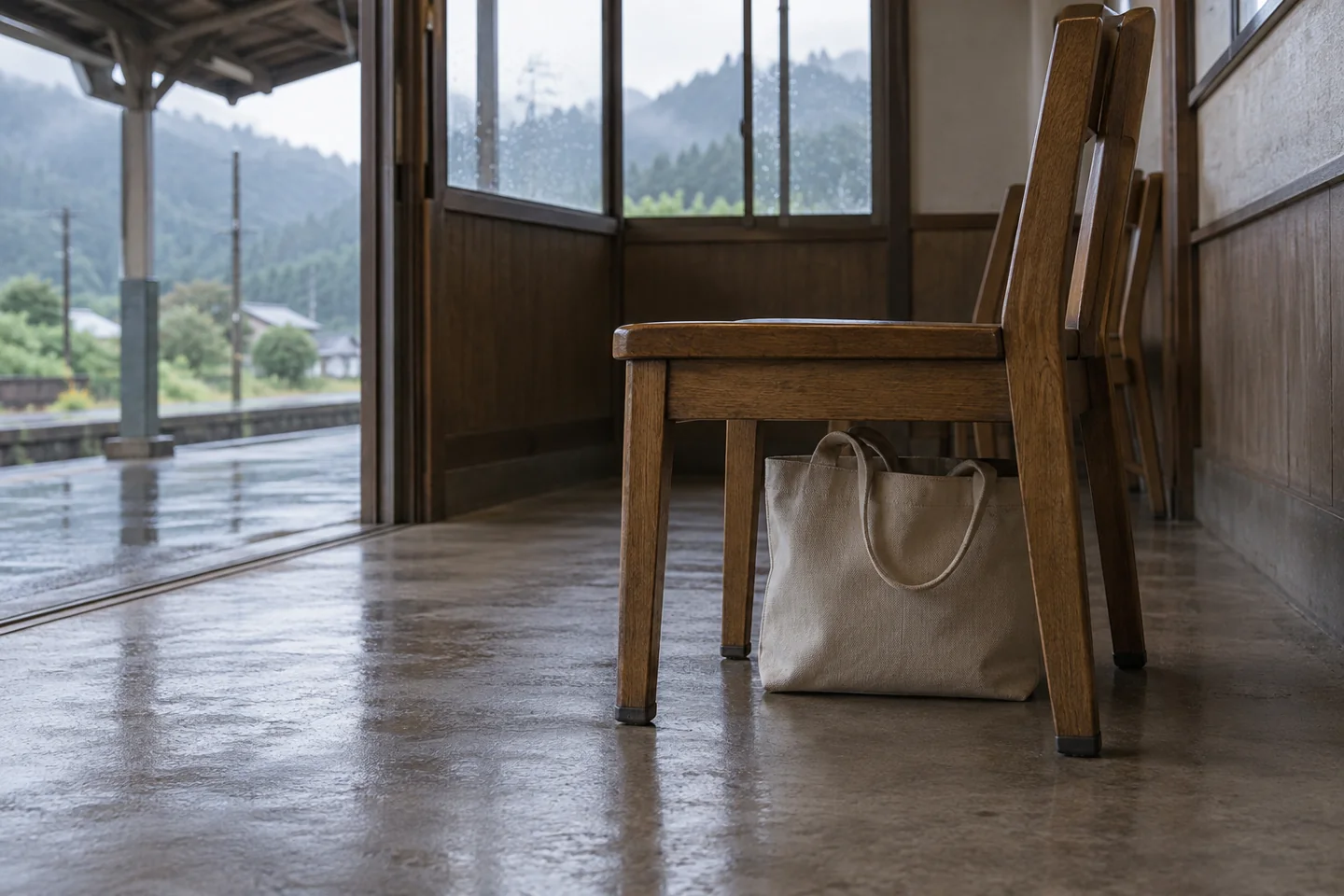
The Japanese location phrase begins with the reference: いすの下, isu no shita, “under the chair”. いす names the chair, の links it to the spatial noun, and 下 identifies the lower area. For this exercise, imagine the bag on the floor beneath the seat. You are describing a stable location, not telling anyone to move something.
An isolated answer such as “under” may be enough when the listener already knows the reference, but it is not enough for our practice. Include the chair or box so that a partner could reconstruct your arrangement. A clear phrase can still be short. What matters is the relationship, not adding more words or trying to sound elaborate.
Keep above and below separate
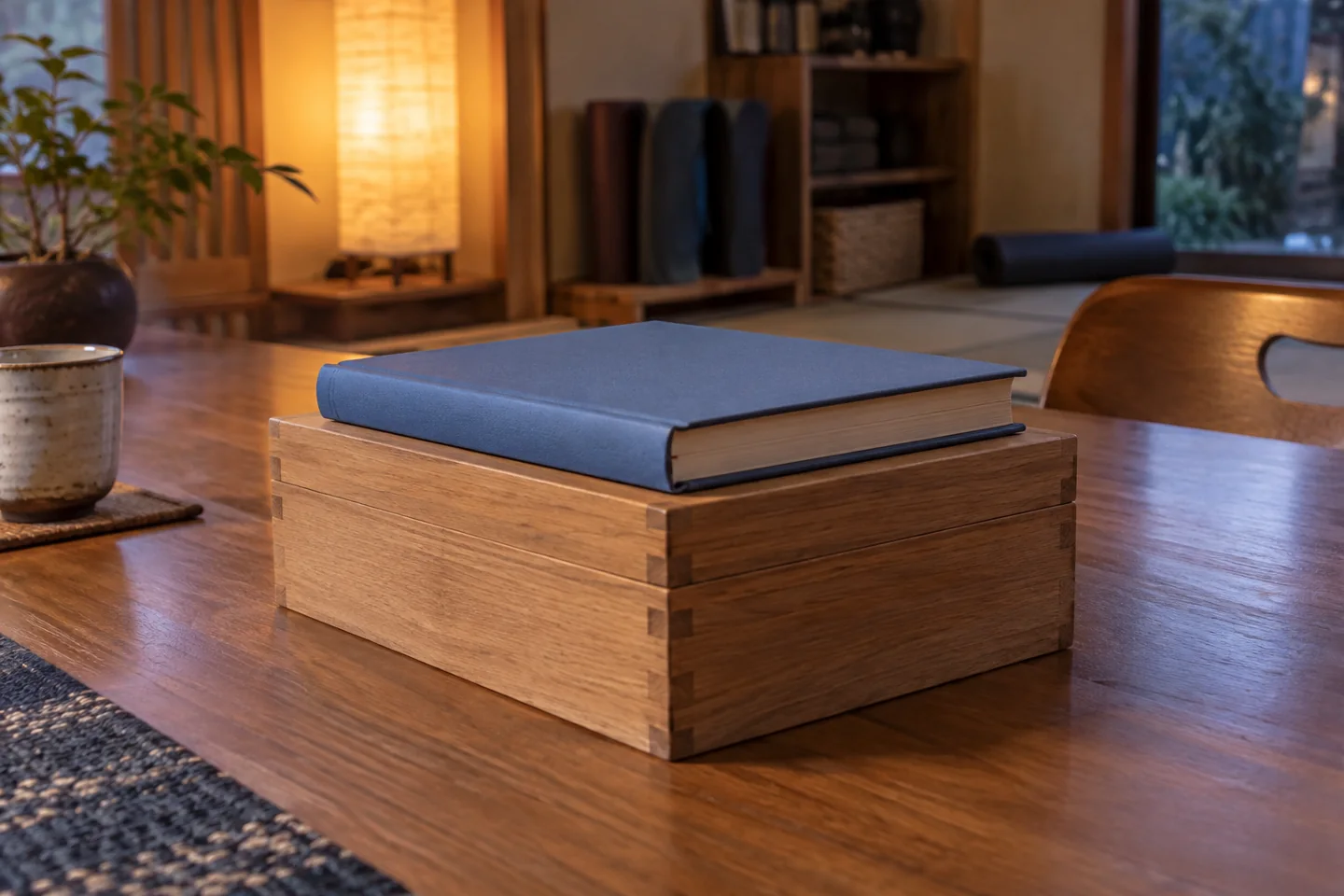
上(うえ, ue)describes the upper area, while 下(した, shita)describes the lower area. In our concrete scenes, a book rests on top of a closed box and a bag rests under a chair. These give easy examples of はこの上, hako no ue, and いすの下, isu no shita. The reference stays before の.
The Japan Society location lesson provides the readings and everyday object vocabulary, including box, chair, bag and book. It also demonstrates a pen on top of a box and a bag on a chair. Use those verified relationships as a starting point, then make an original arrangement that you can describe accurately.
Do not translate ue as “on” in every imaginable sentence. A spatial word can have a wider range than the English phrase used for one picture. Here, “on top of” is precise because the object touches the upper surface. We are not covering abstract meanings, map directions or every difference between “above” and “on”.
For a quick check, put a closed book on a box and name both roles. Then move the book below the box only if you can do so safely, or draw the second scene instead. The location phrase changes from hako no ue to hako no shita; it does not become hon no shita merely because a book is involved.
Inside depends on a real boundary
中(なか, naka)gives the inside of the reference. はこの中, hako no naka, means “inside the box”. For a clear beginner scene, keep the target fully within the box’s walls. A hat hovering over an opening or lying beside a lid would be a poor example because the intended relationship is uncertain.
Use ぼうし, bōshi, for the hat in this task and はこ, hako, for the box. The long vowel in bōshi belongs in the reading. With the box as reference, ぼうしは はこの中です。Bōshi wa hako no naka desu means “The hat is inside the box.” The topic is the hat; the location phrase still starts with the box.
Now compare “the hat is inside the box” with “the box is inside the bag”. Both can use naka, but they do not describe the same scene. The reference changes. A learner who remembers the spatial word but leaves hako as the reference in both answers has made a role error rather than forgotten the meaning of naka.
Place only safe objects in your practice container. There is no need to hide valuables or create an awkward physical puzzle. A simple sketch can supply exactly the same relation. If object words themselves are uncertain, consult the Japanese vocabulary guide and keep today’s list small enough to check.

In front and behind need an agreed orientation
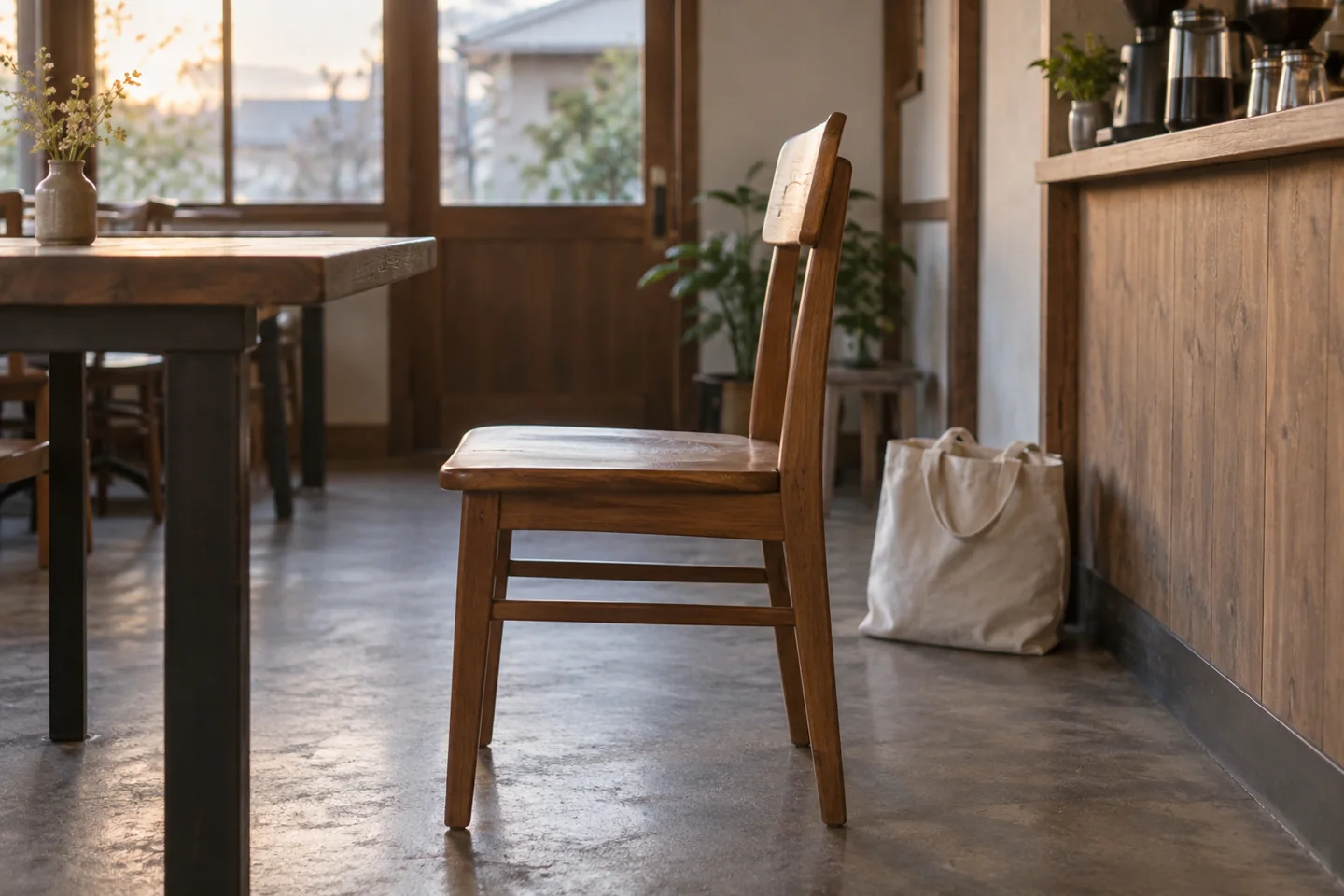
前(まえ, mae)is “in front” and 後ろ(うしろ, ushiro)is “behind” in these spatial examples. Unlike a box’s inside, a front may depend on how a reference is oriented. Use a chair with an identifiable seat and backrest. Agree that the seat faces one direction and the area beyond the backrest is behind it.
A bag on the floor in front of the seat gives いすの前, isu no mae. A bag behind the backrest gives いすの後ろ, isu no ushiro. The target remains the bag in both arrangements. Do not decide solely that whatever is closer to the camera must be mae; that can conflict with the front of the reference object.
Before describing a photograph, say which object supplies the front. If the picture does not show the chair’s orientation clearly, treat it as an ambiguous prompt and choose another scene. The exercise is about language, not guessing the photographer’s intention. A label in the written task can establish the direction when necessary.
You can draw a chair from the side and mark the seating direction in your own notes. Put the bag on either side of the backrest in two separate sketches. Ask a partner to point to the arrangement matching your phrase. Keep left and right, near and next to for another lesson rather than introducing several new distinctions at once.
Build a short polite location sentence
For a known object, use the controlled pattern “target は reference の position です”. The particle は is read wa here. かばんは いすの下です。Kaban wa isu no shita desu means “The bag is under the chair.” Read the sentence in two parts: the bag as the topic, then its location relative to the chair.
The official Japan Foundation São Paulo lesson notes explain this location pattern and the reference-first order. They also show a longer alternative with にあります for objects. Our short desu version lets you concentrate on spatial choice. It is a polite location statement, not a command, an action description or a claim about where someone went.
You may also write かばんは いすの下にあります。Kaban wa isu no shita ni arimasu for the same object arrangement. Do not combine the endings into “ni arimasu desu”. Pick one checked pattern for the first exercise. Changing the verb while also changing the reference and spatial word makes a mistake harder to diagnose.
If you need the wider distinction between a place of existence and a place where an activity happens, use the guide to ni and de. Today’s task is narrower: choose a spatial relationship and form the reference phrase correctly. Knowing the general particle rule alone will not repair a reversed chair-and-bag description.
Six object-search prompts
Cover the answers and write the target and reference for each prompt. Then choose ue, shita, naka, mae or ushiro, and complete a short desu sentence. Kana are enough for a first attempt. The point is to produce the relationship before seeing it, not to copy a kanji string you have just read.
A: A book lies directly on the top surface of a closed box. Locate the book. B: A bag sits on the floor entirely beneath a chair’s seat. Locate the bag. C: A hat is fully inside an open box. Locate the hat. D: A bag sits directly behind a chair’s backrest; the seat faces away from the bag. Locate the bag.
E: The same chair has its front at the seating side. A bag sits on the floor in front of that seat. Locate the bag. F: A small box is fully inside an open bag. Locate the box. For F, the bag is large enough to contain the box; do not replace the given arrangement with a more familiar one.
After answering, explain the roles in F without looking at your Japanese. If you say that the box is the reference, read the prompt again. Then invent one additional scene with a different target but the same reference and position as A. This checks whether you learned a reusable phrase rather than one memorised sentence.
Answers with the relationship made explicit
A: ほんは はこの上です。Hon wa hako no ue desu — “The book is on top of the box.” The book is the target and the box is the reference. B: かばんは いすの下です。Kaban wa isu no shita desu — “The bag is under the chair.” The chair supplies the lower area.
C: ぼうしは はこの中です。Bōshi wa hako no naka desu — “The hat is inside the box.” D: かばんは いすの後ろです。Kaban wa isu no ushiro desu — “The bag is behind the chair.” In D, the prompt defines the back by the chair’s orientation rather than by the viewer’s position.
E: かばんは いすの前です。Kaban wa isu no mae desu — “The bag is in front of the chair.” F: はこは かばんの中です。Hako wa kaban no naka desu — “The box is inside the bag.” F changes which object begins the location phrase. It does not require a new spatial word.
Check meaning first, then word order and reading. A reversed reference, a wrong spatial word and a forgotten noun are different mistakes. Record the exact one you made. If your answer is physically possible but describes another arrangement, it still does not answer the given task. Correct spelling cannot compensate for an incorrect relationship.
Repeat with one deliberate change
Choose the exercise that caused the most hesitation. Keep its target and reference, then alter only the position. You might move a bag from under a chair to its front, or move a hat from inside a box to its top. Say what changed in plain language before producing the next Japanese sentence.
At a later session, rebuild the scene from your own short description without uncovering the original photograph or answer. Compare the arrangement with your sketch. This tests clarity, without promising retention. If two readings remain possible, improve the prompt instead of forcing a guess.
For a broader routine, the Japanese practice guide helps you choose a small task and inspect the result. Keep today’s success criterion concrete: the listener can identify the target, the reference and the intended relation. You do not need a longer sentence until those three pieces remain clear when you change the scene.
Questions about the method
Are these Japanese prepositions?
For this construction, learn them as spatial nouns joined to a reference by no. English may express the same relation with a preposition, but copying English word order will not give the Japanese reference phrase.
Does ue always mean touching the top surface?
No. The guide uses contact scenes so “on top of” is an unambiguous gloss. Ue has broader spatial uses, which need their own context. Do not turn the picture’s particular relationship into a universal translation.
Can I use desu to state where an object is?
Yes, in the checked pattern target wa reference no position desu. The notes also give a ni arimasu alternative for objects. Choose one complete pattern; do not attach desu to arimasu.