
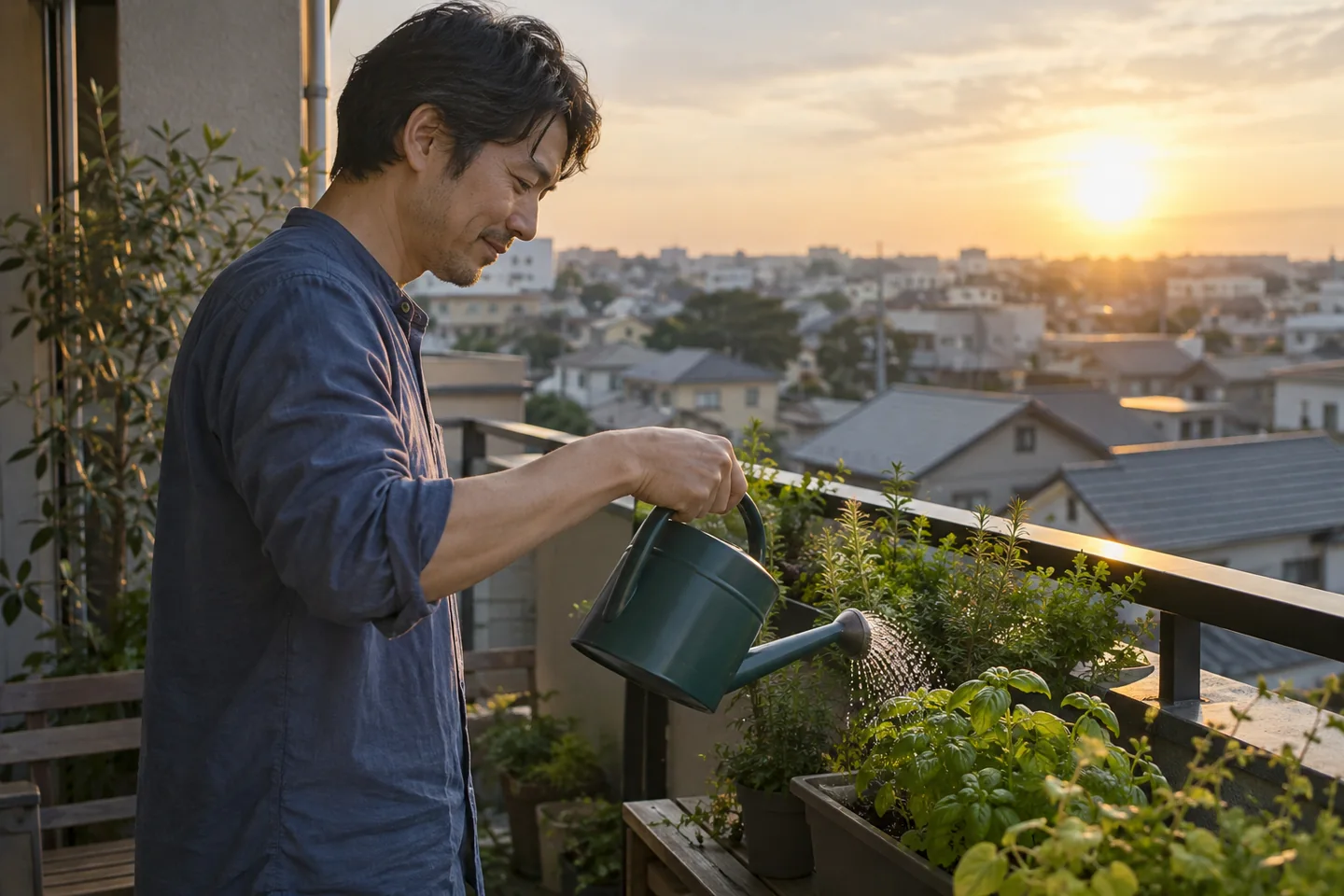
Japanese frequency adverbs help you describe what happens repeatedly: always, often, sometimes, or not very often. The difficult part is not simply remembering four translations. You also need a sentence that matches the habit you mean. A single shopping trip tells you what someone did on that occasion; it does not tell you whether shopping is an occasional activity or a regular part of their week.
This lesson uses a small set of polite sentences, with breakfast, cooking, shopping and television as concrete topics. You will choose meanings, repair one negative pattern and check six situations. A source-verified KanaWay word-card workflow can support word recall when a suitable stored card exists. Choosing the frequency, judging the evidence and building the sentence remain separate tasks you can practise on paper.
Decide what you know about the habit
Begin with a message in your own language. “I often cook” is a claim about a recurring activity, whereas “I am cooking now” describes the present occasion. Our exercise concerns the first kind of message. Write the activity and intended frequency separately before producing Japanese. This makes it easier to see which part changed when your sentence goes wrong.
Do not attach invented percentages to the four words. A useful description depends on the activity, the period being discussed and the speaker’s intended generalisation. Cooking often and travelling abroad often need not imply the same number of occurrences. The supplied prompts name the meaning directly so that you can check the language without guessing somebody’s personal threshold.
The photographs provide activity cues, not records of anyone’s routine. Even the person watering plants in our opening image may be doing so only today. If you lack information about repetition, leave the frequency undecided. Our Japanese vocabulary guide develops learning words through clear contexts; here the context must include the intended habit, not just an attractive scene.
Japanese frequency adverbs: four useful choices
Keep this compact reading list beside your first attempt: いつも, itsumo, “always”; よく, yoku, “often”; ときどき, tokidoki, “sometimes”; あまり with a negative verb, amari, “not very often” in these habit statements. Read the kana first and use the romanisation as support. The list is a starting vocabulary set, not a complete account of every use of each word.
The Japan Foundation’s German wordbook groups these frequency expressions and provides their readings. In our controlled example, いつも朝ご飯を食べます。Itsumo asagohan o tabemasu means “I always eat breakfast.” The understood speaker describes their own routine. Do not replace the message with “I ate breakfast today”; that would require a different sentence and different evidence.
When you practise “always,” choose a scenario that explicitly supplies that strong generalisation. If your real routine has exceptions and “often” better expresses what you mean, change the intended message first. The goal is not to select the strongest word you can remember. It is to say something you can stand behind within the period and context being discussed.
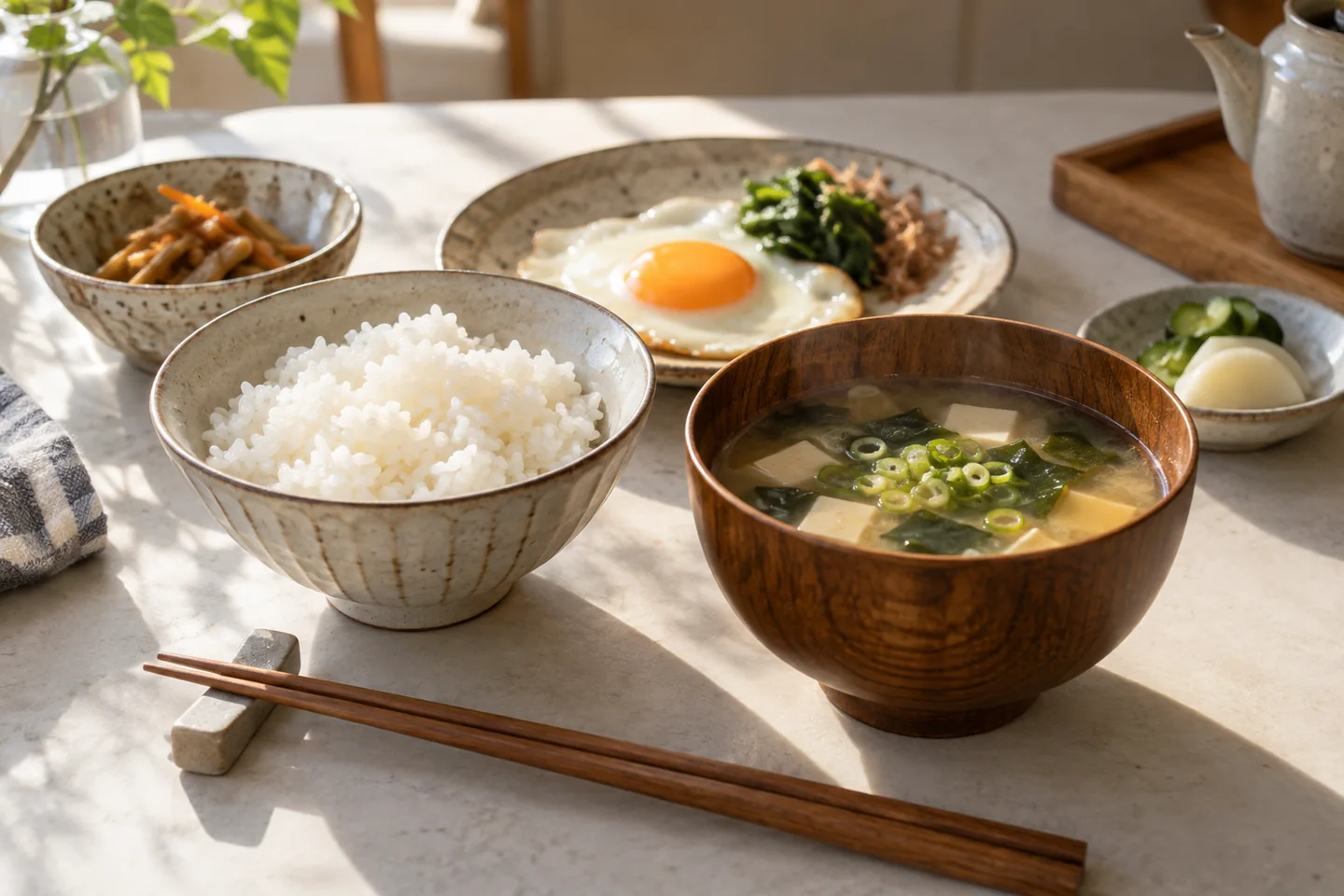
Keep the action steady while frequency changes
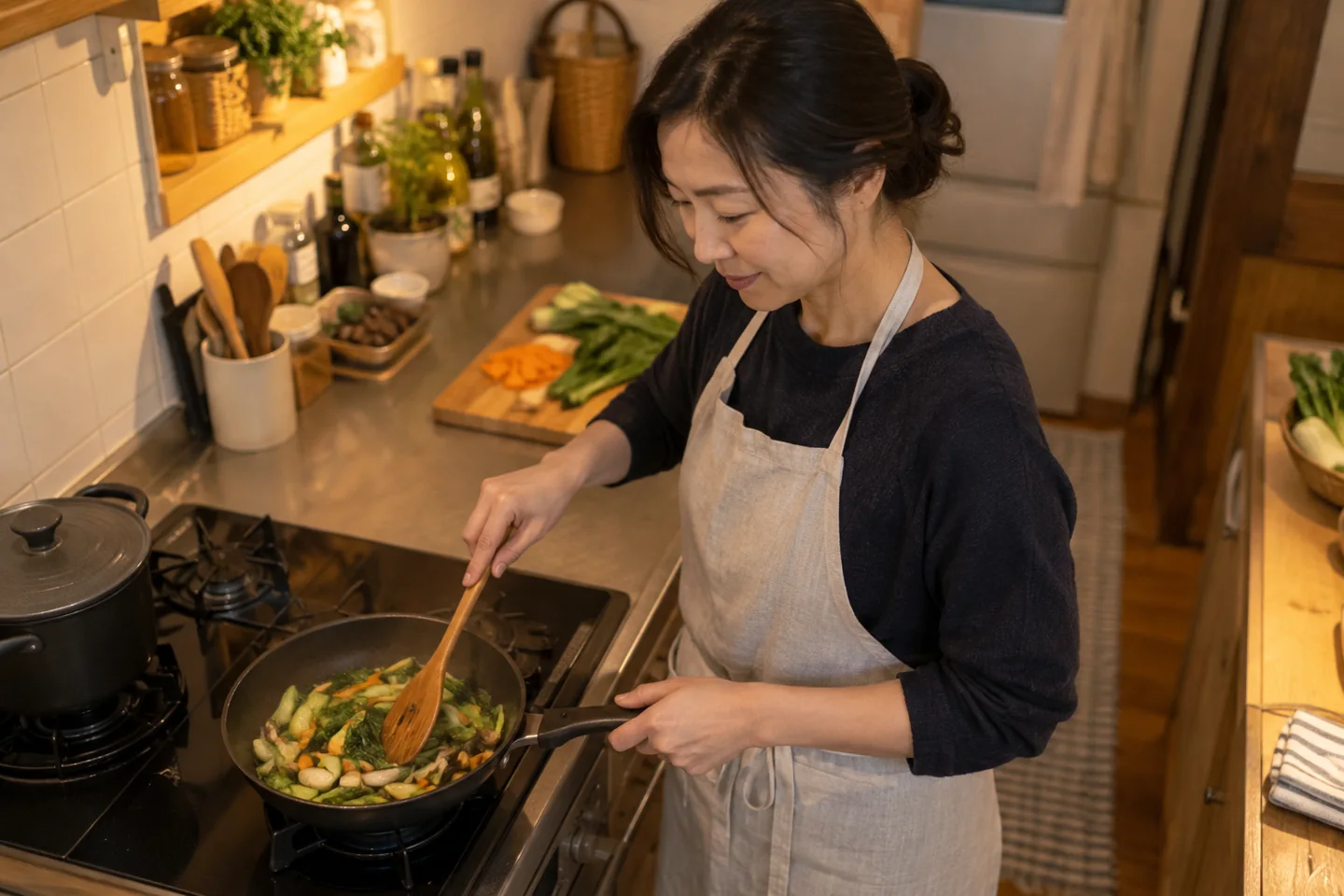
For the cooking model, use よく料理をします。Yoku ryōri o shimasu: “I often cook.” The activity is 料理をします, ryōri o shimasu. To express the supplied meaning “I sometimes cook,” write ときどき料理をします。Tokidoki ryōri o shimasu. Only the frequency expression changes. Keeping the action steady helps you compare the two meanings without introducing an unrelated vocabulary problem.
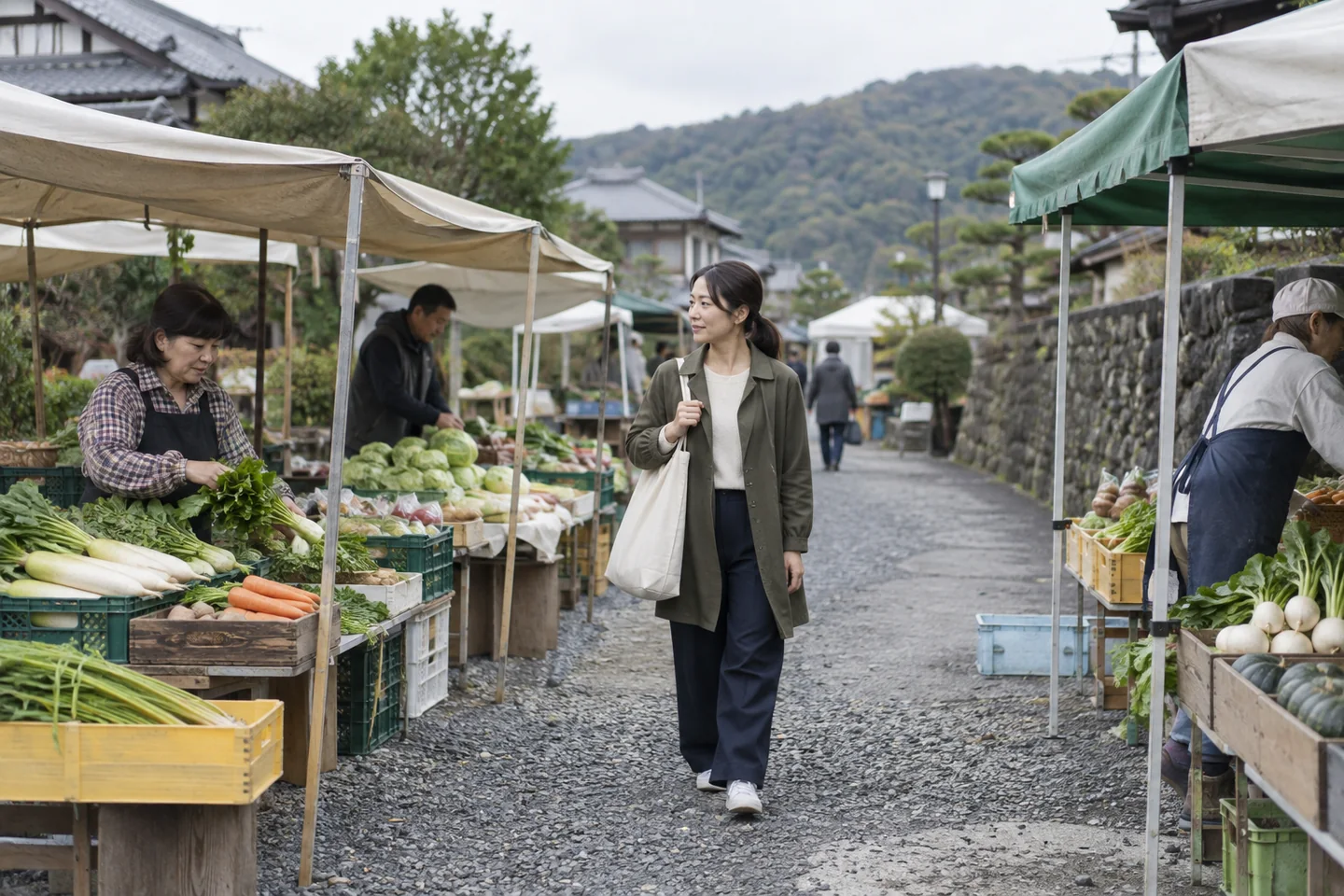
For another activity, use ときどき買い物をします。Tokidoki kaimono o shimasu: “I sometimes go shopping.” The Japan Foundation’s Marugoto grammar note presents frequency expressions with polite verbs. Our original cooking comparison applies that basic pattern. These sentences introduce a manageable affirmative frame; they do not mean that yoku can only ever mean “often” in every Japanese sentence.
Underline the whole activity chunk when reading your attempt. If the prompt asks about cooking but you write a shopping sentence, the adverb may be correct while the answer is still wrong. Then circle the frequency word separately. This two-part check is useful precisely because it avoids treating every error as a failure to memorise the same four adverbs.
Amari needs the negative pattern in this exercise
To describe limited television watching, use あまりテレビを見ません。Amari terebi o mimasen: “I do not watch television very often.” Compare 見ます, mimasu, with 見ません, mimasen. In this controlled habit pattern, the negative ending works together with あまり. Do not preserve the affirmative verb and assume that adding amari alone has produced our target meaning.
The translation depends on context: the sentence can also naturally be understood as “I do not watch much television.” Our task supplies a question about habits, so “not very often” makes the intended dimension clear. We are not measuring minutes of viewing or claiming that the speaker never watches anything. Low frequency and complete absence are different messages.
Now keep shopping as the action: あまり買い物をしません。Amari kaimono o shimasen: “I do not go shopping very often.” Check します → しません, shimasu → shimasen, rather than borrowing the ending of another verb. Our Japanese negative sentences guide covers a wider set of negative forms. Here you only need these supplied polite pairs to inspect the particular mistake.
Review the missing word, then leave the card
Suppose you know that your message is “sometimes,” but cannot retrieve ときどき. If an appropriate stored word card exists in KanaWay, attempt its answer before revealing it. The existing local word-review implementation retains an attempt draft, permits a reveal and accepts a self-rating with an interval preview. These are verified review steps, not a claim that a frequency-adverb deck is publicly available.
After revealing the card, compare what you actually produced with what is displayed. Recognising tokidoki after seeing it is different from retrieving it before the reveal. Rate the attempt you made. A scheduling interval concerns another word review; it cannot certify that you chose an honest description of a habit or that you used the right negative form in a sentence.
Then close the recall task and write a sentence from a separate meaning cue. If the word was correct but you used 見ます after あまり, return to the sentence pair instead of repeatedly reviewing the same translation. Publisher disclosure: KanaWay and Learn Japanese Hub share a publisher. This bounded workflow makes no release, download or outcome promise; the paper exercises remain usable without an app.
Six situations to answer before checking
Cover the next section. One: the supplied message is “I often cook.” Write the polite sentence using 料理をします. Two: change that message to “I sometimes cook,” preserving the activity. Three: the intended meaning is “I do not watch television very often,” but the draft reads あまりテレビを見ます. Repair the specific part responsible for the mismatch.
Four: you see one photograph of a person returning from a market. Can you conclude that they always go shopping? State what the photograph does and does not establish. Five: the supplied message is “I always eat breakfast.” Use 朝ご飯を食べます and choose the frequency expression from our four-word set. Do not replace “always” with a weaker word just because it is easier to retrieve.
Six: you can recall amari accurately but write あまり買い物をします for the supplied low-frequency message. Is another translation recall the whole repair? Identify the sentence form you need to compare. For each task, note whether you checked an activity, an adverb, a negative ending or missing information. Leave a blank when you genuinely cannot retrieve something; guessing hides the next useful practice target.
Check the claim as well as the ending
One: よく料理をします。Yoku ryōri o shimasu. Two: ときどき料理をします。Tokidoki ryōri o shimasu. The activity stays the same. Three: あまりテレビを見ません。Amari terebi o mimasen. Replace the supplied affirmative 見ます with the negative 見ません. In this exercise the adverb and ending must work together; correcting only the spelling of amari would leave the mismatch unresolved.
Four: no. The image depicts one shopping occasion and cannot establish “always,” “often” or “sometimes” as a routine. Five: いつも朝ご飯を食べます。Itsumo asagohan o tabemasu. Six: compare します with しません and produce あまり買い物をしません。Amari kaimono o shimasen. The missing step concerns the negative verb, even though the adverb itself was retrieved successfully.
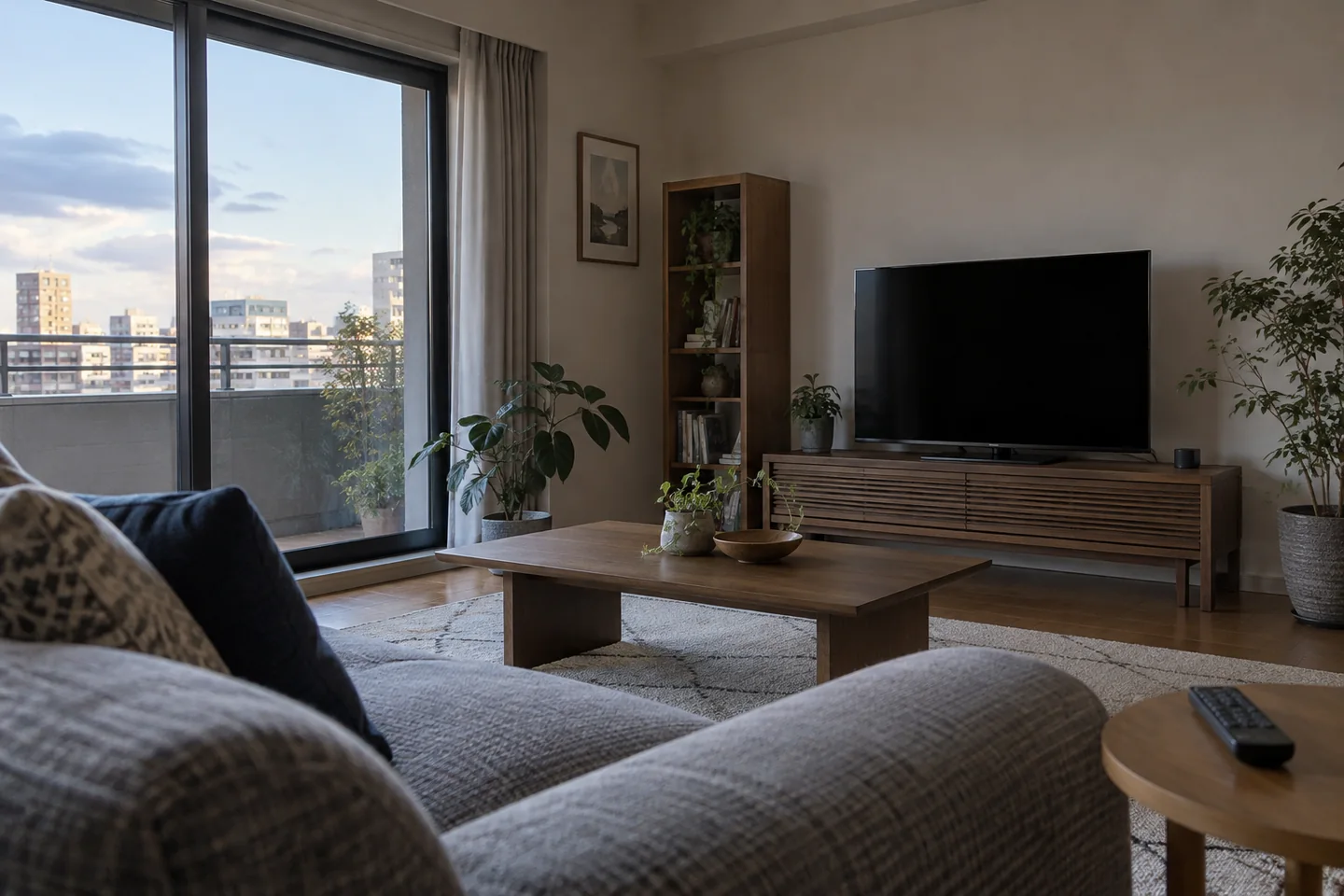
Apply the same caution to our switched-off television image. It shows a screen at one moment, not a person’s viewing frequency. You may use the object as a cue for terebi, but the exercise must separately supply the intended habit. Checking what a sentence claims is part of comprehension, alongside checking how its words and endings are assembled.
Carry one checked contrast into tomorrow
Choose one activity and make two meaning cards on paper: “often cook” and “sometimes cook,” for example. Hide the Japanese models, produce each sentence, then compare the activity chunk and adverb independently. On a later attempt, use the television negative pair. Keep the task short enough that you can explain each correction rather than merely copy a familiar-looking line.
For personal practice, first decide what description fits your actual routine. If you are unsure, write a fictional scenario labelled as such and supply its meaning explicitly. Do not turn a handful of observations into a universal claim about yourself or another person. The exercise works because the intended message is available for comparison, not because a frequency label has a secret numerical definition.
Our Japanese practice guide can help you place this small contrast inside a broader routine. Keep two notes after each attempt: the word or form you missed, and the meaning your sentence actually conveyed. Tomorrow’s useful target may be one verb ending rather than all four adverbs. A clear diagnosis gives the next short attempt a specific purpose.
Questions about the method
Does yoku always mean often?
No. This lesson practises yoku as a frequency expression in affirmative habit sentences. Words can have other uses in other constructions. Learn the supplied cooking example as a contextual model rather than replacing every occurrence of yoku with the English word “often.”
Is amari the same as never?
No. In our negative habit examples it expresses limited frequency or amount, not complete absence. Keep the negative verb in the controlled pattern and translate the whole message. “I do not watch television very often” still leaves room for occasions when the person does watch it.
Should I review a word card after every sentence error?
Only if the error involved recalling that word. If you remembered tokidoki but selected the wrong activity or forgot a negative ending, compare the relevant sentence parts. A correct card answer is one observation about recall, not a certificate that the whole habit statement is correct.