

The Japanese adjective past tense often goes wrong even when the vocabulary is familiar. You know おいしい, oishii, “tasty,” and 静か, shizuka, “quiet.” Then you try to describe yesterday and use the same ending for both. The problem is not necessarily forgetting a word: two adjective classes build these sentences differently.
This lesson keeps the task small. You will describe a past meal, cold weather and a quiet place in polite complete predicates, then repair six controlled answers. Keep a separate check for vocabulary and grammar. If you need the broader sentence framework first, use our Japanese grammar guide. Here the goal is choosing the correct ending, not learning every adjective construction.
Japanese adjective past tense starts with the class
Start with the message before changing any letters. Are you saying that something was tasty, or that it was not tasty? Both refer to the past, but one affirms the quality and the other denies it. Write those two decisions beside your prompt: past, positive; or past, negative. A form can be neatly spelled yet answer the opposite question.
Now identify the adjective class. おいしい, oishii, is an i-adjective. 静か, shizuka, is a na-adjective. The label na describes a connection used before a noun, as in 静かな場所, shizuka na basho, “a quiet place.” In the sentence-ending task here, do not carry that な into 静かでした. Learn the class together with the word rather than guessing from its English translation.
For polite positive past predicates, compare おいしかったです, oishikatta desu, “was tasty,” with 静かでした, shizuka deshita, “was quiet.” The first changes the adjective; the second keeps 静か and changes the ending after it. This contrast is more useful than a rule saying everything in the past takes でした. Keep the two complete examples visible during your first attempt, then cover them for the next one.
Describe the meal without changing desu to deshita
For an ordinary i-adjective, remove its final い and add かった for the positive past. With おいしい, the result is おいしかった. Add です for the polite pattern used here: おいしかったです, oishikatta desu. You are not removing every い in the word. The earlier い belongs to the remaining material, so careless deletion changes more than the grammatical ending.
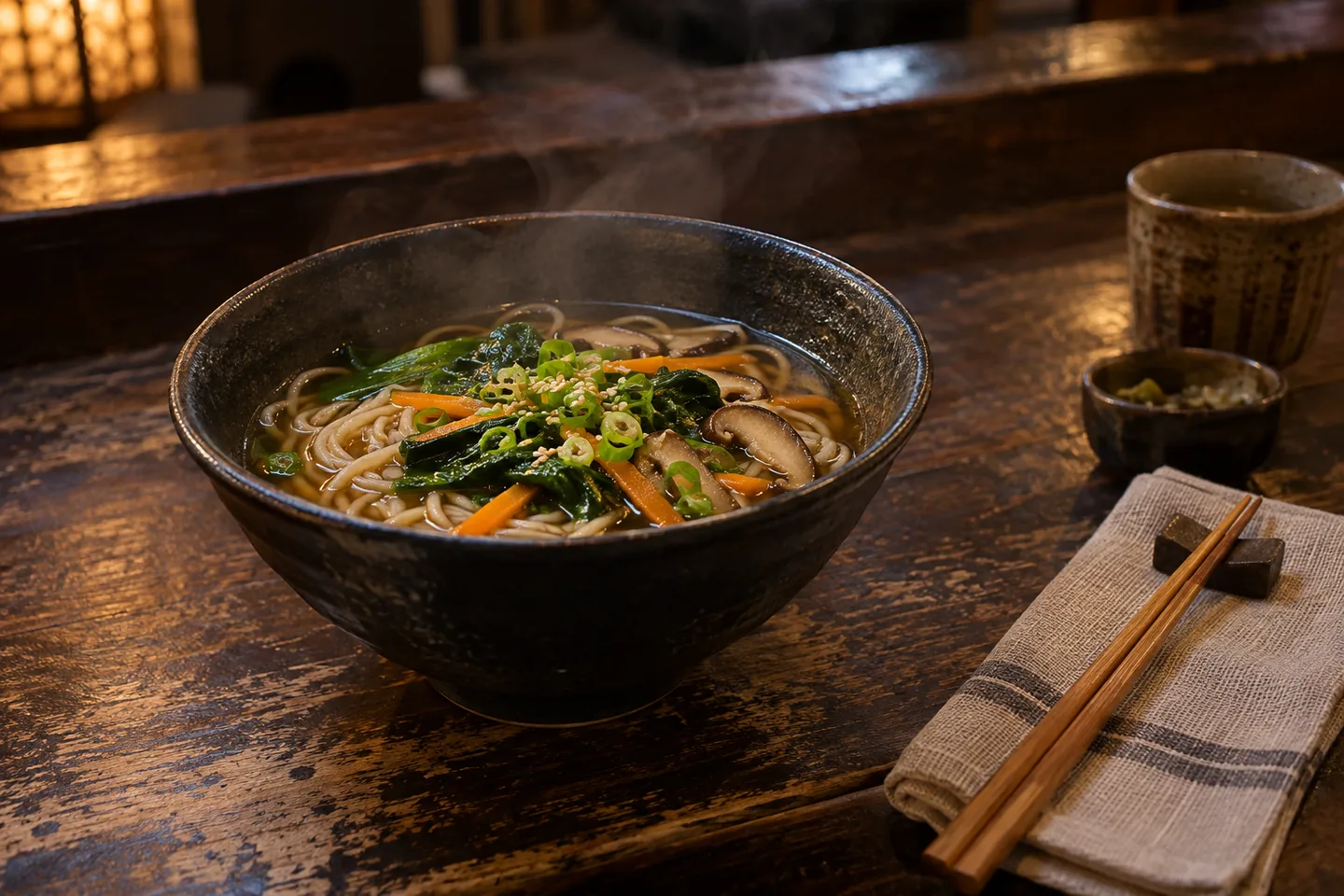
A complete original example is 昨日の料理はおいしかったです。 Kinō no ryōri wa oishikatta desu. “Yesterday’s meal was tasty.” 昨日の料理 supplies the topic and the last part supplies the description. Read the whole meaning back after forming the ending. If you have written a correct past form but translated it as “was not tasty,” your remaining error is the message, not the spelling.
For the negative past, use おいしくなかったです, oishikunakatta desu, “was not tasty.” You can understand the sequence through おいしくない, “not tasty,” whose final い becomes かった. Keep the complete ending くなかった together while learning it. Do not put でした after unchanged おいしい to express either answer. A useful paper check is to circle only the part that changes, leaving the topic untouched.
Keep past time and negation as two decisions
Take 寒い, samui, “cold,” describing weather or the surrounding temperature. The positive past is 寒かったです, samukatta desu; the negative past is 寒くなかったです, samukunakatta desu. Our practice sentence 昨日は寒くなかったです。 Kinō wa samukunakatta desu means “It was not cold yesterday.” The final form tells you both time and negation. Yesterday alone does not make an unchanged predicate a good answer to this exercise.
Try the same topic with the opposite message: 昨日は寒かったです。 Kinō wa samukatta desu, “It was cold yesterday.” Notice how much stays stable. You can compare the endings without introducing a new noun, new particle and new description at the same time. Once the distinction is reliable, remove the positive model and produce the negative from its meaning cue rather than copying the visible pattern.
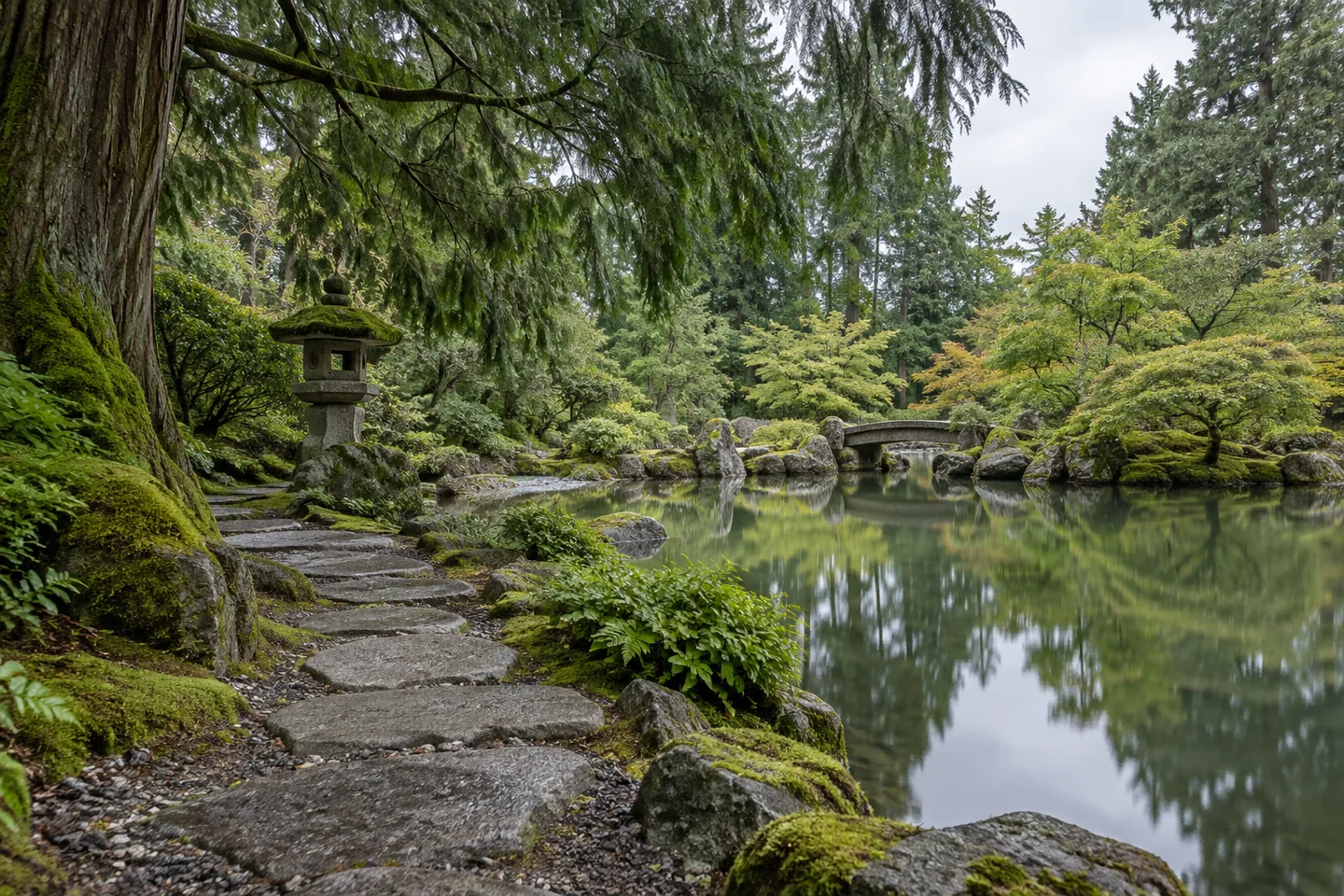
Do not confuse “was not cold” with “was warm.” Negation denies one quality; it does not necessarily assert its opposite. That matters when checking a translation or rating a card. If you recall an opposite word instead, you have changed the answer. The photograph supplies a weather cue, but it cannot establish how yesterday actually felt. These are explicitly imagined practice scenes, not reports attached to a dated location.

A na-adjective keeps its descriptive core
静か, shizuka, describes something quiet. In our polite past sentence, use 静かでした, shizuka deshita, “was quiet.” An original example is 公園は静かでした。 Kōen wa shizuka deshita, “The park was quiet.” You do not remove a final い, because there is no adjective ending of that type to replace. Nor do you add な immediately before でした: the noun-linking pattern is a different task.
The polite conversational negative used in this lesson is 静かじゃなかったです, shizuka janakatta desu, “was not quiet.” Thus 公園は静かじゃなかったです。 Kōen wa shizuka janakatta desu denies that past description. The sequence after 静か carries the negative and past information. Say the complete predicate before returning to the whole sentence so you can hear where the description ends and its grammatical ending begins.
You may encounter 静かではありませんでした, shizuka dewa arimasen deshita, another polite negative past form. It is valid, and generally fits more formal wording. We keep じゃなかったです consistent in the exercise so one task does not become a catalogue of register choices. For contextual models, see Japan Foundation’s Starter lesson 17, especially its adjective and negative-past grammar notes. Our questions below are original practice, not an official test.
Kirei and ii need checks beyond the last letter
きれい, kirei, can mean clean or beautiful, depending on context. It is a na-adjective despite its final written い. For the clean room in this exercise, use 部屋はきれいでした。 Heya wa kirei deshita, “The room was clean.” To deny that description, write 部屋はきれいじゃなかったです。 Heya wa kirei janakatta desu, “The room was not clean.” Treat its whole descriptive core as stable.
The second special check is いい, ii, “good.” Its positive past is よかったです, yokatta desu, and its negative past is よくなかったです, yokunakatta desu. These forms use the よい base, not a newly invented いかった. For a general evaluation, よかったです can mean “It was good.” Let context tell you what is being evaluated; do not assign it a subject that the sentence never supplied.
Tae Kim’s adjective explanation provides a reference for class differences and the good-adjective exception. Use the reference to settle a specific uncertainty, then close it and try again. If you cannot remember what kirei means, a conjugation drill alone will not repair that vocabulary gap. Our Japanese vocabulary guide explains how to connect a word with its meaning and usage before adding another grammatical demand.
Use an available card, then test a separate sentence
A word review can support this lesson, provided you keep its actual task clear. KanaWay’s locally documented stored-card workflow lets you make an attempt, reveal the stored answer and rate your recall. If a suitable adjective card is available, answer what that card asks before revealing it. Check the stored word or reading and choose a rating that reflects that attempt, not your confidence in every possible sentence containing it.
Next, work on the past predicate separately, on paper or aloud with a written model you can check. For example, recognising おいしい is one task; producing おいしくなかったです from “was not tasty” is another. The reviewed workflow does not establish that all adjectives here have dedicated cards, that you can create any custom grammar deck, or that an arbitrary sentence receives automatic grammatical correction. Do not give a meaning card a low rating solely because an extra, unasked conjugation task was difficult.
Keep a short repair note with three fields: the cue, your actual answer and the corrected complete predicate. Add the reason, such as “treated kirei as an i-adjective” or “forgot the negative.” Return to that one reason at your next practice opportunity. A correctly recognised word and an incorrect sentence can coexist; recording them separately makes the next action precise. Our Japanese practice guide helps you choose a bounded task instead of repeating everything.
Six prompts with reasons, not just a score
Cover the models above. Keep the polite patterns in this lesson and write a complete predicate for each prompt. Question one: おいしい, oishii, “tasty”; say “was tasty.” Question two: 寒い, samui, “cold”; say “was not cold.” Question three: 静か, shizuka, “quiet”; say “was quiet.” Question four: きれい, kirei, “clean” in this room context; say “was not clean.” Question five: いい, ii, “good”; say “was good.” Question six: use いい again, now “was not good.”
Answers one and two are おいしかったです, oishikatta desu, and 寒くなかったです, samukunakatta desu. Both use i-adjective grammar, but only the second is negative. Answer three is 静かでした, shizuka deshita: the core stays and the polite past ending follows. Answer four is きれいじゃなかったです, kirei janakatta desu: its last letter does not change its na-adjective class.
Answers five and six are よかったです, yokatta desu, and よくなかったです, yokunakatta desu. Both begin from よい for this change. Check the class, intended message and complete spelling separately. For a fresh transfer task, change only the topic: imagine a room that was quiet, then one that was not quiet. Produce both sentences without the models. If that fails, revisit the specific ending; do not turn one error into a judgement about your whole level.
Questions about the method
Can I put deshita after any adjective?
No. In these polite predicate patterns, a na-adjective such as shizuka uses deshita, while a regular i-adjective changes to its past form before desu. Oishikatta desu is the positive past model here. Identify the class before choosing the ending.
Does a final i prove that the adjective is an i-adjective?
No. Kirei ends in the written character い but belongs to the na-adjective class. Check its classification in a reliable reference and store that information with the vocabulary. Guessing from the last sound can send the whole conjugation down the wrong path.
Is janakatta desu the only polite negative past?
No. Other valid polite forms exist, including dewa arimasen deshita with na-adjectives. This lesson chooses one consistent conversational pattern for practice. In a particular course or situation, follow the register and model provided there rather than marking every different valid form wrong.
Will a good card rating prove I can use the past tense?
It reflects the card task you actually attempted. If the prompt tested word meaning, it does not prove you can build a negative past predicate. Test that separately with a clear meaning cue, then check the resulting sentence against a reliable model.