
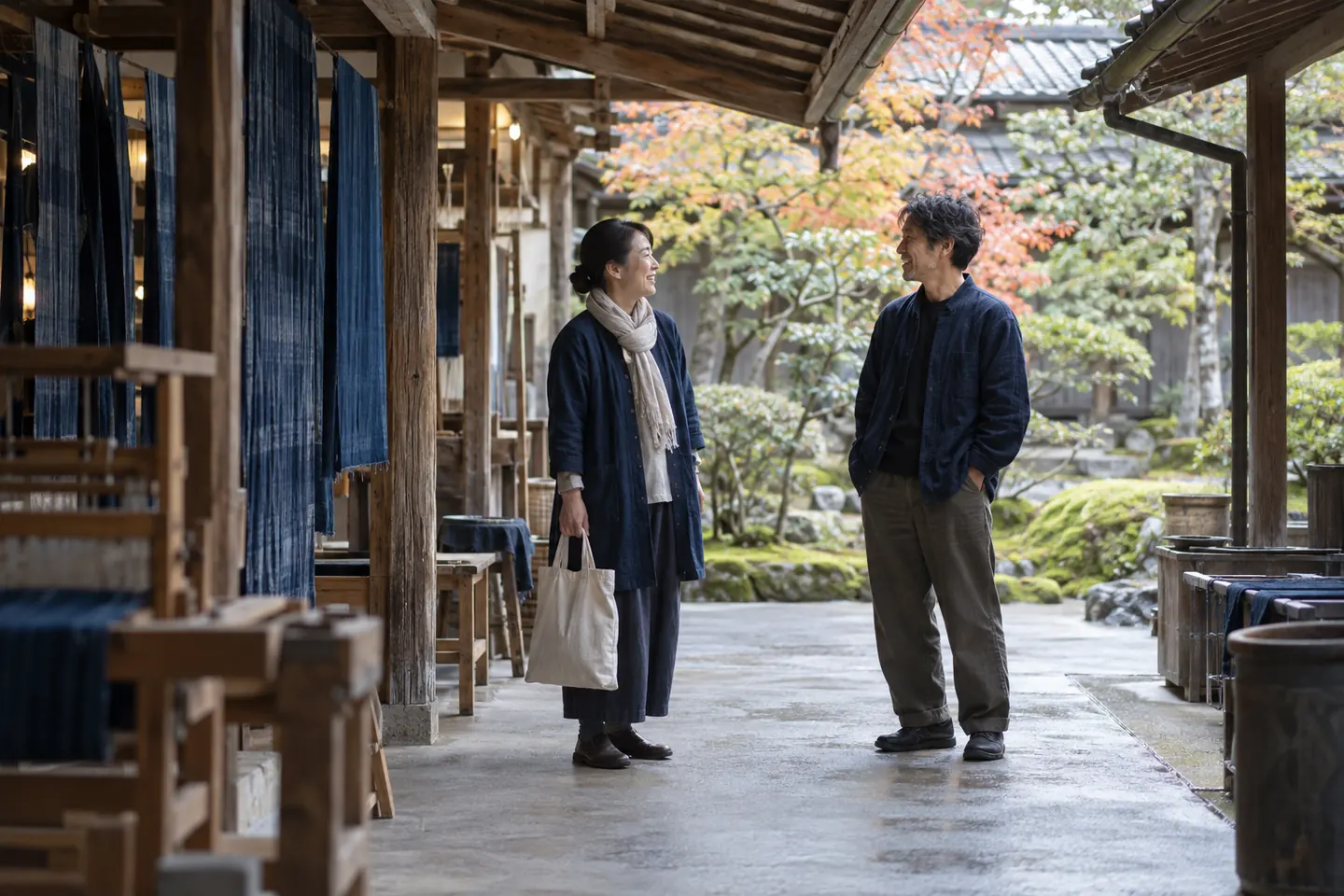
Ageru and kureru can both describe giving, so remembering the English word “give” does not settle the choice. You need to know who is speaking, who gives the object and who receives it. The interesting test comes when two people describe the same gift: the physical event stays fixed while the speaker changes. We will follow a cup and a scarf between two fictional adult friends, Ren and Mika.
Start with the route of the gift on paper. After the sentence work, a suitable stored-word review in KanaWay can help you revisit a missing noun or verb meaning. It cannot decide the viewpoint of your sentence for you. The workflow below separates those two tasks, so a correct vocabulary answer does not hide a role mistake. You can complete the sentence exercises on paper while the app remains in development.
Ageru and kureru begin with the speaker
Put Ren and Mika on opposite sides of a page. Draw a cup between their names and write that Ren gives it to Mika. For this first account, Ren is speaking. Ren is the giver; Mika is the recipient. Point to each role before looking for a Japanese verb. The drawing records the supplied facts rather than guessing them from where someone stands in a photograph.
Now leave the arrow in exactly the same direction and let Mika tell the story. Ren still gives the cup and Mika still receives it. Nothing has been returned or passed back. Only the person telling the story has changed. This is why a simple “left means one verb, right means the other” rule will not help: the reference is the speaker’s perspective, not a permanent side of the paper.
Give each part of the sentence a job
For the models below, state the giver with は, wa, the recipient with に, ni, and the object with を, pronounced o. Both giving verbs keep the giver as the grammatical subject. A translation containing “me” does not turn the receiver into the person who performs the giving. Our models repeat the roles deliberately so you can inspect them.
The St. Olaf College giving-and-receiving reference explains the viewpoint contrast and the giver/recipient roles. We are using its first-person cases here, not treating physical distance as a complete rule for every relationship. The relevant direction is toward or away from the speaker’s side in the stated situation.
Our sentence structure guide can help you locate the final predicate and its related phrases. Write three short notes first: giver, recipient, object. Then add a fourth note, speaker. If one of those notes is missing, ask for that fact before confidently choosing a whole sentence.

Let Ren describe giving Mika a cup
Ren says 私はミカさんにカップをあげました。Watashi wa Mika-san ni kappu o agemashita. “I gave Mika a cup.” 私, watashi, refers to Ren because Ren is speaking. ミカさんに names the recipient, カップを names the object, and あげました reports giving in the polite past. The dictionary form is あげる, ageru.
カップ, kappu, has a small ッ that holds the following p sound. Keep that word-reading issue separate from the viewpoint choice. If you forget “cup”, supply the noun from the vocabulary note and continue checking the roles. If you remember kappu perfectly but choose the wrong giving verb, repeating the noun alone will not repair the sentence.
Cover the model and reconstruct Ren’s account from the four notes. Do not begin by copying the final verb. First identify what 私 refers to in this turn, then trace the gift from Ren to Mika. In this first-person case, the gift goes from the speaker to the friend, so the model uses ageru.
Let Mika tell the same story
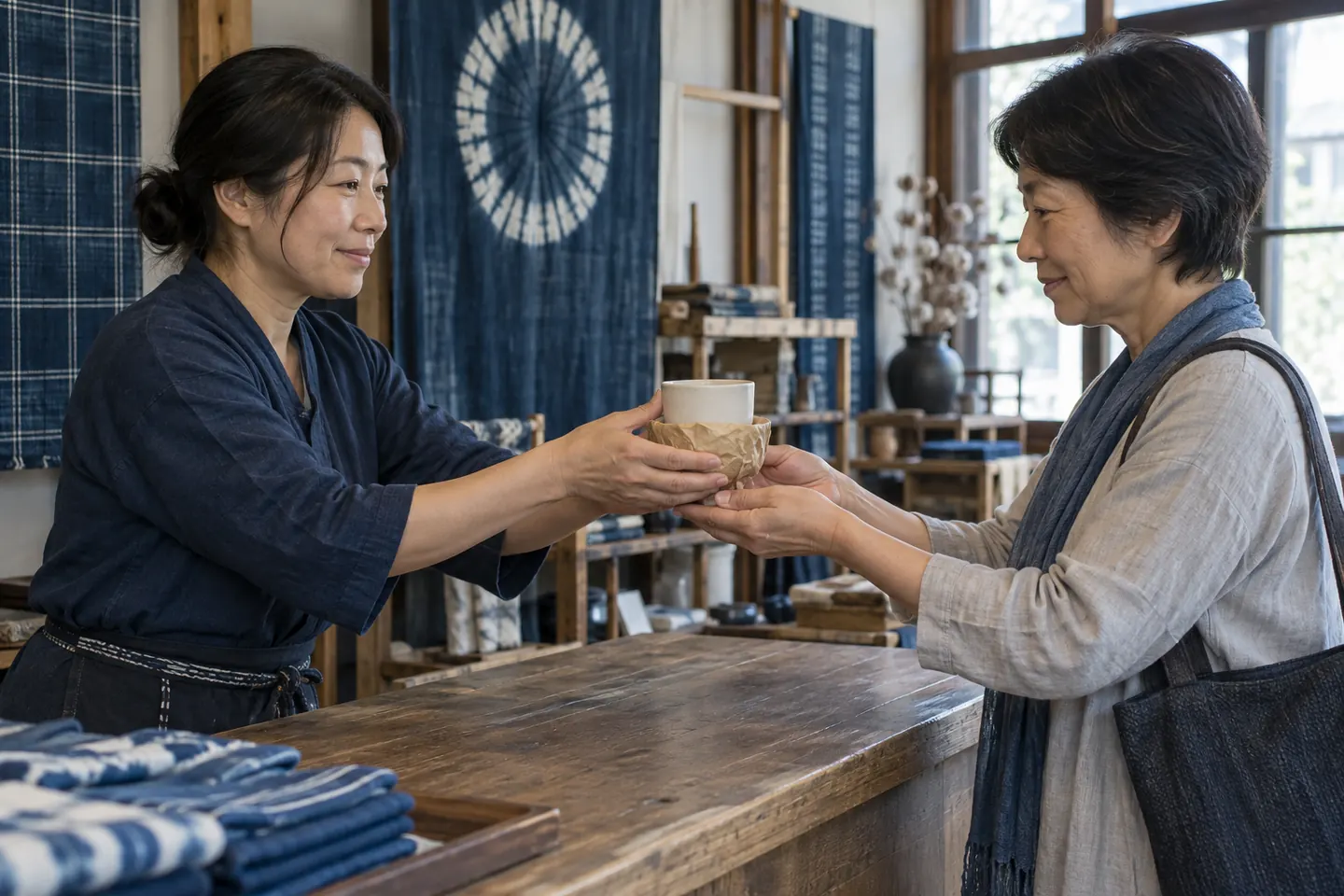
Mika says レンさんは私にカップをくれました。Ren-san wa watashi ni kappu o kuremashita. “Ren gave me a cup.” The cup still travels from Ren to Mika. 私 now refers to Mika, the person speaking. Ren remains the giver and the subject of the giving statement. The dictionary form is くれる, kureru; くれました is its polite past form.
Read the two accounts in different turns. Ren: “I gave Mika a cup.” Mika: “Ren gave me a cup.” You are not changing the event to make the grammar work. You are changing the account because “I” and “me” belong to the current speaker. Put the speaker’s name above each sentence while practising.
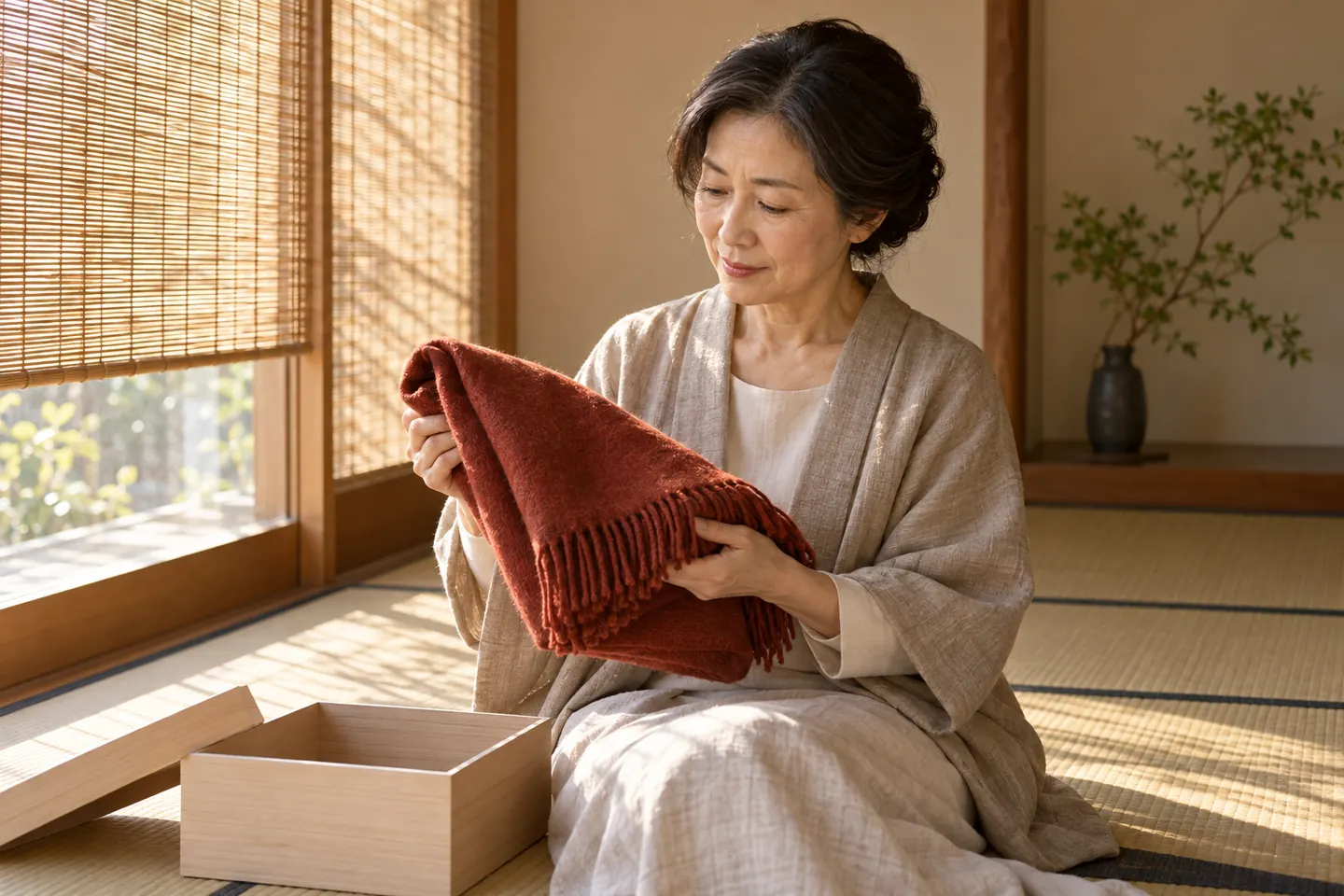
For a second gift, suppose Mika gives Ren a scarf. Ren can say ミカさんは私にマフラーをくれました。Mika-san wa watashi ni mafurā o kuremashita. “Mika gave me a scarf.” マフラー, mafurā, means a scarf here; keep the long final vowel. The recipient is now Ren, and Ren is also the speaker of this account.
Change the narrator without reversing the gift
Let Mika describe that scarf gift herself: 私はレンさんにマフラーをあげました。Watashi wa Ren-san ni mafurā o agemashita. “I gave Ren a scarf.” Compare it with Ren’s account above. The giver is Mika in both. The recipient is Ren in both. The change from kureru to ageru follows the new narrator’s involvement, not a second exchange.
A useful check is to translate the roles into names before translating the whole sentence. In Mika’s sentence, replace “I” with “Mika” in your notes. In Ren’s sentence, replace “me” with “Ren”. The two sets of notes should then describe the same event. If they do not, you may have swapped people as well as switching perspective.
Keep the past endings steady during this comparison. A past event does not become a future plan simply because the narrator changes. The verb conjugation guide provides broader help with polite endings. Here, use agemashita and kuremashita consistently so the central viewpoint decision remains visible.
Use KanaWay for the word you could not retrieve
This website and KanaWay share a publisher. KanaWay is in development. Its word-review workflow being developed uses a stored card, an answer attempt, a reveal step and self-rating with a review-interval preview. That is a way to revisit a word you could not retrieve. It is not a claim that a released giving lesson, a particular gift deck or automatic viewpoint marking is available.
If an appropriate stored card is available, attempt its actual word prompt before revealing the answer. Compare your attempt with what that card asks for, then rate that word recall. A card asking for a noun should not be treated as a complete test of the cup sentence. A successful answer for kappu does not establish who gave the cup to whom.
Return to your paper notes afterwards and rebuild the sentence separately. Our vocabulary guide gives a wider recall routine if you need one. Without a suitable card, use a covered vocabulary note for the same attempt-and-check step. Keep a separate record of a missing word and an incorrect role choice; they call for different follow-up work.

Name the error before repeating the answer
Suppose Ren remembers every word but uses kureru while saying that Ren gave the cup to Mika. The problem in this lesson’s first-person account is the perspective choice. Revisit the speaker note and the direction relative to that speaker. There is no reason to pretend that the noun kappu was forgotten when it was retrieved correctly.
A different learner may choose the right giving verb but forget the word for scarf. That is a vocabulary gap. Recover mafurā, check its reading and then try the full sentence again. A third learner may reverse Ren and Mika in the notes. Fix the event itself before choosing between the verbs; fluent pronunciation cannot make the wrong recipient match the prompt.
Use a short diagnostic label, such as “word”, “roles” or “speaker”. This is your study note, not a proficiency score. On the next attempt, change only the element you are testing. Replacing every person, object and ending at once makes it harder to tell whether you repaired the decision that caused the original error.
Rebuild six accounts from the supplied facts
Cover the next section. All accounts describe past gifts between the same two adult friends. Write the speaker’s name first and keep the giver, recipient and object in separate notes. Use complete polite past sentences for the first four items.
1. Ren gives Mika a cup. Ren tells the story.
2. The same cup gift: Ren gives Mika the cup, but Mika tells the story.
3. Mika gives Ren a scarf. Ren tells the story.
4. The same scarf gift: Mika gives Ren the scarf, and Mika tells the story.
5. Ren is narrating the cup gift to Mika. A draft uses 私はミカさんにカップをくれました. Which decision needs repair without changing the supplied event?
6. A word-card attempt correctly retrieves kappu, but the paper sentence reverses the recipient. Which part succeeded, and which part still needs work?
Check the four notes against each account
Item one: 私はミカさんにカップをあげました。Watashi wa Mika-san ni kappu o agemashita. Ren speaks and gives the cup to Mika. Item two: レンさんは私にカップをくれました。Ren-san wa watashi ni kappu o kuremashita. Mika speaks; the same giver remains Ren, while “me” now identifies Mika.
Item three: ミカさんは私にマフラーをくれました。Mika-san wa watashi ni mafurā o kuremashita. Ren receives the scarf and tells the story. Item four: 私はレンさんにマフラーをあげました。Watashi wa Ren-san ni mafurā o agemashita. Mika gives the scarf and tells her own account. Neither pair requires the object to travel back.
In item five, keep the roles and replace the giving verb with あげました, agemashita. Swapping the giver and recipient to rescue kureru would change the prompt. In item six, the noun recall succeeded; the paper role assignment did not. Review each task against its own target rather than merging them into one vague result.
For transfer, return to item one and change only the object to a scarf. Say Ren’s account and then Mika’s. Explain which facts stayed fixed and what 私 refers to in each turn. That explanation is the final check that you are following the gift from a stated perspective rather than remembering a sentence by its position on the page.
Questions about the method
Does kureru mean that the receiver is the subject?
Not in these giving sentences. The giver remains the subject with both ageru and kureru. Japanese also has morau, commonly translated as “receive”, with a different sentence arrangement. Keep that as a separate pattern rather than moving the recipient into the subject position while leaving this model unchanged.
Must I say watashi in every real conversation?
No. Context often makes participants clear, so speakers can leave understood information unstated. We keep the roles explicit for practice because the exercise changes narrators. Learn to identify the people first; then consider what can safely be omitted without making the listener guess the intended event.
Can I use these models for any social relationship?
This lesson deliberately uses ordinary adult friends. Formal situations and differences in social relationship can require other choices. Adding a polite past ending is not a complete guide to gift etiquette or respectful language. Confirm the relevant context before extending these small first-person models to a different relationship.