
A sentence can describe what somebody does not do without asking anyone to change their behaviour. Naide kudasai helps you make the second meaning explicit: you are asking another person not to perform an action. That difference matters when a door should stay open, a shared object should remain on a table, or a visitor needs to understand a simple instruction. Start with the action and the situation, then choose the negative verb form. Adding a polite ending does not remove the need for a reasonable request.
This lesson uses a fictional adult craft group preparing an exhibition. No emergency, medical decision or real venue rule is involved. You can practise with paper and your voice. Write down who is speaking, who should act and what should remain unchanged. Those three facts make your answer easier to check than an isolated English translation of “please don't.” Our aim is a short, understandable request, not a claim that one expression suits every relationship.
First decide whether you are asking
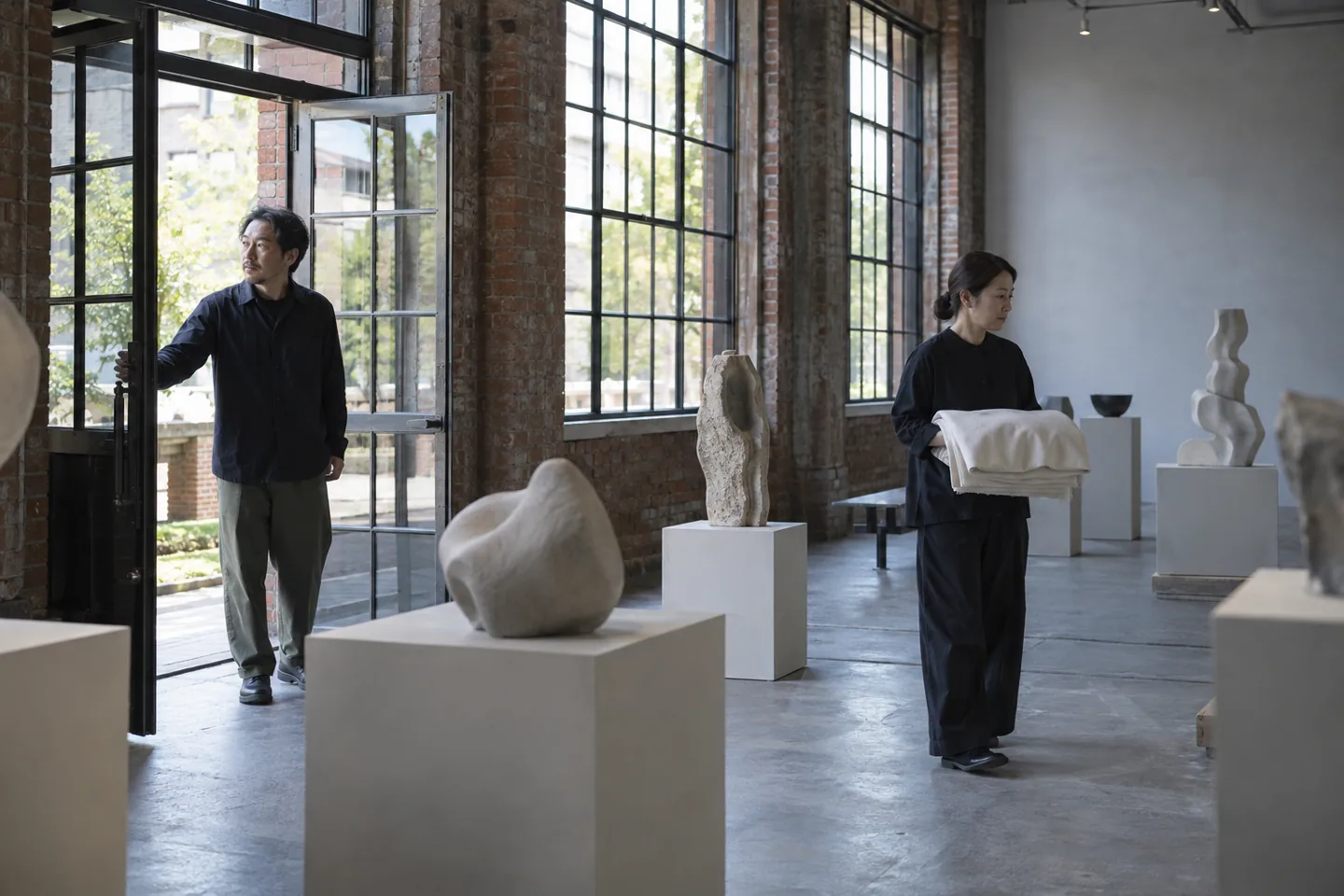
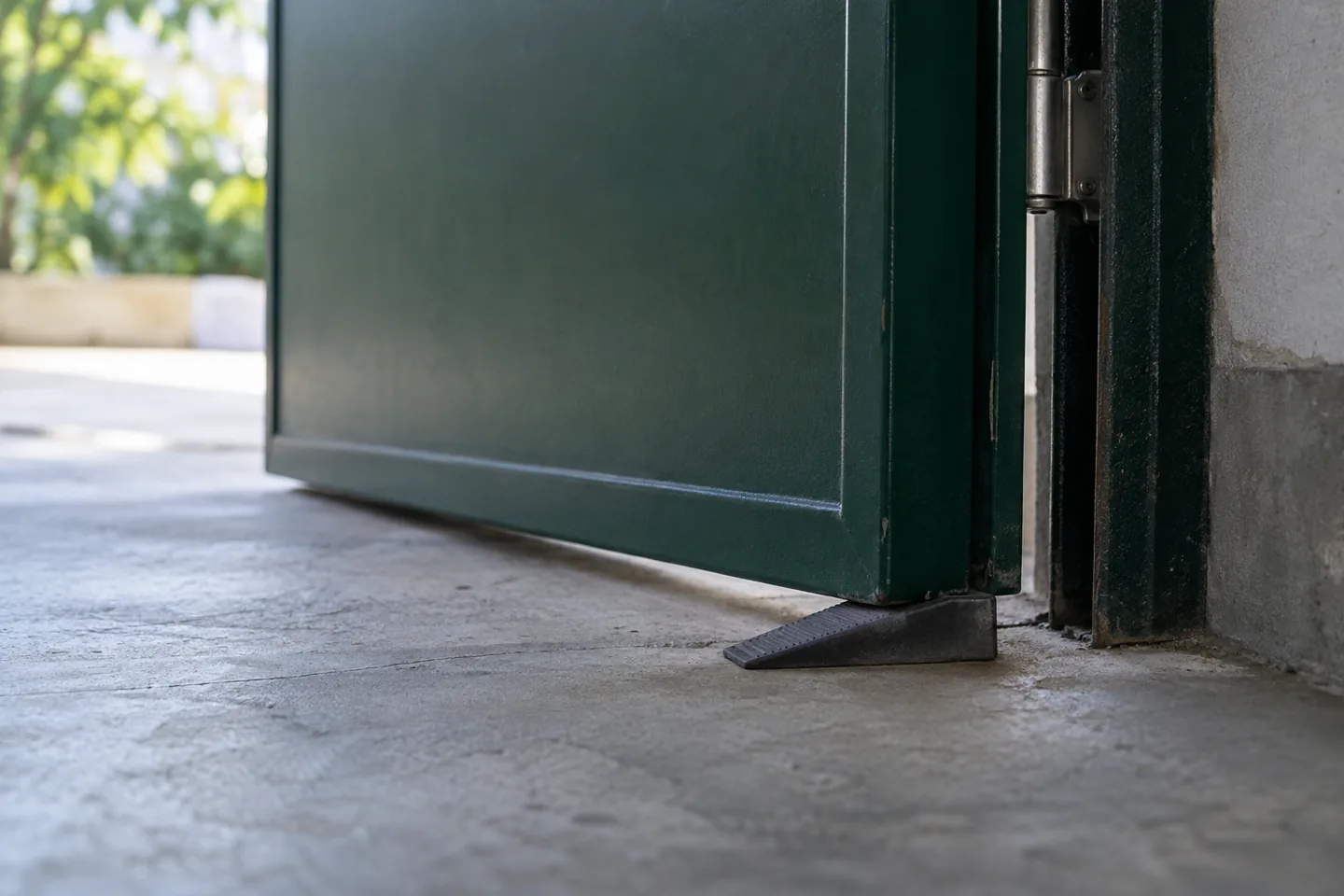
Imagine that the group wants the entrance door to remain open while the room is being prepared. A person is about to close it. ドアを閉めないでください。 Doa o shimenaide kudasai. means “Please don't close the door.” The speaker is addressing somebody whose possible action matters now. The sentence does not say the door is currently closed, and it does not ask somebody to open it. Keeping those distinctions explicit prevents a surprisingly common practical mistake.
Compare ドアを閉めません。 Doa o shimemasen. “I don't close the door,” or “I won't close the door,” depending on context. This is a polite negative statement. Without surrounding conversation it leaves the subject unstated, as Japanese often does. It does not by itself provide the request structure of the first example. In your exercise, supply the speaker and intended actor before translating either sentence. Do not assume that every negative verb is an instruction to the listener.
Naide kudasai begins with the negative form
Use the plain negative verb followed by でください. With 閉める, shimeru, “close,” the negative form is 閉めない, shimenai. Keeping that entire negative form and adding でください gives 閉めないでください, shimenaide kudasai. Do not remove the final い from ない. Treating the pattern as plain negative plus de kudasai is a useful way to see the boundary, even though ordinary Japanese writing does not insert spaces between these pieces.
Another example is 使う, tsukau, “use.” Its negative form is 使わない, tsukawanai, so the request is 使わないでください, tsukawanaide kudasai. Notice わ in this change. Simply deleting the last syllable of an unfamiliar dictionary form is unreliable. The negative form belongs to the verb's conjugation pattern. When you cannot form it confidently, check the verb before constructing the request. A correctly copied ending cannot repair a wrong negative stem.
The project's guide to Japanese verb conjugation can help you review those forms separately. For today's exercise, keep the vocabulary small: close, use, move and forget. You need fewer moving parts when learning a new communicative function. First retrieve the negative form, then add the request ending, then reread the whole sentence with its object. This order makes a correction precise: you can identify whether the problem was vocabulary, conjugation or the intended action.
Keep the action and object connected
For a display table, say この箱を動かさないでください。 Kono hako o ugokasanaide kudasai. “Please don't move this box.” The verb is 動かす, ugokasu, and its negative form is 動かさない, ugokasanai. The box is the object marked by を, pronounced o in this use. Our fictional speaker points out the particular box before making the request. A photograph of several boxes alone would not tell the listener which one was intended.
Now compare この箱を使わないでください。 Kono hako o tsukawanaide kudasai. “Please don't use this box.” Both requests mention the same object, but they prevent different actions. Someone could leave a box in place and still use it. Your answer key should therefore check the verb as well as the negative ending. “It contains naide kudasai” is not enough to establish that the sentence solves the situation you were given.
For independent practice, draw two plain boxes on paper and identify one with a simple mark. Write a cue about moving it, then a cue about using it. Keep the object constant while you change only the verb. Read both requests aloud without looking at the English. Afterwards, explain what action each one asks the listener to avoid. You are checking meaning against a supplied situation, rather than guessing the meaning from how fluent your repetition sounds.

A request and permission solve different problems
A visitor might ask この箱を使ってもいいですか。 Kono hako o tsukatte mo ii desu ka. “May I use this box?” That is a request for permission. Our negative request tells somebody not to use it; it is not the same question with a different ending. The sentence-structure guide helps you identify the actor and object in that separate exchange. Here, keep your attention on whether you are seeking approval or directing an action to remain undone.
Likewise, a neutral statement about your own habits does not automatically become a rule for everybody else. “I don't use this box” and “Please don't use this box” may describe a similar practical outcome for one moment, but they assign responsibility differently. Make two columns headed “speaker's statement” and “request to listener.” Sort examples by what the speaker is doing in the conversation, not by the presence of an English word such as “not.”
Choose a reasonable setting for the wording
Kudasai provides a polite request form, but directness, relationship, tone and the size of the imposition still matter. In our fictional exercise, an adult group member is responsible for arranging the room and the request has an understandable purpose. That supplied context helps explain why the instruction is expected. It does not prove that the same wording is the best choice when making an unusual demand of a stranger or someone in a different role.
The Japan Foundation's Irodori materials include practice with V-naide kudasai. Use that authoritative teaching material to check the grammatical pattern. Its example situations do not make our exhibition scenario a quotation from the textbook. The original exercises here deliberately avoid medical instructions: they concern a door, a box and items to bring. Do not turn a language example about somebody's conduct into advice about treatment, safety procedures or legal authority.
A reminder can still be a negative request
明日、ノートを忘れないでください。 Ashita, nōto o wasurenaide kudasai. means “Please don't forget your notebook tomorrow.” The negative form comes from 忘れる, wasureru, “forget.” Unlike the box examples, this request asks someone to remember an item rather than leave an object untouched. The structure is the same, but understanding the verb changes what successful action looks like. The listener should bring the notebook; merely avoiding a box would not satisfy the reminder.
Notice the long vowel in nōto. Romanization is a reading aid, while ノート remains the Japanese written form. Keep a small vocabulary note if this word is unfamiliar, and return to the project's vocabulary guide when word recall interrupts the task. During the request exercise, use one consistent romanization system and do not substitute a guessed English pronunciation. Reading accurately and selecting an appropriate request are connected skills, but neither one automatically proves the other.

Try six decisions from supplied facts
A. A colleague is about to close the entrance door, which should stay open. Choose between shimenaide kudasai and shimenai. B. The marked box should stay where it is. Choose between ugokasanaide kudasai and tsukawanaide kudasai. C. You are describing your own plan not to close the door. Choose a negative statement or a request. D. You want approval to use a box. Choose a permission question or a negative request. E. A participant needs their notebook tomorrow. Complete nōto o wasure... with the negative request. F. Explain whether adding kudasai makes every demand suitable for every listener.
For A, shimenaide kudasai explicitly makes the negative request; shimenai alone does not provide that full request form. For B, ugokasanaide kudasai prevents moving the box. Tsukawanaide kudasai prevents using it, a different action. For C, use a statement about your own plan rather than instructing the listener. For D, ask permission with tsukatte mo ii desu ka. These answers preserve the conversational task, not just the negative meaning.
For E, the complete verb phrase is wasurenaide kudasai. The plain negative wasurenai keeps its final i before de kudasai. For F, the answer is no: polite grammatical form does not guarantee that the request is appropriate. Review the relationship and purpose supplied by the scenario. If your answer chose the correct ending but the wrong action, record that as an action-selection error. If the action was right but the negative form was wrong, practise that verb separately.
Finish with a small transfer exercise
Create one ordinary nonmedical request about an object in your study space. Identify the object, name the action you want someone to avoid and state who is being addressed. Check the plain negative form before adding de kudasai. Then write a separate negative statement about yourself and explain why it performs a different conversational job. Keep the situation fictional if nobody has actually agreed to your proposed arrangement. The useful outcome is a request whose action, listener and purpose you can explain.

Questions about the method
Do I remove the final i of nai?
No. Keep the plain negative form and add de kudasai: shimenai becomes shimenaide kudasai. A wrong boundary can produce a form that does not match the intended pattern.
Does a negative statement always tell the listener not to act?
No. A statement and a request perform different jobs. Give the exercise enough context to identify the speaker and intended actor instead of inventing them from a bare sentence.
Do I need an app to practise this lesson?
No. The situations, comparisons and answer key work with paper and spoken rehearsal. The shared KanaWay information card is optional; it is not evidence that an app grades your grammar or contains these exact exercises.